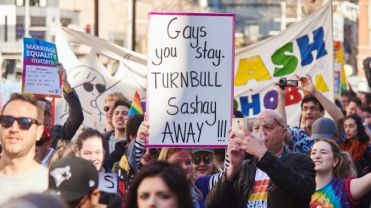
 Like many in the Australian LGBTIQ community, I am exhausted by the marriage equality “debate” that we are being subjected to. The nature of this atomised survey is that we’re supposed to stay positive and upbeat, to try and convince everyone that we’re “normal” and have no other agenda than “love”. But being glass-half-full optimistic in this situation takes a lot of mental and emotional energy. That’s why it was so deeply infuriating to see our Prime Minister Malcolm Turnbull—the person whose cowardice means we even have to endure this survey—on TV suggesting that the ‘yes’ campaign needs to lighten up about homophobia.
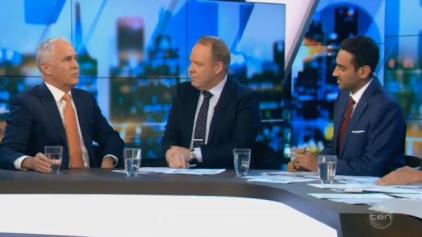
Turnbull appeared on The Project last night, commenting on the “controversy” over whether Macklemore should sing his chart-topping song Same Love at the NRL Grand Final. The religious right leading the ‘no’ campaign have suggested that Macklemore’s “same-sex anthem” has no place in sport. Turnbull defended against censoring the song, in the name of “free speech” and “artistic expression”. But when host Waleed Aly pressed him on the issue, suggesting that it was unavoidably political and an “incendiary intervention” in the current climate of homophobia, Turnbull dismissed him saying “oh no don’t…everyone’s focused on the football”. When Aly continued, Turnbull sighed, “we were just having fun Waleed, why do you have to be such a downer?!” Turnbull dismissed the recent spate of homophobic attacks and abuse being levelled at the LGBTIQ community amid the survey as a “tiny percentage”.
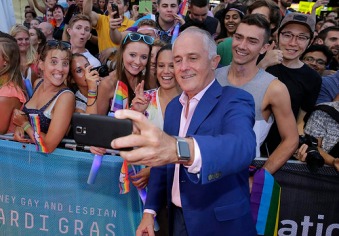 It’s important to take a step back here and recognise Turnbull’s comments for what they are: gaslighting. Indeed, the comments coming from the ‘no’ campaign and even many liberal ‘yes’ voters also involve gaslighting. This is not simply a case of homophobes vs. supporters, because there are many “supporters” that are contributing to a discourse that punishes LGBTIQ people and puts the blame back on them for being upset. It’s important to recognise and name this behaviour for what it is, because when you are upset by all the small comments being made it’s hard to understand why it affects you so badly unless you connect it up to the bigger picture.
Gaslighting is an emotionally abusive tactic that undermines the confidence of the person being targeted, where they are made to feel like what they are experiencing isn’t “real”. Here’s the “11 signs of gaslighting” as demonstrated by Turnbull (and similar others) in the marriage equality debate:
- They tell blatant lies
Last night Turnbull defended the survey as “democratic”, referred to it as a “plebiscite”, and suggested any nastiness was just the same as what you would see in a federal election. Not only is this survey disenfranchising many, a complete shambles, not statistically rigorous, and not an actual plebiscite, this is a survey on the legitimacy of recognising same-sex couples as equal, qualitatively different from a federal election in every way. - They deny they ever said something, even though you have proof
Turnbull is now a great defender of the postal survey as democratic, even though he is on the record as previously stating (in the debate around an Australian Republic) such a method “flies in the face of Australian values”. - The use what is near and dear to you as ammunition
Because he has to defend the survey, Turnbull has been highlighting things we ought to value (including: democracy, respect, fairness) and using these values against the LGBTIQ community’s critiques of the survey. He has suggested that we “cannot ask for respect from the No case if you’re not prepared to give respect to the No case”. In other words, you have to respect people disrespecting you, otherwise it is *you* that is disrespectful. - They wear you down over time
The fact that this survey has been stretched over a timeframe of more than two months says it all—who among us has the energy to stay fighting the whole time. Turnbull is now encouraging us to stop caring about the issue, even as it goes on and on: have “fun”/stop talking about this/don’t be such a “downer”. - Their actions do not match their words
Despite not allowing a free vote in Parliament (presumably because it would have threatened his leadership in the Coalition), and subjecting us to the postal survey, Turnbull has come out supporting ‘yes’. Now I guess we’re supposed to be appreciative of his “support”. In a classic gaslighting move his words (tacit support) and actions (creating this mess) do not match up. - They throw in positive reinforcement to confuse you
One minute Turnbull is suggesting the survey is hard on LGBTIQ people, “This is a time to put your arms around them, to give them your love and support”, and in the same breath he states, “The vast majority of people who do not agree with same-sex marriage are not homophobic and do not denigrate gay people”. It is clear that the main prerogative of the ‘no’ campaign is precisely to denigrate gay people. Turnbull’s positive “support” means nothing, except for adding to the confusion about how we should feel grateful for this “democratic” opportunity to have our say. - They know confusion weakens people
Despite nominally supporting the ‘yes’ campaign, Turnbull has defended campaign tactics from ‘no’ in the name of “free speech”. Rather than suggesting that the most important thing is showing support for the LGBTIQ community (which is what I would expect from a ‘yes’ campaigner), he claims that “mutual respect” is the number one priority. It’s confusing to have someone on “your side” defending the opposite side and simultaneously chastising you for getting upset by the debate. Further adding to confusion, Turnbull has said that the will of the people reflected in this survey is only binding if it’s a no, but not if it’s a yes. Wait, which side are you on again Turnbull? - They project
Turnbull keeps telling the LGBTIQ community to be “proud” and confident, yet, we know that it is Turnbull’s cowardice that has created this drama. It seems like the person who really needs to hear the mantra “believe in yourself” is Turnbull, not us. - They try to align people against you
Instead of suggesting that we should protect against discrimination of the LGBTIQ community in this survey, Turnbull has commented that “The only way to stop people from saying things that you find hurtful is to shut down free speech”. In other words, *protecting* those who would discriminate in the first place is the number one priority because “free speech”. - They tell you or others that you are crazy
While stating again and again that only a “handful” of Australians are homophobic, Turnbull was one of the first to condemn the attack of Tony Abbott by a random anarchist and use it against the ‘yes’ side: “They are not helping their case by engaging in violent conduct. They are not showing respect for others”. In other words, Turnbull suggests we ignore the homophobic attacks happening, but is the first to use a random attack (even though the accused man has stated this had nothing to do with the marriage issue) on a Liberal as a reason to condemn the ‘yes’ side. In sum: the LGBTIQ community is crazy for feeling vilified, but Tony Abbott and co are legitimate in their fears. - They tell you everyone else is a liar
This is what we saw on The Project last night: Turnbull suggesting that being concerned about homophobia in this debate is a media beat up. Apparently the only person we should trust on this is Turnbull, who tells us to forget our troubles and have fun. Gosh what a lot of fun it is.
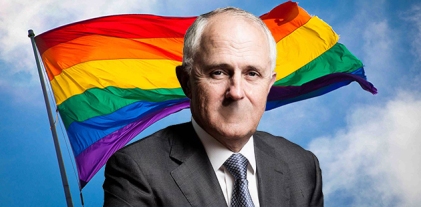 What all of this reveals is that whatever the outcome of the survey, Turnbull is firmly not on the side of the LGBTIQ community.
Instead of accepting the abusive logic of the marriage equality survey where we are told to be politely grateful for every ‘yes’, we should remember the liberatory politics of LGBTIQ activism past: we don’t just want equality, we want freedom; we want more than words, we want action; we don’t beg, we demand. And most of all: we are not the problem.
 As
As  So the story goes: “it gets better”. This is a common refrain of LGBTIQ youth services in Australia. “It gets better” refers to the promise that when you leave school, you won’t have to deal with bullies any longer – you’ll be free to live your life as a happy LGBTIQ person. Now, for many of us, this isn’t totally wrong. Leaving the social intensity of the schoolyard and becoming independent from family units, can mean that we are able to find new communities of acceptance.
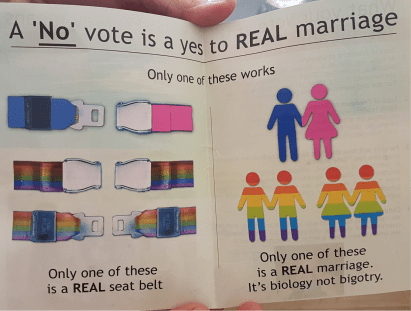 But how cruel might this hopeful promise be, when bigotry can be canvassed as state-sanctioned “legitimate debate”, as we are seeing now? When homophobic and transphobic ideas are not originating from the schoolyard itself – as we know,
  As
As  But cruel is the optimism of the segments of the “yes” campaign that refuse to confront the homophobia and transphobia emerging in the debate, and instead seek to win hearts and minds on the basis of respectability, normality, and the idea that “love” is indeed “love”. As Berlant argues, it is a cruel optimism that operates where we live with the toxic conditions of the present labouring under the view that the future will “somehow” deliver something better.
 And indeed it is cruelly optimistic to imagine what that future will entail if we do not question the social constitution of futurity in the first instance. As
 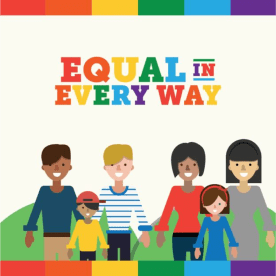 This is precisely what we have seen playing out for over a decade, albeit more sharply in recent times, in the marriage equality debate. While the right have repeated the refrain, “think of the children”, the left too have taken up this mantle, constantly leaning on statistics about the welfare of queer youth or children from queer families in order to make a point of the utter sameness of the child under queer circumstances. In this envisioning, the queer child doesn’t queer the future, rather, the queerness of the child is contained in order to suggest that there is very little threat – only a slight extension – to the more conservative vision.
 As the recent
  We might wonder about the astringency of Edelman’s anti-social thesis, in light of the fact that attachment to “same-sex marriage” is currently being enacted by many as a mode of survival. Many have thrown themselves into fighting for a yes campaign precisely in order to assist a striving toward a “getting better”. We might also question the limits of Edelman’s radical presentism and anti-futurity, and if a different kind of future envisioning might be possible without a cruel investment in inevitable progress.
 As
As 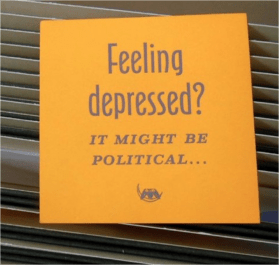 Similarly
 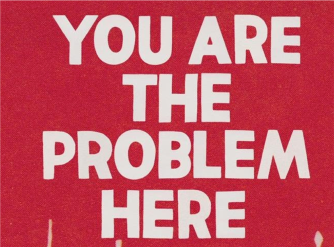 But in making the negativity at the heart of things public rather than private, we can also become targeted as the problem rather than merely pointing out the problem. As
  While we focus solely on concepts like fairness and kindness, positivity, good stories, the “good homosexual”, or the “unqueer queer child”, the bad feelings at the heart of the marriage equality debate remain occluded and politically impotent. To fail to recognise and name the homophobia and transphobia that are proliferating under conservative discussions in the marriage equality debate is to inadvertently reiterate a narrative of a heteronormative future where “it gets better”. To engage in a queer hopefulness then, is not to shy away from negativity, but rather, to embrace the possible world that it reveals to us.
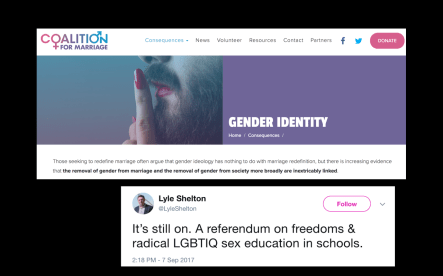 It is only in confronting those elements of the present that we would rather deny, from which a truly utopian vision might emerge. In this case, my educated hope is that we will have a marriage equality debate that confronts homophobia and transphobia, that embraces gender and sexual diversity, and that makes space for the LGBTIQ community well beyond the question of marriage.
 BINARYTHIS