Darth Penis vs. The Training of Men

Ok, so it may seem like a silly task to dissect a flippant popular culture article (although, that is mostly what is done on this blog). However, I got some referrals to this cracked.com article today titled, ‘5 Ways Modern Men Are Trained to Hate Women‘, and by popular demand, thought I would give a considered response. Incase you can’t be bothered looking at the article, here’s the five basic tenets of its argument:

– Boys are indoctrinated with the idea that one day they will be “rewarded” for their efforts in life, with a hot chick. When this doesn’t work out in life, this makes men inevitably turn into the Hulk (that is to say, angry, not giant and green)

– Boys learn that women must always be pretty and decorative eye-candy. They can have a brain/be people too, but they also (mostly) have to be hot. Again, when this is not the case, HULK SMASH

– Men have penises that they can’t help touching (e.g. in public places), they are super horny creatures that just want to get laid 24/7. So when a girl “shows too much skin” this is a major tease, which brings out the big, green, angry man

– Men think that since childhood, women have gradually emasculated their “core male urges” (e.g. stopped them from showing their penis to strangers as a child). This makes men embarrassed and spiteful

– Men are OBSESSED with sex. That is why men have created civilization. To get the hot chicks. The hot chicks which they actually, will probably not get. The hot chicks who they will not get, who show too much skin, and have emasculated them. This all causes resentment and a BUCKET LOAD OF ANGER. HUUUULK

All in all this article reads as a kind of feminist take on why men subordinate women. To be fair, I think that this article is well-intentioned, and has mostly come about in response to the truly misogynous comments made by Rush Limbaugh in the USA recently. However, there are some very, very concerning assumptions made in it, that should be pointed out. The main problem with this article is that it reinforces some pretty serious stereotypes about men and women, even though it is actually trying to challenge some of them. How’s that? Well…
In some respects, this article presents a blurred line between the “constructed” and the “real”. While the article is keen to preach the things that men are “taught”, is also relies on a bunch of statements about men’s “nature”. So while men’s thoughts about being owed sexy women is something that they have learnt, they have an anger-response and ridiculous sex drive that is intrinsic to being a man. The proof in this “base-urge” pudding is given as neuroscience findings, possibly higher testosterone levels in men, evolutionary factors, and/or “maybe society has trained us to be like this”. Despite this little construction-disclaimer (we learned to have these crazy base urges), the article still paints this as a kind of man-truth.

The article actually gets close to questioning the naturalness of the “man” category in point #2, recognising the kind of enforcements of male masculinity often seen in popular culture, but then goes back to talking about how when men are boys “Darth Penis” rules their primal urges to wave their wang in the face of women. So, in all of these senses, this article actually reifies what men are like, in the way in which it talks about the “nature of men”.

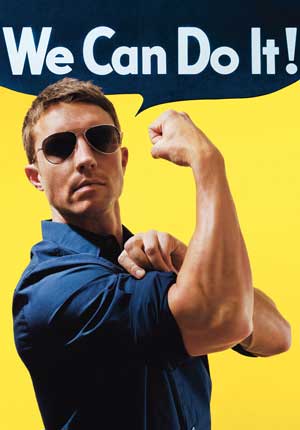
Most problematically, when we get to point #1 of the article, that men have constructed civilization to get some lady lovin’, but will forever remain bitter and twisted about it, I can’t help thinking of this:

"I have turned the world upside down"

In the end, I think it’s great to have discussion about what we absorb from the gender norms perpetuated in society- it’s just a shame that often in our questioning, we end up reinforcing the idea that “men” and “women” are discrete and stable categorical realities, and we end up driving that gender binary wedge just a little deeper.

Men, and International Women’s Day

Today I went to a luncheon for International Women’s Day (IWD). The room was full of hundreds of (mostly) women, from many different sectors in the community. Being there, listening to speakers on the topic of “women” (mostly focusing on the need to enhance the lives of women in developing nations), I had some deep pangs of uncertainty. As I sat there, eating my posh lunch and sipping Pinot Grigio, I couldn’t help but ask myself, what does it even mean to be a woman? Should I be proud? What does it mean to be an “empowered” woman? Where do men figure into this?…

It felt to me like the “feminist” bent of the meet was to say “look, there’s still work to be done sisterhood, keep up the good fight!”. Not a single speech considered the relevance of feminism or the importance of challenging gendered assumptions. But I was torn – while I sat there wishing we could instead have an “International Question-the-Binary Day”, I was also struck by the fact that the lived experience of many women around the world is profoundly disturbing and must be addressed (and, admittedly many women in need may not be helped much by my proposed academic gender-deconstruction talk-fest). I think that some of my existential angst sprung from the fact that I felt a deep concern over my relationship to the women overseas being spoken about, considering my apparent academic Western ivory tower.

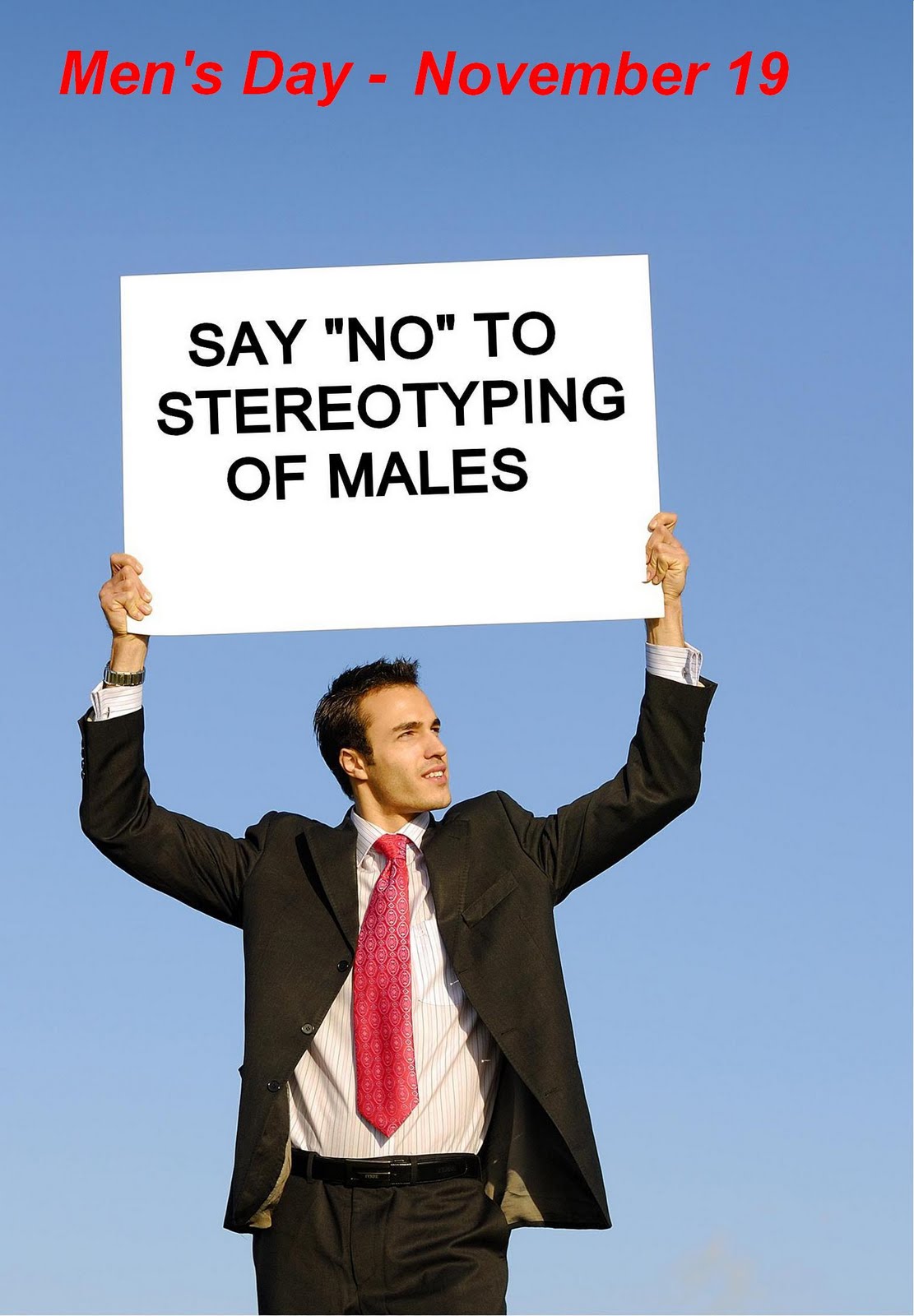
Though I didn’t quite come to terms with these cultural qualms, I was also still stuck on the issue of the day being so overtly gendered. The old adage often brought up on this day is, “why isn’t there an International Men’s Day?” with the reply “every day is International Men’s Day!” This oft quoted interlude is problematic for several reasons:

1. There is actually an International Men’s Day. November 19. Look it up. This is not to be confused with Men’s World Day– an event celebrated in Austria in the early 2000’s, awarding “exemplary” men (including the Bee Gees). Funnily enough the day was criticised for it’s gender-exclusivity and after being renamed, the main event is now (rather ironically) called the “Women’s World Awards“.

2. Promoting the idea that every day except this one is a default men’s day kind of reinforces the whole notion that every day is men’s day. It’s a catch-22. At what point do the days stop being gendered? Is there a point of “progress” where we finally sit back and go, “yep, equality achieved!”?

With these points in mind, I think that there is a fundamental problem with the current approach to women’s “equality” in the Western world, in that it often involves a tactic of “tipping of the scales“. This is an affirmative action strategy that says: to make up for all of the years of oppression and male privilege, women are now the ones that should be privileged. And often IWD involves celebrating the achievements of women, which is great, until it slips into essentialist generalisations about how women “keep the world together“. The thing that this particular mode of feminism overlooks is, well, men (and don’t even get me started on how this whole thing forgets people that don’t fit neatly into the man/woman gender binary!). Instead of focusing solely on “empowering” women to do anything, shouldn’t we be doing the same for men (and actually everyone despite gender), so that we achieve some balance and so that women aren’t expected to do everything?

We should be supporting men (and everyone!) in parental roles, men as caregivers and carers, celebrating the men that are community sector workers, teachers and nurses – i.e. men that do “traditional women’s roles”. As well as promoting women to be engineers, we should encourage men to enter primary school teaching. Instead, we just focus on the women – and that, I think, puts both a burden on women and denigrates men (and everyone outside the binary) in our society.

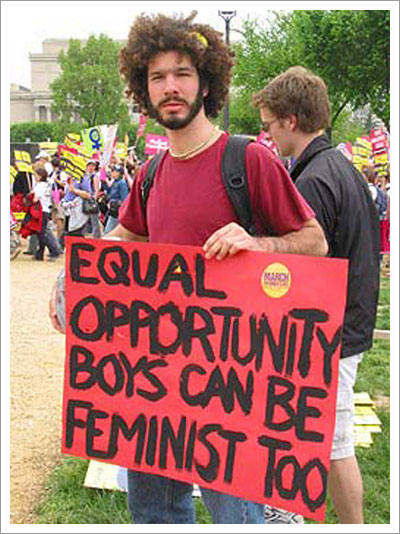
What about the men that we love? What about the men in our lives that are gentle and caring and believe in equality, but that get overlooked for scholarships, jobs and other positions because they are not women or are not cut throat competitors? And how on earth can we really empower women around the world, if we turn a blind eye to the role of men in these societies? What about the men in the world that are feminists? Surely we should celebrate and encourage them too. In the end, I appreciate International Women’s Day- I just don’t want to forget about men along the way.

Mmmm alphabet soup…tastes like rainbows

So last week I was asked to give a speech at my university’s local Mardi Gras celebration. Here it is:

“So what can I say about today’s Mardi Gras event? Well, I spend a lot of my days thinking about questions of gender, sex and sexuality, and the way in which we take up those specific identifiers that say, “Yes! This is who I am in the world”. I think that Mardi Gras is both about the personal and the political- celebrating who you are out loud, and demanding to be seen and heard. Mardi Gras is about opening up a space to talk about identity and belonging, and to have a discussion about things that might otherwise go unsaid and unheard.

As some of you may know, the Sydney Gay and Lesbian Mardi Gras changed its name to just “Mardi Gras” for this year’s festival. The organisers of the event said that they wished to promote greater inclusivity by dropping the “gay and lesbian”. And, as we celebrate our university Mardi Gras event today, we stand under a similar banner, designed to promote respect and equality for all people, no matter their sexual orientation.

While a central aspect of Mardi Gras might be inclusion, how do we make sure we don’t lose the alphabet soup along the way? I’m talking here about the ever growing acronym- LGBTIQAP, Lesbian Gay, Bisexual, Transgender, Intersex, Queer, Asexual, Pansexual… I could add more. How do we maintain our pride for who we are, without getting lost in the milieu of inclusion? While I agree that we are all equal despite questions of gender or sexuality, issues of visibility are ever-present. Being recognised, acknowledged, and respected for the person that you are, is a big deal.

Well, my thoughts on this are: say it out loud. For example, I am proud to say that I am a bisexual, queer, femme.

But this isn’t about labelling or having to “fit” into specific categories- it’s about naming our diversity and opening up new areas of discussion about identity. 

So let’s take this opportunity today to remember the alphabet soup, and in doing so, welcome everyone and anyone, under the ever expanding rainbow.

Happy Mardi Gras!”