Sisters, Doing it for Them-selfies

WDN_18-04-2013_ROP_01_WAR170413selfie_t460

A “typical” selfie pose

Recently an article, Dark Undercurrents of Teenage Girls’ Selfies, has been doing the social media rounds. Selfie literally refers to taking a photo of yourself, and as the papers would have it, this is a dangerous trend being taken up predominantly by girls. While the author – a grade eleven student – admits that “There isn’t anything inherently wrong with uploading self-portraits”, part of this piece also claims that the underlying motivation is popularity, ultimately judged by men: 

Who do we blame for this moral mess? As feminists, we correctly blame patriarchy because boys are securely at the top of the status game. Boys end up with the authority. They have their cake and eat it.

On the weekend The Observer also jumped on the bandwagon with an ominous appraisal over this “global phenomenon”. Journalist Elizabeth Day argues that even though the selfie allows for a modicum of control over images, “once they are online, you can never control how other people see you”. And as Anna Goldsworthy recently remarked in her piece for the Quarterly Essay:

And so the young woman photographs herself repeatedly, both in and out of her clothes, striking the known poses of desire: the lips slightly parted, the “come hither” eyes, the arched back or cupped breast.
tumblr_mfobi2itwF1rm5ngbo1_500By all accounts, young girls today are not just in big trouble, they are trouble. Unlike every generation before them, these girls are the lewdest, excessively raunchy, most aggressively hypersexual… What we have on our hands is a moral panic that combines two things we love to fret about: technology and women’s bodies.

I think that whether or not selfies are ultimately empowering vs. disempowering is actually a moot point. After all, this line of questioning can only really disseminate along two opposing lines:

  1. Empowering – Girls are in control, and the elements of choice and agency involved in self-constructing images is key. This perspective necessitates extrapolating individual claims out to the whole.
  2. Disempowering – Girls may think they have control when they produce a selfie but really as outsiders we know better: they are the victims of a patriarchal culture that compels them to auto-objectivise. This perspective necessitates making generalisable structural claims to the detriment of considering individual experience.

Both of these lines of argument involve making wide-spread claims to provide a definitive evaluation that the practice of taking selfies is either good or bad. From this black and white approach, the possibility that something might be at once empowering and disempowering, is obscured. But – let’s take an imaginative leap here – what if we decided that actually, the answer to the empowerment question is actually kind of fuzzy…

It's not just young people that get in on selfie action...

It’s not just young people that get in on selfie action…

It is almost certain that, as Olympia Nelson claims, many young people are playing popularity games through selfie posts. But what if we considered the ways in which online environments are opening up new avenues for exploration of identity and selfhood? Capacitating the formation of new communities? Creating space for young people to experiment with different modes of self-expression? Selfies are just one more form of image being produced and reproduced in this world. But why flatten girlhood through this story of the scourge of selfie, and miss the other aspects at play in this question of growing up in an era where online expression is the norm?
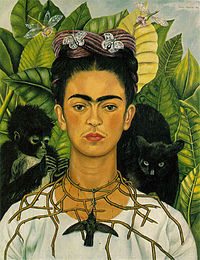
Frida Kahlo: doing selfies before it was cool

Frida Kahlo: doing selfies before it was cool

Nelson herself admits that “The real problem relates to conformity” – but unfortunately her morality-tale (clearly sensationalised by the paper, e.g. the byline “a cut-throat sexual rat race”) doesn’t leave room for a more in-depth look at how she herself engages online aside from her general, mostly generalised, examples. It seems to me that there are more interesting questions to ask about being a young person on social media if we can put aside our immediate reactions, dry our sweaty brows for a minute and calm our anxiety over the “youth of today”.

The point is, why not suspend judgement and condemnation of these girls and their online practices? Let’s think of some new ways to engage with questions of technology, sexuality and gendered bodies…without all the panic.

Makeovers and Mistakes: What Does Bravery Look Like?

Princess-Merida-before-an-009

Merida “before” (left) and “after” (right)

The recent controversy over Disney’s “makeover” of Brave character Merida, has been troubling me. CGI-Merida, hero of the 2012 the film, was stylistically re-designed as part of a re-branding of many of the Disney Princesses. Last week, website A Mighty Girl started a change.org petition to have Disney revoke Merida’s new look. The content of the petition gives a sense of the kind of reaction the new image garnered. It states:

The redesign of Merida in advance of her official induction to the Disney Princess collection does a tremendous disservice to the millions of children for whom Merida is an empowering role model who speaks to girls’ capacity to be change agents in the world rather than just trophies to be admired. Moreover, by making her skinnier, sexier and more mature in appearance, you are sending a message to girls that the original, realistic, teenage-appearing version of Merida is inferior; that for girls and women to have value — to be recognized as true princesses — they must conform to a narrow definition of beauty.

What is perhaps more concerning than the "new" looks is how their heads each differ vastly in size. Snow White looks like she could literally eat Cinderella.

What is perhaps more concerning than the “new” looks is how their heads each differ vastly in size. Snow White looks like she could literally eat Cinderella.

As it is, the campaign quickly gained over 200,000 supporters and Disney have apparently withdrawn the new Merida concept from their website (though they have manufactured a doll version that people aren’t happy about either). I first heard about Merida’s new look through my university women’s department, and my response was (literally, a Facebook comment): “Brave can be sexy too?” But it seems I was in the minority with this viewpoint. And while I can support the argument that representations of princesses should perhaps include more diversity in general, I have found most of the reactions deeply troubling and indeed to be inadvertantly reinforcing gender stereotypes. Let’s consider what people have been saying about Merida and the “makeover” (I’ve highlighted some of the more troubling bits):

  • The Mail Online writes: “Unlike most other Disney heroines, the animation character of Princess Merida looked like a real girl
  • The LA Times writes: “Among the modifications: Merida’s long mane of red curls has been defrizzed, her neckline has plunged, her waistline has narrowed and her wide-eyed, round face has been angled. She’s also got eyeliner.”
  • The Christian Science Monitor writes: “Let’s review the chief problems:They took a strong character and weakened her; They took a natural beauty and glamorized her; They took a youthful 16-year-old and made her look like she’s 22; They disrespected the fact that Merida is a princess who goes against the grain, eschewing the trappings of being a princess in favor of being an individual.”
  • Jezebel writes: “As you can see, her eyes are wider, her waist is smaller, her hair is sleeker, and her dress is sparkly as shit.”
  • Brave co-director Brenda Chapman has also been reported as saying, “‘When little girls say they like [the new toy] because it’s more sparkly, that’s all fine and good but, subconsciously, they are soaking in the sexy “come-hither” look and the skinny aspect of the new version.”
towardthestars

“Keep Merida Brave!”: one of the most problematic slogans of the campaign

However, there was one voice that went against the grain. Disney. Executive Catherine Connors writes: “It doesn’t matter what iterations of Merida are out there in the culture – Merida is Merida, and the essence of who she is is defined by the girls who embrace her”

While I remain skeptical about the intentions of any big-wigs intent on selling things to people, I can’t help but agree with Connors. Aside from the fact that I think a lot of the descriptions sensationalised how different the new image is (“plunging” neckline?!), much of the backlash focused on how the image of “new” Merida somehow inherently contained messages that:

  • There is such a thing as looking like a real girl (and it’s not “new” Merida!)
  • Things like wearing makeup and being sparkly/glamorous signify weakness (never bravery!)
  • This is all part of the sexualisation and brainwashing of children (let’s not teach our children critical thinking skills, let’s try and eliminate these kinds of representations!)

As someone who cares a lot about the possibilities of “femme” and subverting expectations despite “heteronormative” appearances, the language and assumptions of the Merida petition concern me. When we suggest chucking out one representation for another, what other norms are we in fact supporting or reinforcing? What limits are we too putting on expression?

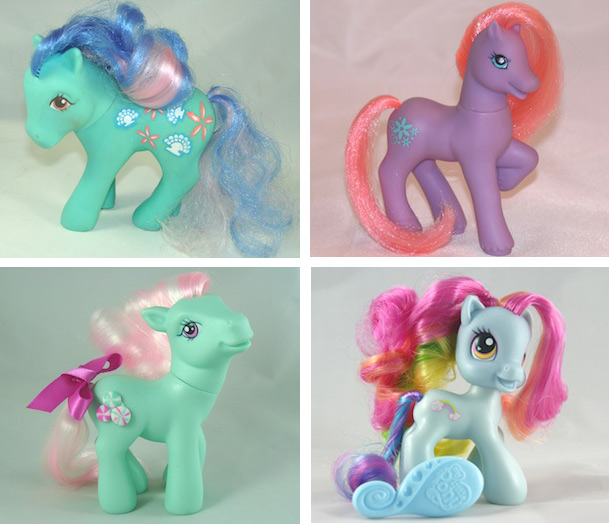
My Little Ponies have changed a lot over the years... yet they are still just as awesome (if not awesomer) than ever

My Little Ponies have changed a lot over the years… yet they are still as awesome as ever

I love this post from The Afictionado that argues for acknowledging that all kinds of different “types” of girls can wield power. They write: “You can be a tomboy or a girly girl, or a hard-working student or a lazy scatterbrain, and it’s all okay. And any of these qualities still allows you to pick up your wand and save the world.”

So, when Disney says, “Merida exemplifies what it means to be a Disney Princess through being brave, passionate, and confident, and she remains the same strong and determined Merida from the movie whose inner qualities have inspired moms and daughters around the world” maybe we should listen. Maybe we need to take a look at the kind of assumptions we are making about what a “typically” feminine appearance can versus cannot possibly signify. After all, isn’t courage about being, not looking, brave?

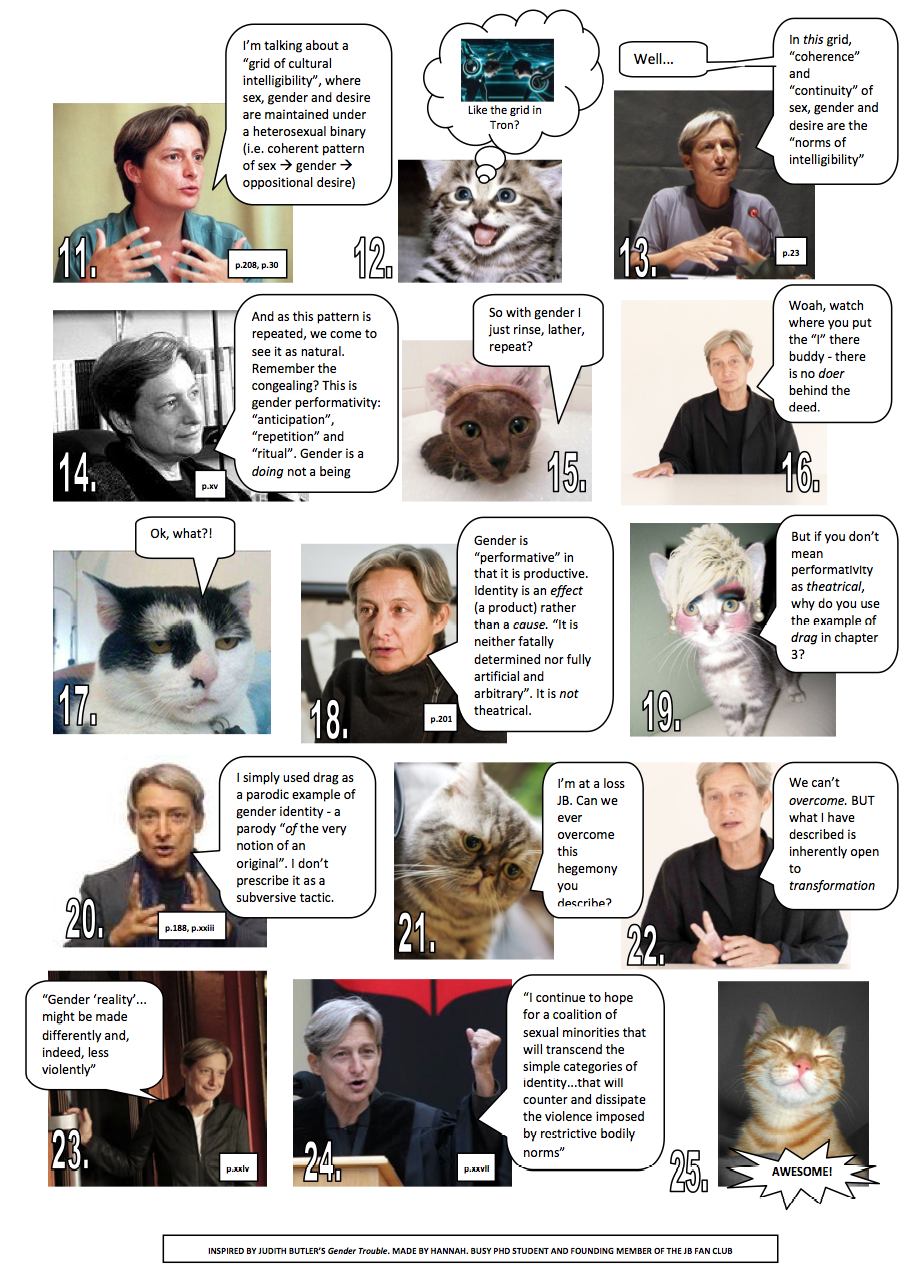
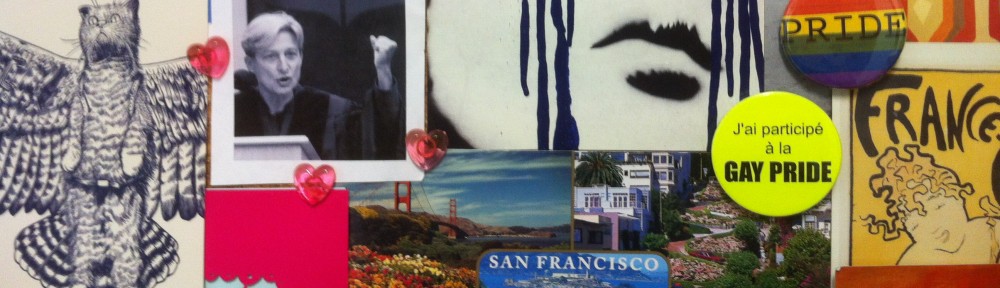
Judith Butler Explained with Cats

Following hot on the heels of Foucault Explained with Hipsters, here’s JB’s Gender Trouble  explained in Socratic dialogue style. With cats.

B1

B2


All page references from Butler, J. (1990 [2008: 1999]). Gender Trouble: Feminism and the Subversion of Identity. New York; London: Routledge.

Got any more ideas for philosophy/sociology/gender theory you’d like to see explained in comic form? Let me know in the comments below.

Spectacular Satire? Seth MacFarlane and Boobs at the Oscars

Seth MacFarlane: practically a Nazi

Seth MacFarlane: practically a Nazi

There’s a lot going around today about the fiasco that was Seth MacFarlane’s hosting performance at the Oscars on the weekend. Most notably this has focused on his “We Saw Your Boobs” opening number that had him sing out a list of all the women’s boobs that have appeared on film. And as salon.com covered today, many of these references refer to films in which women are exposed during rape or other violent scenes.

I had a few mixed feelings when I saw the clip. These included: an initial reaction of confused laughter and OH MY GOD I CANNOT BELIEVE THIS IS REAL*; amazement that the broadcast also showed the uncensored disdain of the women mentioned as they listened from the audience*; agreement that Anne Hathaway’s boobs in Brokeback Mountain were memorably great; and disgust at the likes of Hilary Swank’s boobs being noted considering it was in the context of Boys Don’t Cry. All in all I found the whole thing both upsetting and spectacular for what it illustrated.

544205_489351247767905_351580930_n

Naomi Watts and Charlize Theron react to the song*

It’s too easy to critique MacFarlane, creator of Family Guy (arguably a whole other kettle of satire or problems depending on how you look at it), as the douche who sang a rapey song about boobs. I’m sure he’s going to cop some hate mail and death threats over this incident (that seems to be the common response to offence in these days of identity politics). But how did this actually happen in the first place? Given the notoriously male-dominated arena that is the Oscars (not to mention the fact that no women directors pretty much EVER get nominated), doesn’t this whole episode kind of say in big blaring letters- Hollywood: Reducing Female Actors to Boobs Since 1929?

Anne Hathaway: wonderful boobs, incredible actor

Anne Hathaway: wonderful boobs, incredible actor

Rather than look at MacFarlane as an individual sexist they just happened to let run the gig why not see it for what it shows up? The women mentioned were clearly not ok with this reduction of their acting to their body parts, and nor should they be. The internet has leapt up and started talking about just how not okay it is.

I’m not heralding MacFarlane as some kind of comic genius, but I think we need to look a bit deeper.  And I don’t give a shit about intention, but clearly whether he intended it to be satirical or not, that song caused a lot of offence and probably on the flip side of that a lot of laughter not based on how absurd the premise is. I’m not saying “lighten up”- the specific references in the songs were horrifying. But surely this means we could be focusing on this aspect: wow, how fucking insane is the idea that women are only good as boobs in films. So insane in fact, we might laugh…

*NOTE: Since writing this post I have been made aware that the segment was not “real” in so far as the song was framed within the context of “imagine if…” (much like movies that end poorly with “it was aaaall a dream”) and that the reactions of Watts and Theron were thus pre-recorded. The points of this article however, stand, particularly considering how easily this material is accessed on the internet out of “context” and the reaction it has garnered as a result.

Worried about your body? Join the club.

I haven’t always had a super happy relationship with my body, but it’s only been the last little while that I’ve really started to care properly about my weight. And when I say properly I mean, get obsessive.

In high school I was too distracted with worries about my ubiquitous dark body hair and small bust to think much about weight. My genetic predisposition/height/beach lifestyle/youth meant that I ate crap-tonnes of chips and never really worried about my midsection. Plus my mum raised me with an extremely good ethic of “love who you are“, and never spoke about dieting or an obsession with losing weight herself. When I got to uni, I would prance around in teeny shorts, still revelling in my 19-year-old metabolism. But I remember the day I started caring. I was 21, and I looked in the mirror at my bum and though, “Oh, right. Shit.” That moment didn’t really alter my eating or exercising behaviour much, though I did start covering up more. Mostly all I got was an unhealthy dose of body-angst.

I’ve always been someone who rejects “diets” and been the first to tell my friends who are trying to lose weight that they are crazy and don’t actually need to change a thing. Now I’m 26 and I’m not sure what triggered it in the last month or two, but I started to pay attention to my body a lot more. I decided I would try and take control of my eating and exercising. As soon as I started “calorie counting” and swapping hot chocolates for tea, and pasta for mountain wraps, I became a lot more aware of just how starving some people (especially famous people) must actually be. I’ve been trying to eat “well” and exercise a significant amount, but it makes me wonder- heck those famous people must be eating air to stay as thin as they are. And damn, they must be cranky!

It turns out yes, Jennifer Aniston for one is rumoured to have eaten the same salad for her entire decade on Friends. Just one type of salad. For 10 years!

I’m not on a crazy one-salad diet, but in the last month or so I have changed my eating habits, lost some weight and toned up a bit. But I’ve also become fairly obsessed about food and how I look, and that sure seems like a bung trade-off. I think I was lucky to have escaped the weight game for so long. Though I agree that magazines perpetuate unhealthy stereotypes of bodies, I don’t think you can just “blame the media“. These kind of critiques flatten our understanding of how ideas of what is “normal” perpetuate in society, and I hate to say it, but I think most of the time it comes down to ourselves – we are effectively policing each other’s bodies, every day.

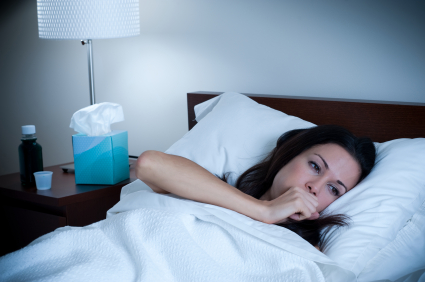
“Well, at least this debilitating illness is making me thinner….”

Example 1: You comment to someone, “oh, have you lost weight?”. They might immediately feel self-conscious that you have been silently judging their weight in the first place (“you thought I was fat before?!”) while simultaneously proud that they look thinner (and who knows, maybe they’ve lost weight because they have swine flu…)

Example 2: You complain to someone that you feel “so fat” and are trying to lose weight or are on a diet. This often comes up when you are buying/eating food together. The other person might immediately feel guilty for not doing the same act of abnegation.

Example 3: You judge the crap out of your own body. If you get in a judgey state of mind, there is no way that you are not judging everyone around you and comparing yourself to them. It’s a negative cycle with all roads leading to judge town, population: you.

Then of course, there are the overt examples of you or others blatantly commenting on weight or size, “you could exercise more”, “you are too skinny”, etc etc (or my personal favourite: I bought a packet of Oreos to a work meeting, and one of my colleagues told me I should “watch [my] arms”). If we simply blame the media, we miss the fact that we open up Vogue and condemn the lack of diverse bodies on the one hand, and then all secretly download calorie counting apps and don’t have a tim-tam when it comes to afternoon tea, on the other. We are promulgating the issue, just by the fact that we don’t acknowledge just how much we are really judging ourselves.

There’s obviously no simple remedy to this (except maybe watching a local Roller Derby game to remember that kicking-ass comes in all shapes and sizes). But perhaps, if we can’t stop judging ourselves – and by that standard others – maybe we can at least admit that we are. We need to think: when we are watching weight, is that all that we are really watching?


Babyz in the Hood: Girlhood Aspirations Then and Now

Yesterday I came across this amazing song from the Muppet Babies circa 1984:

I had a dawning realisation that 1984 is getting to be quite a long time ago now (*gasp*) and that the kids that would have watched Muppet Babies would already be in their mid to late thirties. With this in mind, I started to think: do the lyrics of the song give us some insight into girls’ childhood aspirations of the time, and, are these aspirations playing out in the lives of the thirty somethings as we speak?

Baby Miss Piggy sings: I’m gonna be a movie star/ And I’m gonna learn to drive a car/ Gonna be a veterinarian too/ And I’m gonna always love you/ I’ll be the cutest model you ever saw/ Then I think I’ll study criminal law/ And I’m gonna scuba dive too/ And I’m gonna always love you/ I’ll be a doctor for diseases/ And help you with your sneezes/ And practice neurosurgery on your brain!/ Gonna climb the Matterhorn/ But only after all our children are born/ ‘Cause I want to be a good mommy too! / And I’m gonna always love you!

The song conveys the idea that baby Miss Piggy aspires to be good looking, outgoing, have children and a successful career. I couldn’t help being reminded of all of the contemporary writing on the “problem” of the modern woman that thinks she can have it all. There’s a lot of writing on it, so I won’t go into the debate here. Suffice to say that my take on it is that perhaps we need to focus more on supporting shared parenting responsibilities and part-time work arrangements rather than arguing either that: women should be and do everything OR that women should simply choose. While I’m not sure that Muppet Babies are to blame for this particular issue, it did get me wondering what kind of girlhood aspirations are currently being represented on television.

Then I came across this (I suggest only watching two minutes maximum, it is quite painful):

This clip is care of the Bratz Babyz film 2006. The lyrics for the song at the beginning of this are: Put on your makeup/ Fix your hair/ No time to take up deciding what to wear/ It’s now or never/ You can’t slow down/ Gotta get it together/ Cos time is running out/ Final count down/ Get ready now/ 5, 4, 3, 2, 1/ Gotta be hotter than hot/ You just have to rock/ No time to stop/ ready or not/ Gotta look hotter than hot/ Gotta show what you got/ No more time on the clock/ Ready or not

As the lyrics and visuals reveal, girlhood aspirations portrayed in Bratz are heavily tied up with wearing makeup and overcoming the burden of choice, that is, what colour dress to wear (!) Amazingly, the characters in the clip shown are babies, not full grown “Bratz”. The baby Bratz world reveals that even toddlers are concerned with matching their lipstick with their outfit. Now, I don’t want to get all down on femininity. I love lipstick. I do. But babies concerned with being “hotter than hot”? I have to admit this is slightly concerning. Not least because it infuses a focus on consumption even further into childhood. As a member of society well and truly down that rabbit hole, I would only hope that people in their younger years could put this off as long as possible.

A girl showing her Bratz inspired face paint

But aside from capitalist concerns, it also seems to flatten aspirations- sure, baby Miss Piggy wanted to be a hot model, but she wanted to perform neurosurgery on your brain too! On the other hand, while some may say it is precisely toys such as Bratz dolls that contribute to the media’s sexualisation of children, the Bratz movie also reveals an abstraction of femininity from sexuality. No longer is femininity about being a perfect woman for a man, it’s just about indulging in femininity, pure and simple…

By my calculations (considering that the Bratz range came out in 2001), the Bratz generation should be in their mid-late teens/ early twenties by now. In the end, what future do these lyrics foretell for the up and coming generation of women? How will they differ from the Muppet Babies generation before them? Only time will tell…

Darth Penis vs. The Training of Men

Ok, so it may seem like a silly task to dissect a flippant popular culture article (although, that is mostly what is done on this blog). However, I got some referrals to this cracked.com article today titled, ‘5 Ways Modern Men Are Trained to Hate Women‘, and by popular demand, thought I would give a considered response. Incase you can’t be bothered looking at the article, here’s the five basic tenets of its argument:

– Boys are indoctrinated with the idea that one day they will be “rewarded” for their efforts in life, with a hot chick. When this doesn’t work out in life, this makes men inevitably turn into the Hulk (that is to say, angry, not giant and green)

– Boys learn that women must always be pretty and decorative eye-candy. They can have a brain/be people too, but they also (mostly) have to be hot. Again, when this is not the case, HULK SMASH

– Men have penises that they can’t help touching (e.g. in public places), they are super horny creatures that just want to get laid 24/7. So when a girl “shows too much skin” this is a major tease, which brings out the big, green, angry man

– Men think that since childhood, women have gradually emasculated their “core male urges” (e.g. stopped them from showing their penis to strangers as a child). This makes men embarrassed and spiteful

– Men are OBSESSED with sex. That is why men have created civilization. To get the hot chicks. The hot chicks which they actually, will probably not get. The hot chicks who they will not get, who show too much skin, and have emasculated them. This all causes resentment and a BUCKET LOAD OF ANGER. HUUUULK

All in all this article reads as a kind of feminist take on why men subordinate women. To be fair, I think that this article is well-intentioned, and has mostly come about in response to the truly misogynous comments made by Rush Limbaugh in the USA recently. However, there are some very, very concerning assumptions made in it, that should be pointed out. The main problem with this article is that it reinforces some pretty serious stereotypes about men and women, even though it is actually trying to challenge some of them. How’s that? Well…

In some respects, this article presents a blurred line between the “constructed” and the “real”. While the article is keen to preach the things that men are “taught”, is also relies on a bunch of statements about men’s “nature”. So while men’s thoughts about being owed sexy women is something that they have learnt, they have an anger-response and ridiculous sex drive that is intrinsic to being a man. The proof in this “base-urge” pudding is given as neuroscience findings, possibly higher testosterone levels in men, evolutionary factors, and/or “maybe society has trained us to be like this”. Despite this little construction-disclaimer (we learned to have these crazy base urges), the article still paints this as a kind of man-truth.

The article actually gets close to questioning the naturalness of the “man” category in point #2, recognising the kind of enforcements of male masculinity often seen in popular culture, but then goes back to talking about how when men are boys “Darth Penis” rules their primal urges to wave their wang in the face of women. So, in all of these senses, this article actually reifies what men are like, in the way in which it talks about the “nature of men”.

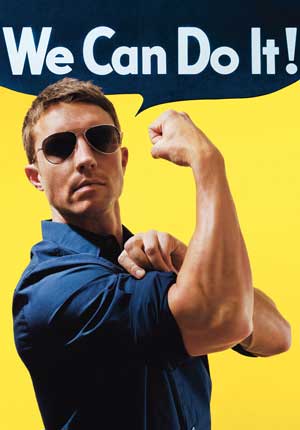
Most problematically, when we get to point #1 of the article, that men have constructed civilization to get some lady lovin’, but will forever remain bitter and twisted about it, I can’t help thinking of this:

"I have turned the world upside down"

In the end, I think it’s great to have discussion about what we absorb from the gender norms perpetuated in society- it’s just a shame that often in our questioning, we end up reinforcing the idea that “men” and “women” are discrete and stable categorical realities, and we end up driving that gender binary wedge just a little deeper.

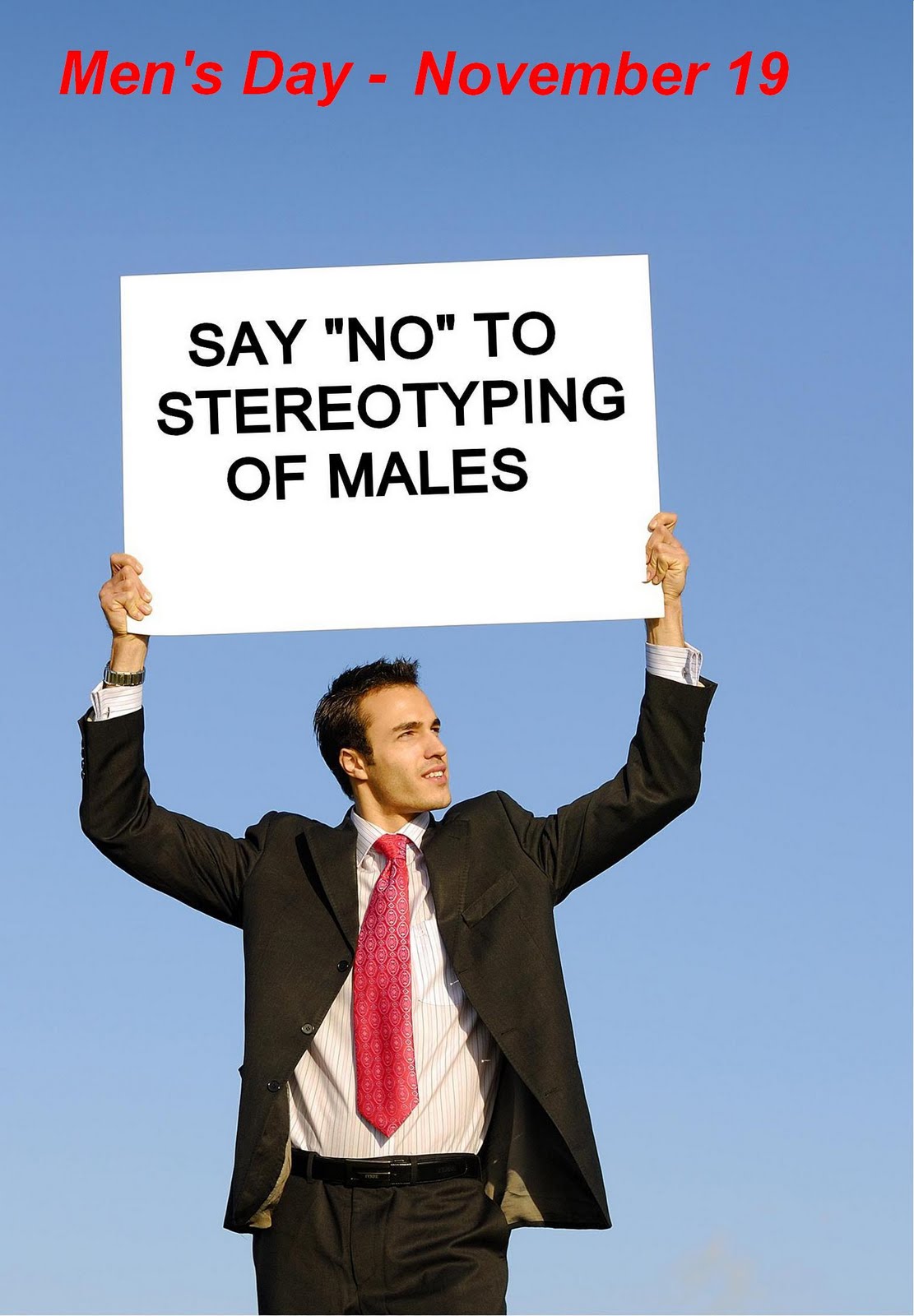
Men, and International Women’s Day

Today I went to a luncheon for International Women’s Day (IWD). The room was full of hundreds of (mostly) women, from many different sectors in the community. Being there, listening to speakers on the topic of “women” (mostly focusing on the need to enhance the lives of women in developing nations), I had some deep pangs of uncertainty. As I sat there, eating my posh lunch and sipping Pinot Grigio, I couldn’t help but ask myself, what does it even mean to be a woman? Should I be proud? What does it mean to be an “empowered” woman? Where do men figure into this?…

It felt to me like the “feminist” bent of the meet was to say “look, there’s still work to be done sisterhood, keep up the good fight!”. Not a single speech considered the relevance of feminism or the importance of challenging gendered assumptions. But I was torn – while I sat there wishing we could instead have an “International Question-the-Binary Day”, I was also struck by the fact that the lived experience of many women around the world is profoundly disturbing and must be addressed (and, admittedly many women in need may not be helped much by my proposed academic gender-deconstruction talk-fest). I think that some of my existential angst sprung from the fact that I felt a deep concern over my relationship to the women overseas being spoken about, considering my apparent academic Western ivory tower.

Though I didn’t quite come to terms with these cultural qualms, I was also still stuck on the issue of the day being so overtly gendered. The old adage often brought up on this day is, “why isn’t there an International Men’s Day?” with the reply “every day is International Men’s Day!” This oft quoted interlude is problematic for several reasons:

1. There is actually an International Men’s Day. November 19. Look it up. This is not to be confused with Men’s World Day– an event celebrated in Austria in the early 2000’s, awarding “exemplary” men (including the Bee Gees). Funnily enough the day was criticised for it’s gender-exclusivity and after being renamed, the main event is now (rather ironically) called the “Women’s World Awards“.

2. Promoting the idea that every day except this one is a default men’s day kind of reinforces the whole notion that every day is men’s day. It’s a catch-22. At what point do the days stop being gendered? Is there a point of “progress” where we finally sit back and go, “yep, equality achieved!”?

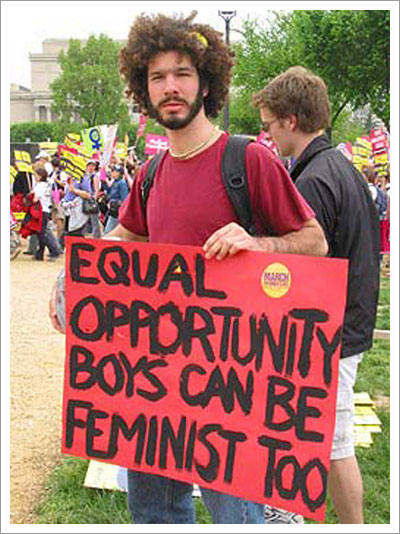
With these points in mind, I think that there is a fundamental problem with the current approach to women’s “equality” in the Western world, in that it often involves a tactic of “tipping of the scales“. This is an affirmative action strategy that says: to make up for all of the years of oppression and male privilege, women are now the ones that should be privileged. And often IWD involves celebrating the achievements of women, which is great, until it slips into essentialist generalisations about how women “keep the world together“. The thing that this particular mode of feminism overlooks is, well, men (and don’t even get me started on how this whole thing forgets people that don’t fit neatly into the man/woman gender binary!). Instead of focusing solely on “empowering” women to do anything, shouldn’t we be doing the same for men (and actually everyone despite gender), so that we achieve some balance and so that women aren’t expected to do everything?

We should be supporting men (and everyone!) in parental roles, men as caregivers and carers, celebrating the men that are community sector workers, teachers and nurses – i.e. men that do “traditional women’s roles”. As well as promoting women to be engineers, we should encourage men to enter primary school teaching. Instead, we just focus on the women – and that, I think, puts both a burden on women and denigrates men (and everyone outside the binary) in our society.

What about the men that we love? What about the men in our lives that are gentle and caring and believe in equality, but that get overlooked for scholarships, jobs and other positions because they are not women or are not cut throat competitors? And how on earth can we really empower women around the world, if we turn a blind eye to the role of men in these societies? What about the men in the world that are feminists? Surely we should celebrate and encourage them too. In the end, I appreciate International Women’s Day- I just don’t want to forget about men along the way.

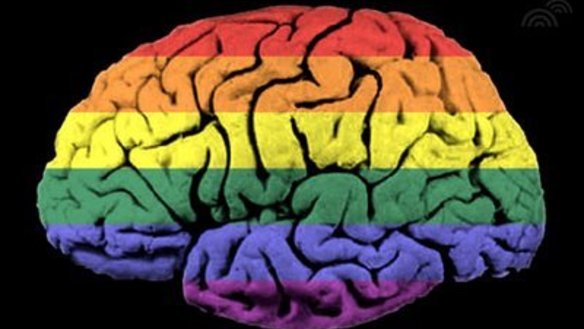
Brain love and tear drops: the science of emotion

I came across Brent Hoff’s mini-documentary The Love Competition yesterday. Hoff, in conjunction with a bunch of Stanford University neuroscientists, ran and filmed a contest to see who could [neurochemically] love the most. It’s beautifully filmed, and Hoff approaches each individual that is interviewed with a gentle curiosity.

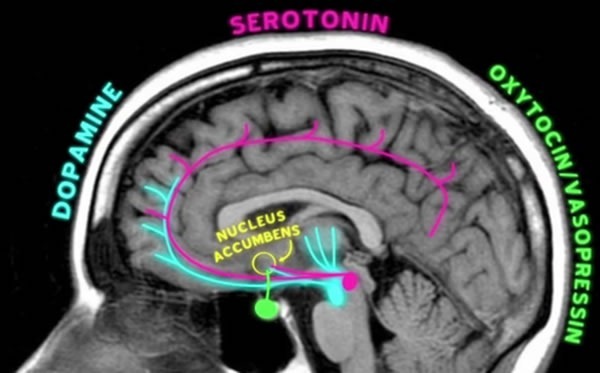
So how does one measure love? Aside from the general arm-span-width measure (“I love you this much!“), one might think that there’s not much concrete to go by. Hoff and his science buddies beg to differ. The love experiment placed contestants in an fMRI machine while they focused on their “love” emotion (and the object of their love). After the scanning was complete, the scientists measured activity levels in the brain regions most commonly associated with love.

But, despite the friendly and somewhat heartwarming nature of this doco, I can’t help feeling a bit dismayed by the whole notion that love is located in the brain. For one, love is abstract. Reducing it down to three brain pathways seems incredibly erroneous. I feel like trying to measure love with an fMRI machine is akin to attempting to understanding the ocean through examining some grains of sand on the beach- misguided.

Second, love is complex and diverse. What’s fantastic about the group of people selected for The Love Competition is that they all have extremely different notions of love, and focus on a vast array of love “objects” when they are in the machine. I particularly like the woman who decides to focus on love as internal and generated through chakra meditation- how interesting!

Third, I’m not sure how neuroscientists actually get to a point where they go, “yep, these are the love pathways“. The process of thinking love/ measuring thinking love/ ascertaining love areas/ getting someone else to think love/ measuring them against love areas- well, the whole thing seems like a self-fulfilling prophecy. What gets missed in this process?

Lastly, locating social concepts such as love in the brain can never end well. What if someone was put in the machine that could never produce any “love” activity- would we label them a sociopath? Does the woman crying at the end love her husband of 50 years less than he loves her?

Like Ron Burgundy reminds us, “You’re just a woman with a small brain. With a brain a third the size of ours. It’s science“.

It’s interesting to contrast The Love Competition with Hoff’s earlier work, The Crying Competition (don’t ask me why all these emotions have to involve competing, but whatever). In this, four men struggle so hard to produce a single teardrop that they quit after half an hour. When a woman sits down at the end, it takes just 20 seconds to deliver the salty goods. I think it’s easy to walk away from this video with a strong contention that men don’t [or can’t] cry. Certainly biological elements may factor into this (fluctuating levels of hormones certainly seem to make me tear up at some stages on the calendar). But what else might be going on?

Well, listening to the commentary from the men in the video almost seems to reveal an uncertainty about how to “get in touch” with emotions that lead to tears. I can’t help but wonder how much of this is a product of socialisation- a deep internalisation of the norm that men do not cry. But if we leave The Crying Competition video promulgating it as “proof” that men don’t cry, we perpetuate the very sentiment. 

I think that at the end of the day, what the Crying and Love competitions reveal, is that human expression about feelings is far more interesting than any scientific “measures” of emotion. One man in Crying even states that he is almost crying watching himself unable to cry- perhaps mourning the abstraction between masculinity and tears that his body has incorporated. Similarly, the disparate views expressed in Love reveal that there is a plethora of human experiences that we might call love.

The fact that the brain scans couldn’t adequately reflect these different experiences of “love” as relevant brain activity, shows us that such a neurochemical interpretation of love is flawed in the first place.

The difficulty of speaking about “women”

I went to a Women of Letters event yesterday – a fantastic evening listening to some well-renowned women (including the fabulous Melanie Tait and Eva Cox) read out letters on the theme of re-writing history. After the letter-reading session, there was a panel on “divergent ways” hosted by Scissors, Paper, Pen of Canberra. But when one of the curators of Women of Letters, the talented Michaela McGuire (the other being the spunky  Marieke Hardy), was asked a question about letter-writing as gendered, I was surprised at her response. Michaela suggested that perhaps letter writing and the desire to express oneself with pen and paper (or computer and paper!) is more of an innately womanly pursuit. Furthermore, Michaela pointed out that yes, Women of Letters was made up of mostly “female” speakers.

Now, Michaela has stated in the past that she questions whether she calls herself a feminist or not, and has got some flack for running predominately woman-focused events. So given this acknowledgement I wouldn’t want to call Michaela out for her essentially essentialist statement on women. But it did remind me of the struggle that I often personally encounter with talking about “women” versus “men” as well as the problematic interchange I often make between the words “woman” and “female”.

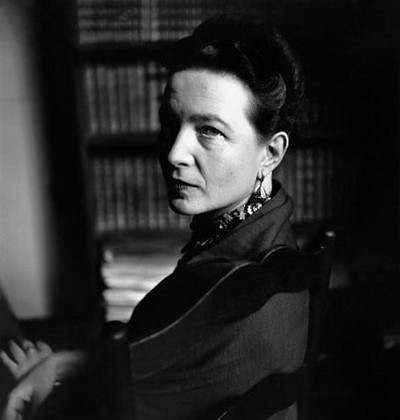
de Beauvoir: espouser of the sex/gender distinction

Simone de Beauvoir famously stated, “One is not born, but rather becomes, woman” (in the new translation by Constance Borde and Sheila Malovany-Chevalier). Following de Beauvoir, feminist writers have been keen to highlight the difference between sex and gender (of course not everyone sees it that way). On the surface of things, this argument amounts to the idea that sex is in reference to a determination male vs. female made at birth based on genitalia, while gender involves a process of acculturation, learning the expectations of what it means to be a “real” woman or a man (e.g. real men wear suits not dresses). Of course, then Judith Butler came along and posited that sex is caught up in a similar process, but that’s another story…

The point is that for the most part, much feminist writing has attempted to draw a very clear distinction between sex and gender- i.e. “female” and “woman” carry very different meanings. So while we might want to say that femaleness is biological (though this is questionable and hardly clear-cut as JB points out, and as intersex conditions demonstrate), the category of woman holds the weight of a history of socialisation involving certain gendered roles.

Then again, transgender/trans* came along and reminded us that there is a lot more to gender than just socialisation- some people desire transition from one sex and/or gender to another (or something in-between or outside of). PLUS trans* reminds us that gender isn’t just about masculinity or femininity- e.g. you can be assigned female at birth, become a man, but present as feminine (see Femme FTM). So what does it really mean when we say “woman”, “feminist” or we attempt to categorise what “women” are like? And doesn’t an awareness of the sex and gender distinction render attempts at answering any of these questions really really difficult?!

Academic and poet Denise Riley expresses her apprehension toward identity categorisations, reminding us that terms fluctuate in meaning over time and context. Nevertheless, Riley acknowledges, “While I can’t think why I’d want to utter that chilling phrase ‘speaking as a woman’, I can think of situations in which it could be my lot to cough pointedly from the back row, ‘But what about the women here?’” While I hold many concerns about using the term “feminist” (noting its tricky devotion to the gender binary), I still fill with rage, for example,  when I think about the under-representation of women in the philosophy discipline (see my philosophy women tumblr here, they do exist!- Did you know that a bunch of Pythagoras’ teachers were women? No? Well, they totally were!).

Toilet door symbols remind us that being a woman is about wearing triangle dresses

On so many recent occasions I have found myself struggling to express my feminist sentiments in non-essentialising ways. Certainly relying on the interchangeability of the terms “female” and “woman” is something I trip up on. When talking about even the most general things, such as the difference between dating men versus dating women, I am prone to making the most lurid generalisations that blur the line between sex, gender and “natural” traits. And, while I know I am guilty of this, I still cringe when I hear women speaking about their natural proclivities for sharing, being supportive and caring, etc. While we continue to promote these ideas about innate difference, we in fact produce them.

Are women more prone to letter writing? Maybe. But surely that is not something we are born with.