Makeovers and Mistakes: What Does Bravery Look Like?

Princess-Merida-before-an-009

Merida “before” (left) and “after” (right)

The recent controversy over Disney’s “makeover” of Brave character Merida, has been troubling me. CGI-Merida, hero of the 2012 the film, was stylistically re-designed as part of a re-branding of many of the Disney Princesses. Last week, website A Mighty Girl started a change.org petition to have Disney revoke Merida’s new look. The content of the petition gives a sense of the kind of reaction the new image garnered. It states:

The redesign of Merida in advance of her official induction to the Disney Princess collection does a tremendous disservice to the millions of children for whom Merida is an empowering role model who speaks to girls’ capacity to be change agents in the world rather than just trophies to be admired. Moreover, by making her skinnier, sexier and more mature in appearance, you are sending a message to girls that the original, realistic, teenage-appearing version of Merida is inferior; that for girls and women to have value — to be recognized as true princesses — they must conform to a narrow definition of beauty.

What is perhaps more concerning than the "new" looks is how their heads each differ vastly in size. Snow White looks like she could literally eat Cinderella.

What is perhaps more concerning than the “new” looks is how their heads each differ vastly in size. Snow White looks like she could literally eat Cinderella.

As it is, the campaign quickly gained over 200,000 supporters and Disney have apparently withdrawn the new Merida concept from their website (though they have manufactured a doll version that people aren’t happy about either). I first heard about Merida’s new look through my university women’s department, and my response was (literally, a Facebook comment): “Brave can be sexy too?” But it seems I was in the minority with this viewpoint. And while I can support the argument that representations of princesses should perhaps include more diversity in general, I have found most of the reactions deeply troubling and indeed to be inadvertantly reinforcing gender stereotypes. Let’s consider what people have been saying about Merida and the “makeover” (I’ve highlighted some of the more troubling bits):

  • The Mail Online writes: “Unlike most other Disney heroines, the animation character of Princess Merida looked like a real girl
  • The LA Times writes: “Among the modifications: Merida’s long mane of red curls has been defrizzed, her neckline has plunged, her waistline has narrowed and her wide-eyed, round face has been angled. She’s also got eyeliner.”
  • The Christian Science Monitor writes: “Let’s review the chief problems:They took a strong character and weakened her; They took a natural beauty and glamorized her; They took a youthful 16-year-old and made her look like she’s 22; They disrespected the fact that Merida is a princess who goes against the grain, eschewing the trappings of being a princess in favor of being an individual.”
  • Jezebel writes: “As you can see, her eyes are wider, her waist is smaller, her hair is sleeker, and her dress is sparkly as shit.”
  • Brave co-director Brenda Chapman has also been reported as saying, “‘When little girls say they like [the new toy] because it’s more sparkly, that’s all fine and good but, subconsciously, they are soaking in the sexy “come-hither” look and the skinny aspect of the new version.”
towardthestars

“Keep Merida Brave!”: one of the most problematic slogans of the campaign

However, there was one voice that went against the grain. Disney. Executive Catherine Connors writes: “It doesn’t matter what iterations of Merida are out there in the culture – Merida is Merida, and the essence of who she is is defined by the girls who embrace her”

While I remain skeptical about the intentions of any big-wigs intent on selling things to people, I can’t help but agree with Connors. Aside from the fact that I think a lot of the descriptions sensationalised how different the new image is (“plunging” neckline?!), much of the backlash focused on how the image of “new” Merida somehow inherently contained messages that:

  • There is such a thing as looking like a real girl (and it’s not “new” Merida!)
  • Things like wearing makeup and being sparkly/glamorous signify weakness (never bravery!)
  • This is all part of the sexualisation and brainwashing of children (let’s not teach our children critical thinking skills, let’s try and eliminate these kinds of representations!)

As someone who cares a lot about the possibilities of “femme” and subverting expectations despite “heteronormative” appearances, the language and assumptions of the Merida petition concern me. When we suggest chucking out one representation for another, what other norms are we in fact supporting or reinforcing? What limits are we too putting on expression?
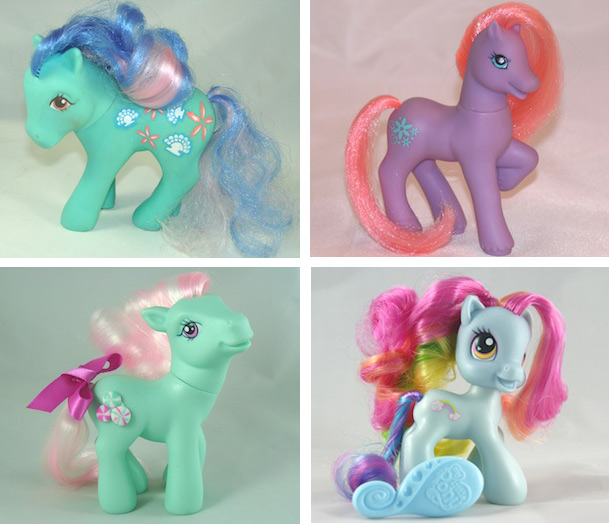
My Little Ponies have changed a lot over the years... yet they are still just as awesome (if not awesomer) than ever

My Little Ponies have changed a lot over the years… yet they are still as awesome as ever

I love this post from The Afictionado that argues for acknowledging that all kinds of different “types” of girls can wield power. They write: “You can be a tomboy or a girly girl, or a hard-working student or a lazy scatterbrain, and it’s all okay. And any of these qualities still allows you to pick up your wand and save the world.”

So, when Disney says, “Merida exemplifies what it means to be a Disney Princess through being brave, passionate, and confident, and she remains the same strong and determined Merida from the movie whose inner qualities have inspired moms and daughters around the world” maybe we should listen. Maybe we need to take a look at the kind of assumptions we are making about what a “typically” feminine appearance can versus cannot possibly signify. After all, isn’t courage about being, not looking, brave?

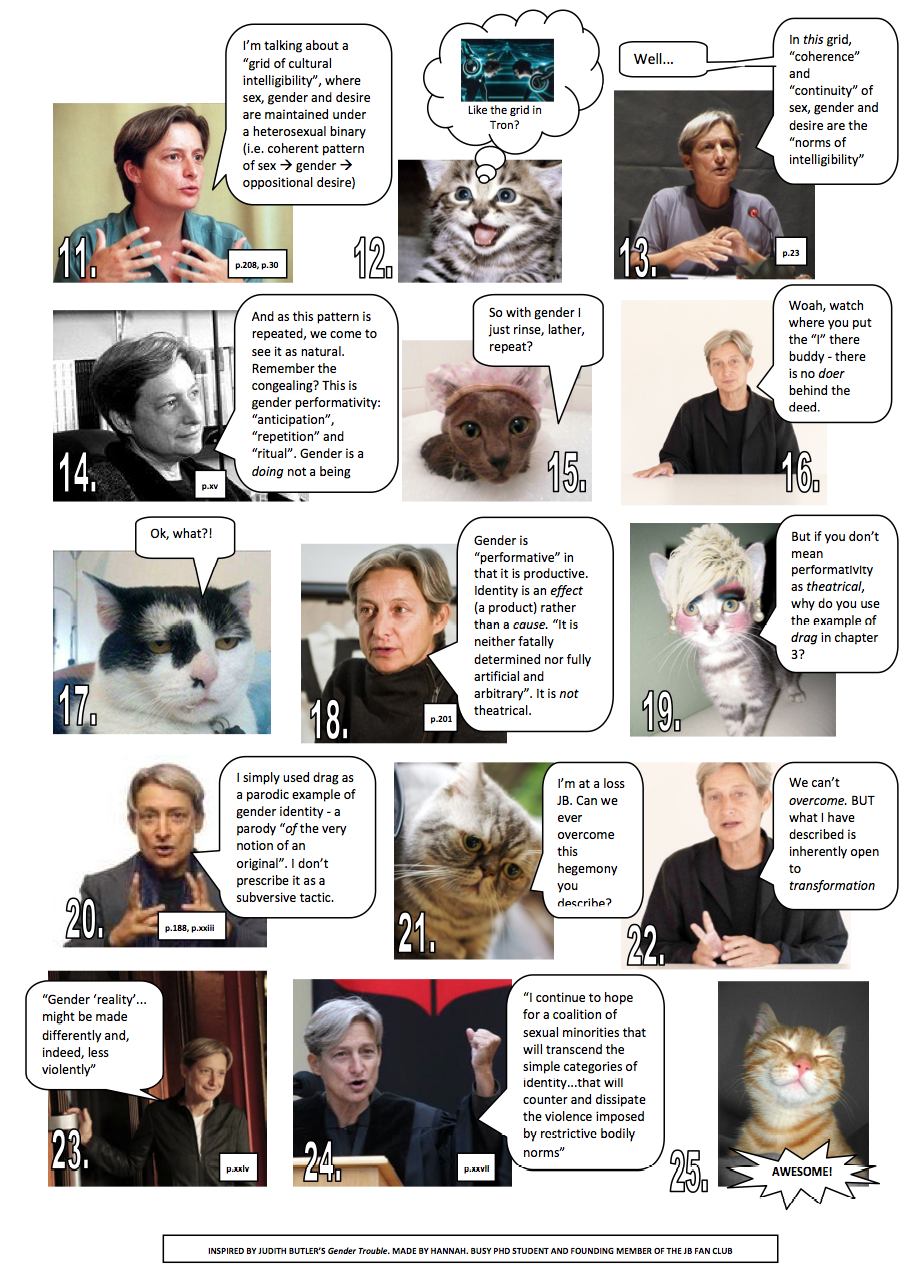
Judith Butler Explained with Cats

Following hot on the heels of Foucault Explained with Hipsters, here’s JB’s Gender Trouble  explained in Socratic dialogue style. With cats.

B1

B2


All page references from Butler, J. (1990 [2008: 1999]). Gender Trouble: Feminism and the Subversion of Identity. New York; London: Routledge.

Got any more ideas for philosophy/sociology/gender theory you’d like to see explained in comic form? Let me know in the comments below.

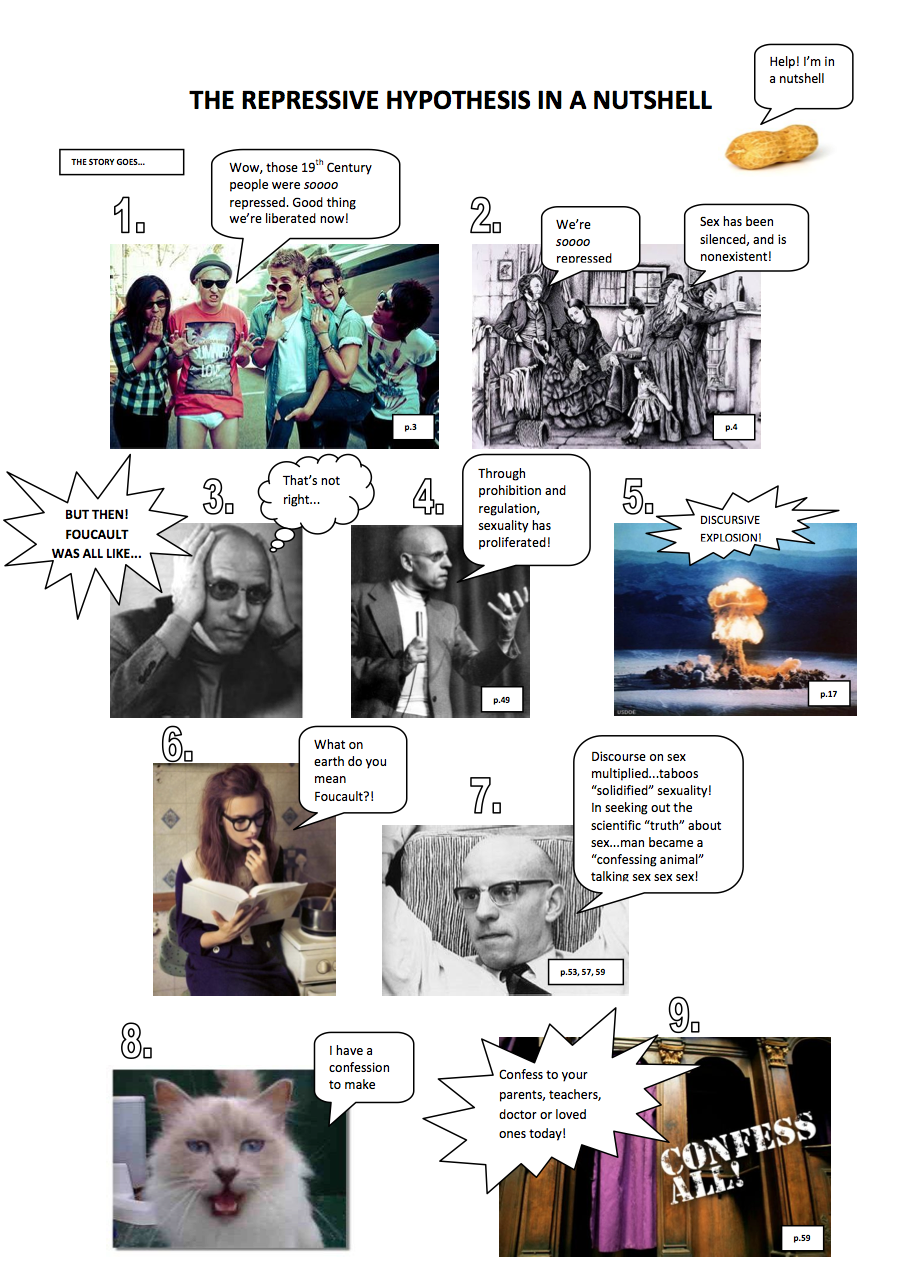
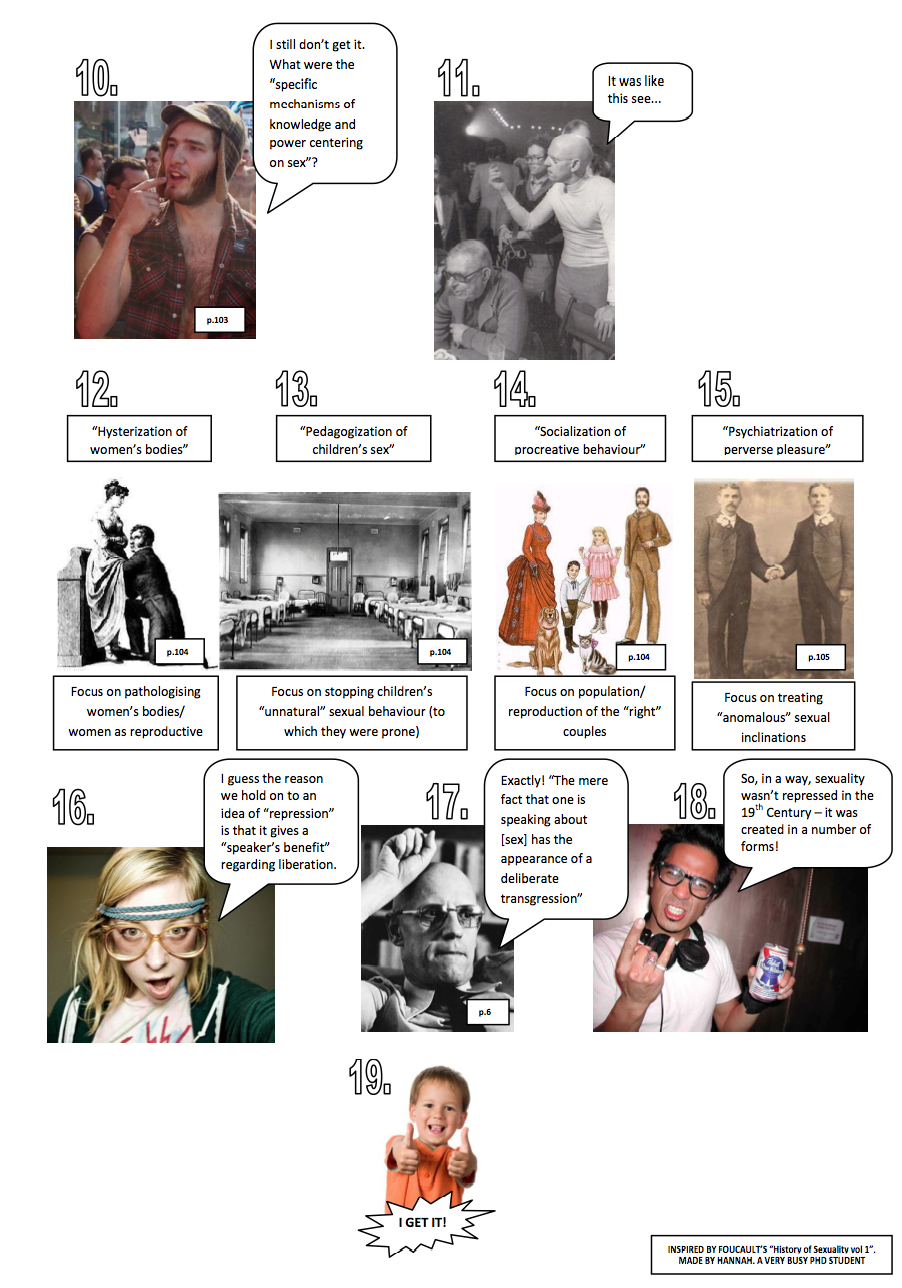
Foucault Explained with Hipsters

A comic I made for a second year gender studies course I tutored for in 2012, to help students understand some of the themes from Foucault’s The History of Sexuality Vol.1:f1

f2All page references from Foucault, M. (1976 [2008; trans 1978]), The History of Sexuality: Volume 1., R. Hurley, [trans], Victoria: Penguin Group

Stay tuned for Judith Butler explained with cats!


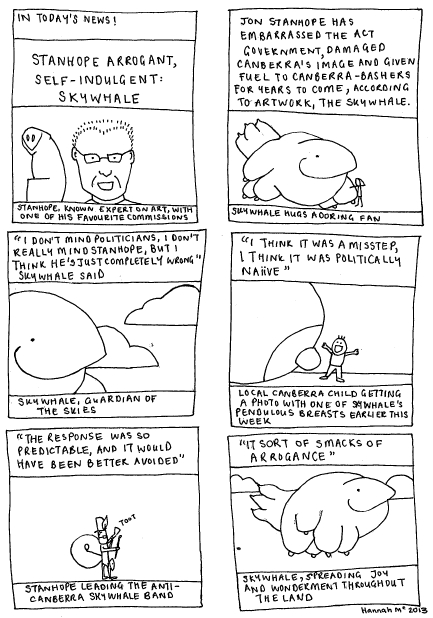
Some Thoughts on Art or: How I Learned to Stop Worrying and Love The Skywhale

art magpie

Though many Canberrans hate the art scheme, magpies on the other hand are huge fans

In Canberra we have a penchant for statues. There’s publicly-commissioned bronze on every street corner, from sheep showing you their bits to creepy parcels: if there’s a patch of spare land we’re not developing, you’ll bet we’ll be putting art on it. But some residents aren’t fans of local government spending on this kind of thing. If art is often a case of “you love it or you hate it”, it seems Canberrans more often fall on the “hate” side of the coin. I myself distinctly remember a time when I used to complain about our use of public art funding. I supported it ideologically, but used to worry that we were paying overseas artists whom our Chief Minister(s) admired, while Canberran artists missed out. I would moan about the fact that the Belconnen owl seriously looks like a penis. When art + Canberra came up in conversation I’d roll my eyes at the thought of another statue. That time was last week. So what changed?

whale

Such a cutie!

Well, we got a freaking Skywhale.

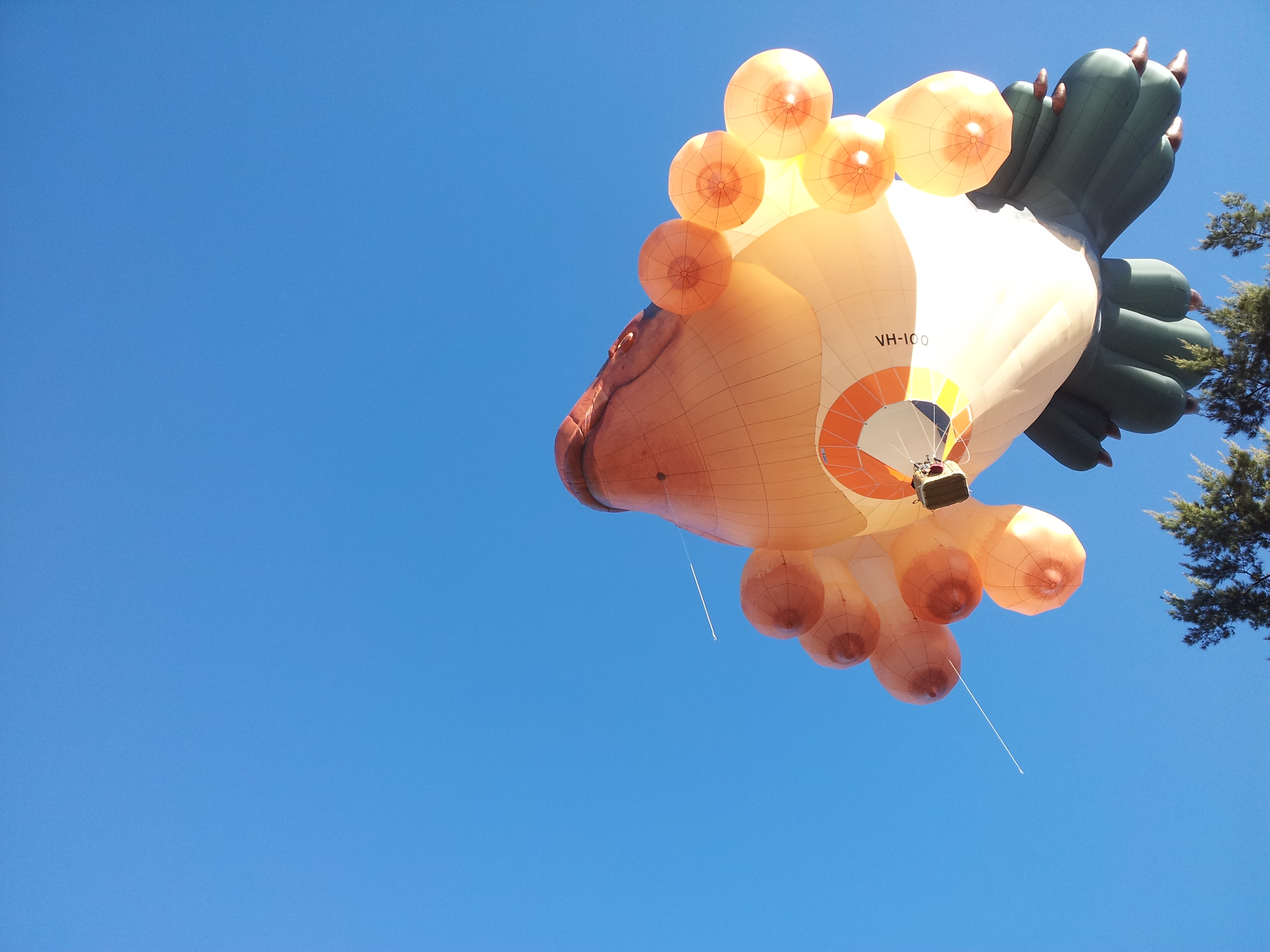
Commissioned as part of Canberra’s Centenary celebrations this year, The Skywhale is a many-mammaried chimerical hot air balloon, designed by controversial and world-renowned ex-Canberra artist Patricia Piccinini. Let’s let that sink in for a sec. OUR TOWN MADE A MAGICAL BREASTED SKY CREATURE POSSIBLE. IN BALLOON FORM. When my friends and I went to see her launch at the NGA, I felt like an exuberant child. I was literally skipping.

Ok, so I personally dig the majesty and awe of Skywhale. It comes from a combo of being a previous fan of Piccinini’s work, which always challenges ordinary conceptions of humanity and life, and the fact that I get really excited about hot air balloons (it’s a Canberra thing). But a lot of others have been outraged, and apparently it’s now being referred to as “Hindenboob”. People have been complaining that the artwork is too obscure / ugly / irrelevant / expensive / big / arty / offensive… every ire-filled rejection you can imagine.

Though a lot of the unfolding debate has been pretty amusing, it’s hard not to get down when a lot of people seem to draw the conclusion that art is a waste of money and time, or is just a big joke. I decided to ignore this depressing aspect of the discussion, and instead revel in the delight I found in Skywhale.

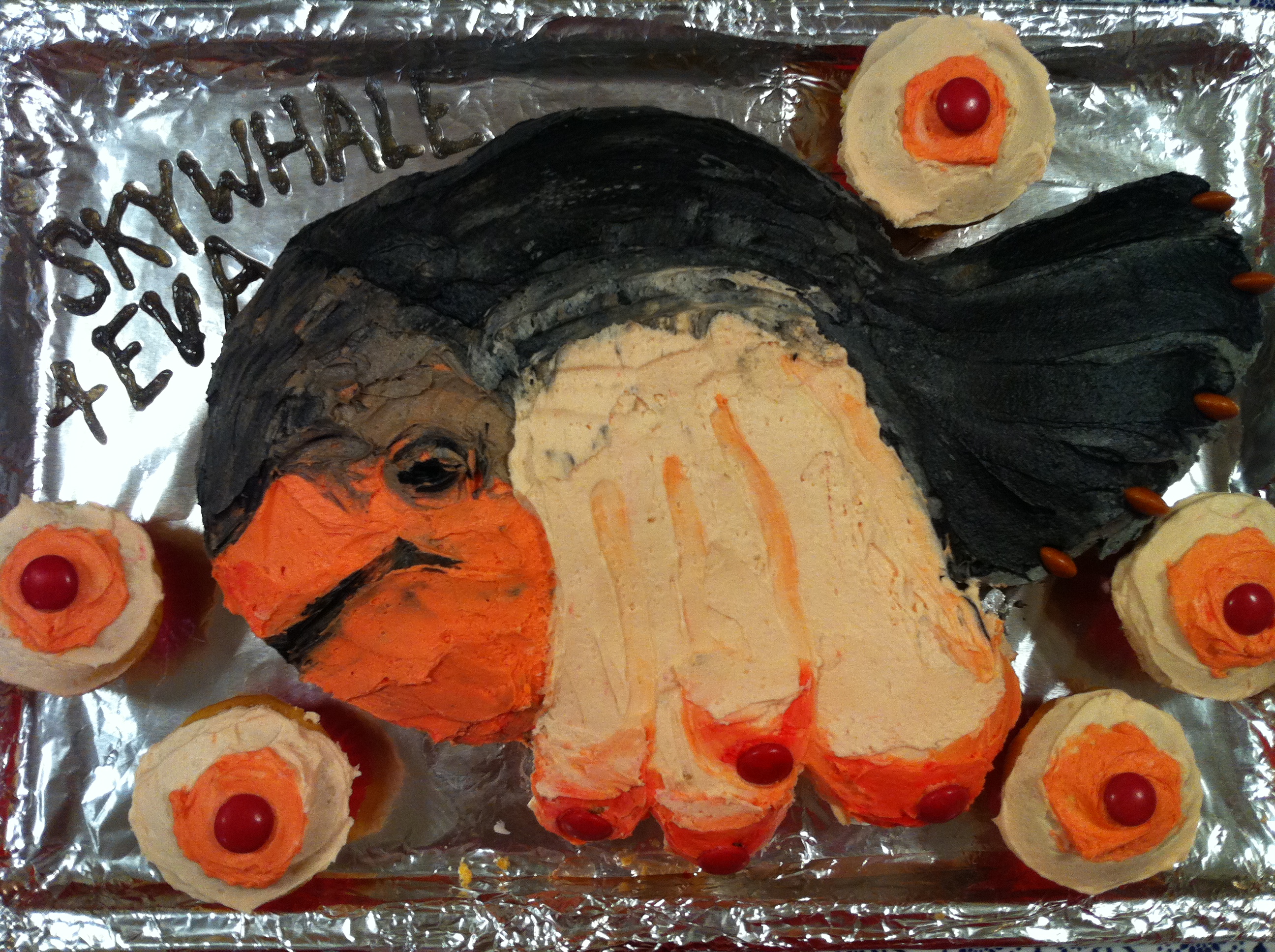
skywhale cake

Like the real Skywhale, the cake was both temporary and delicious

I was so enthused I made a cake version of her, with delicious boob-cupcakes on the side. I thought, well, the haters might be able to express disdain, but they probably won’t bother to get inventive with their complaining. They’re not exactly going to bother baking something with anti-Skywhale sentiments if they don’t dig creativity. And we all know cake speaks louder than words.

But while I am obviously a massive Skywhale fangirl, I think my personal preferences are fairly irrelevant to the general debate. While I may never be able to convince those who think public money shouldn’t be spent on art (though there are good arguments to be made in response), I can say something to those who say we don’t need art that’s too “weird” or seemingly superfluous to your average resident.

BKH8vvXCcAE1khK

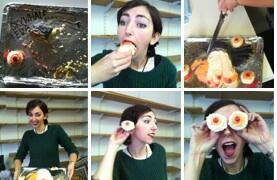
Eating the Skywhale treats

The thing is, spectacular art is often whack. If it wasn’t, it might not get us feeling, thinking, or talking. If it was just another stone in the pavement, we’d walk right over it. Had Skywhale been a big ordinary-looking whale balloon, would the despair over her cost have been so great? Would we feel at ease if there were only a singular transparent layer of meaning; comforted knowing that we wouldn’t have to deal with feelings of horror, fantasy, lust, confusion, distaste or joy sparked by encountering something strange and difficult to comprehend? Art can change us, our minds, moods, perspectives on the world – if we’re open to it.

skywhale-launch

Image source: P.S. Cottier

When I first heard about Skywhale I couldn’t believe my eyes. Had our little town truly gotten behind such a peculiar and wondrous artwork that would now be part of the contemporary art cannon?! I started looking around me at all the public art I’d previously complained about. I noticed that actually, there is a lot of work by local Canberra artists. There’s also a huge range of installations, sometimes in the strangest places, so that everyone – not just public servants or inner-city dwellers – can enjoy it. But you might say, these works are there 365 days a year, Skywhale is just fleeting hot air right…?

While Skywhale is relatively ephemeral, she’ll float through the imagination of this place for time to come. It’s just how we choose to respond to this artful memory that matters.

Cultural Citizenship, Identity Politics and Spaces of Belonging

Music brings people together...and I'm not just talking music festivals

Music brings people together…and I’m not just talking music festivals

A few weeks ago I came across this article on “cultural citizenship” as discussed by a recent panel at Harvard University. What fascinated me was the focus on conceptualising citizenship as not simply related to national identity or civic activity, but to the artistic creation of spaces of belonging with others. More specifically, this article considers how shared creative activities can engender inclusion that isn’t simply about enveloping the other in a predefined space, but is in fact about creating a new space with the other. As panellist Colin Jacobson is quoted as saying, “In order to play with someone else, you have to have a shared common ground on which to stand”.

Notably it seems that cultural citizenship is also explicitly connected with ideas about minority expression, and as this article also discusses, the importance of being able to perform significant traditional forms of music in new contexts. However, the broader theme of creativity as key to emergent spaces of belonging that does not take identity, simple “pluralism”, or assimilation as centralising concepts par excellence for notions of belonging,  I think has relevance to potentially imagining new possibilities of gender and sexuality beyond binaries like man/woman and gay/straight outside of the problematics of identity politics.

painting%20as%20universal%20language

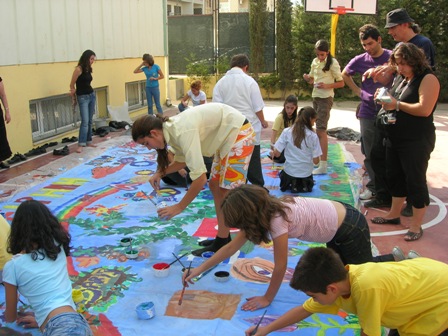
Perhaps we could see painting together as creating a space of belonging too

To test this idea, I racked my brain – could I think of an example where artistic expression is being used to develop such as space related to gender and sexuality? Then I realised, the queer choir I was part of last year does in many ways function as a model of artistic inclusivity in the Canberra community. Though the Qwire (as it is known) is also sometimes called the “Canberra Gay and Lesbian Choir” this is perhaps due more to its sexuality-politics historical roots in the 90s, than its current member base. Qwire was one of the first places where I felt very welcomed in the queer community “despite” identifying as pan/bisexual. There were of course a few people who I felt maybe weren’t so keen to chat to me once they heard I had a boyfriend. But aside from the individual-to-individual differences of orientation and opinion, the point is that as a whole Qwire is a place for singing together and thus creating a space for (literally!) expressing oneself in harmony with others. In choir I was more than just a funny sounding alto line – I was part of beautiful and complex chords.

The possibilities of artistic expression are endless...

The possibilities of artistic expression are endless…

This year I’m meant to be focusing more on study (blogging counts right? *cough*) so I’m taking a break from Qwire and enjoying being on the receiving end of many of their public performances. But when I think about my time there, the more it strikes me as a great thing to have been a part of. Often the Qwire performs at events where there might be a lot of problematic identity politics stuff going down – where questions might be being raised about only a narrow proportion of the queer community being represented, etc – but then Qwire will step up and sing, and for a moment at least those political tensions are put aside. Because Qwire is a veritable alphabet soup, and there’s a lot more joy and playfulness than there is policing of identity boundaries. And it seems to me that even if you’re just listening, you’re part of a new shared space.

Spectacular Satire? Seth MacFarlane and Boobs at the Oscars

Seth MacFarlane: practically a Nazi

Seth MacFarlane: practically a Nazi

There’s a lot going around today about the fiasco that was Seth MacFarlane’s hosting performance at the Oscars on the weekend. Most notably this has focused on his “We Saw Your Boobs” opening number that had him sing out a list of all the women’s boobs that have appeared on film. And as salon.com covered today, many of these references refer to films in which women are exposed during rape or other violent scenes.

I had a few mixed feelings when I saw the clip. These included: an initial reaction of confused laughter and OH MY GOD I CANNOT BELIEVE THIS IS REAL*; amazement that the broadcast also showed the uncensored disdain of the women mentioned as they listened from the audience*; agreement that Anne Hathaway’s boobs in Brokeback Mountain were memorably great; and disgust at the likes of Hilary Swank’s boobs being noted considering it was in the context of Boys Don’t Cry. All in all I found the whole thing both upsetting and spectacular for what it illustrated.

544205_489351247767905_351580930_n

Naomi Watts and Charlize Theron react to the song*

It’s too easy to critique MacFarlane, creator of Family Guy (arguably a whole other kettle of satire or problems depending on how you look at it), as the douche who sang a rapey song about boobs. I’m sure he’s going to cop some hate mail and death threats over this incident (that seems to be the common response to offence in these days of identity politics). But how did this actually happen in the first place? Given the notoriously male-dominated arena that is the Oscars (not to mention the fact that no women directors pretty much EVER get nominated), doesn’t this whole episode kind of say in big blaring letters- Hollywood: Reducing Female Actors to Boobs Since 1929?

Anne Hathaway: wonderful boobs, incredible actor

Anne Hathaway: wonderful boobs, incredible actor

Rather than look at MacFarlane as an individual sexist they just happened to let run the gig why not see it for what it shows up? The women mentioned were clearly not ok with this reduction of their acting to their body parts, and nor should they be. The internet has leapt up and started talking about just how not okay it is.

I’m not heralding MacFarlane as some kind of comic genius, but I think we need to look a bit deeper.  And I don’t give a shit about intention, but clearly whether he intended it to be satirical or not, that song caused a lot of offence and probably on the flip side of that a lot of laughter not based on how absurd the premise is. I’m not saying “lighten up”- the specific references in the songs were horrifying. But surely this means we could be focusing on this aspect: wow, how fucking insane is the idea that women are only good as boobs in films. So insane in fact, we might laugh…

*NOTE: Since writing this post I have been made aware that the segment was not “real” in so far as the song was framed within the context of “imagine if…” (much like movies that end poorly with “it was aaaall a dream”) and that the reactions of Watts and Theron were thus pre-recorded. The points of this article however, stand, particularly considering how easily this material is accessed on the internet out of “context” and the reaction it has garnered as a result.

Convoluted Schmonvoluted: The Value of Complex Ideas


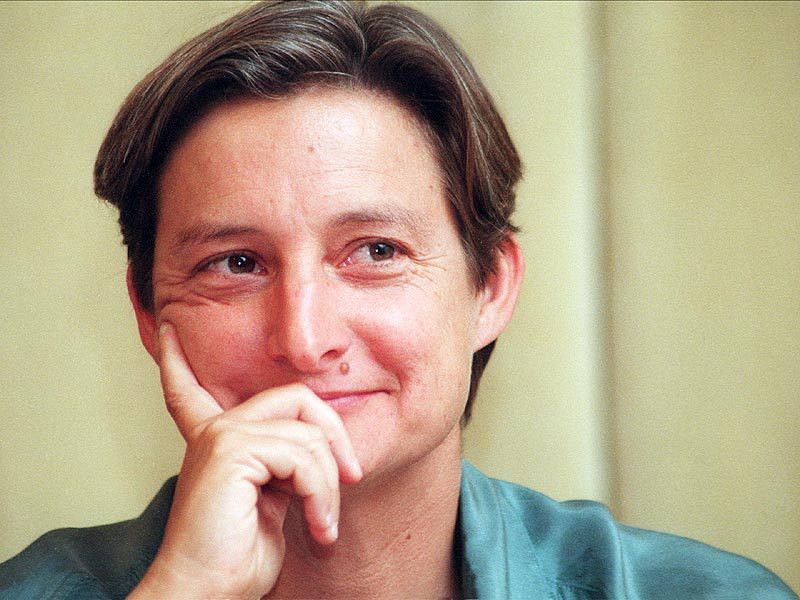
JB. So rad.

JB. So rad.

I can’t deny it, I am a giant Judith Butler fan. If there were some kind of Judith Butler club, I would be in it, vying for Junior Vice President position with a T-Shirt saying JB FANGIRL. As it happens, the closest I can get to this is writing a PhD thesis on gender, and indoctrinating teaching undergrads about the wonders of Butler’s work. But one thing that always seems to rear its obnoxious face when I mention JB, is the claim that she is notoriously difficult to read and that her writing is unnecessarily, torturously, bad. This sentiment pisses me off. Here’s why:

Gender. Obvs so simple.

Gender. Obvs so simple.

1. Butler is dealing with the complexities of gender both in theoretical and real terms. Should that be a simple thing to explain? No. Why? The whole idea that gender is as simple as man vs. woman is what got us into this mess in the first place. It’s complex shit.

2. Butler weaves together, critiques and develops a bunch of full on theoretical stuff. She is some kind of theory-hero and as such deserves mad props, not the award for worst writing ever.

Heidgger. Dense *and* terrifying.

Heidgger. Dense *and* terrifying.

3. Even if we concede that Butler is dense, why is it specifically Butler that is singled out for this, always? Anyone try reading Kant, Hegel, Heidegger, Wittgenstein, Nietzsche, ETC? Those be opaque mother f***ers. Yet we herald them as geniuses and give them a lot of time. Why not Butler too?

4. Butler is palatable. You just might have to read some other stuff first. Butler doesn’t exist in a vacuum. She’s a philosopher by training. The least you could expect from her would be philosophical writing.

5. There is a misnomer that if you are smart enough, you should be able to (and indeed it is your duty to) communicate complex ideas simply, for the digestion of a general audience. While I agree that important ideas should filter down to effect change in the world, I think they necessarily do without the need to involve ourselves in writing crappy newspaper columns. Complex ideas are such for a reason. When you reduce them you often throw out the champagne with the cork.

What I have to say to people that dismiss JB for her complexity

What I have to say to people that dismiss JB for her complexity

Mind you, having said all that, last year I did make a cat-based comic to explain Butler’s theory of gender performativity to my classes. But it was an addendum- you had to get your head around the complex stuff before you could really unlock the meaning of the cats.

In the end, I think it is reasonable to be confused by Butler. But that should be the impetus for asking questions and seeking to understand, not dismissing the work as “bad”. Sure, Butler is trouble, but in all the best ways.

Great Expectations: Holding Hands and Heterosexual Privilege

Privilege FlowerAs someone who has for the most part been involved in “straight” relationships (despite identifying as bisexual/pansexual), the question of heterosexual privilege is something that troubles me often. When I’ve been in relationships with women, I have without a doubt felt more “legitimate” in identifying as queer, even though I realise the problem inherent in this thought process. The pressing political need for recognition has also been more salient during these times. Turns out walking through the mall holding hands with your girlfriend garners a lot of gawking. I never experienced any danger of any kind but I have many friends who recount feeling unsafe because of their queerness in public spaces.

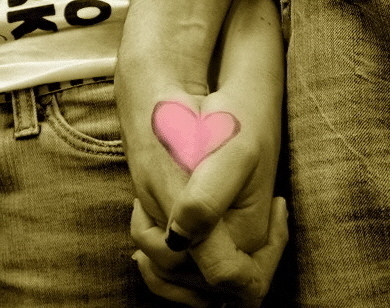
polyamorous quintet or just friends?

polyamorous quintet or just friends?

“Straight” hand-holding gleans no such double takes. In fact, people assume that you are coupled up even if you’re not holding hands. This is opposed to the girl-on-girl scenario wherein if you escape blatant discrimination it’s probably just because people think “hmmnn…maybe they’re just really close friends?”

The list of privileges for the straight hand-holders seems obvious (see this post from Queers United for the full gamut of heterosexual privileges to mull over). For one thing, there’s recognition of the relationship, but there’s also no real danger of encountering social-norm policing about said relationship manifesting as violence of any kind, physical or psychic.

However, the problem of the notion of heterosexual privilege is that it ascribes heterosexuality to heterosexual-seeming couples, thereby risking erasure of the queer complexities unknown about the relationship being judged. Unless you wear your kink, polyamory, bi-proclivities or otherwise on your sleeve, the man-and-woman-holding-hands scenario is going to be lumped into the category of normative heterosexuality. This point isn’t to deny that material and social privileges exist for the heterosexual-seemers, but it undoubtedly contributes to a problematic social notion that sexuality can easily be defined by the categories of straight and gay (with in-betweeners oscillating between the two poles).

The sea-monkey family: heteronormative, or queer as f***?

The sea-monkey family: heteronormative, or queer as f***?

Part of this problem is the assumed erasure of past experiences and desires in relation to the person you are currently holding hands with. How often do we hear the story of someone coming “out of the closet” after years of a “fake” heterosexual marriage? These kind of narratives reinforce the notion that desires should conform to one spectrum of the hetero-homo pole, in such a way that all temporality is reconfigured in light of one’s current sexual trajectory. That is not to say that the labels and identities that people align themselves with don’t matter – they should be respected. But next time I catch myself in some hetero-hand holding, I’ll try and remember who I was, am and might be… and in doing so resist the tempting oversimplification that happens when I see other possible dyads, triads, partners and complex kinship relations hanging out in public spaces.