What Disney Princesses taught me

I came across this today-

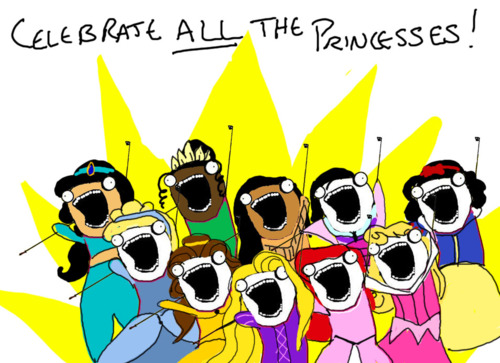
A reading of what Disney princesses teach girls

Sure, I have considered the rather un-feminist implications of a lot of the princess story lines before. But I’ve never really sat down and thought about it. My reaction to this picture was to think that I could see how these readings were plausible, but that for me, reinforcing hetero-norms is not the first thing I think of when I see the princesses (which is odd, cos that’s basically all I see in everything).

Okay, on the surface they all want their prince to come, etc, etc. And they’re all feminine and beautiful, and fairly non-diverse (until Princess Jasmine, Pocahontas, Mulan and Tia cracked the scene). While I distinctly remember adoring little mermaid Ariel growing up, my mum loved Ursula, and was pointed to note that not all short-haired plump women were actually sea witches. Looking at the older princesses (Snow White, Sleeping Beauty, and Cinderella) compared to the newer ones, there is a marked difference between their representations. Princesses have had a lot more ‘tude since the 1980s.
Totally.

I went back and watched Colours of the Wind from Pocahontas. It reminded me that, wait a minute, these chicks kicked ass in these movies. The prince thing was always just a distracting part of the story line for me, and I barely remember the prince characters. While the princes were all pretty generic (charming, rich, handsome…*yawn*), the princesses had exciting lives, amazing magical friends and, most of all, adventurous spirits. But, I guess that’s why it’s kind of depressing when they all end up “settling down” in the end.

No doubt, you could write a feminist tome deconstructing these animations (I’m sure they’re out there). Still, I can’t help looking back fondly at the Disney Princesses I grew up with. And I’m really not waiting around for my prince to come. Why? Sorry, too busy exploring the shore above, painting with the colours of the wind – I want much more than this provincial life, I want adventure in the great wide somewhere….

Total synthesis and the cult of the natural

"Unaltered" food is a big selling point

Yesterday, I got into a discussion about genetically modified crops. My perspective was that while one might have ethical concerns about the practices of companies such as Monsanto, this is different from having an issue with genetic modification (GM) itself. This apparent blurring of lines between the science of GM and the corporatisation of GM products was most clearly evidenced in July 2011, when Greenpeace activists whipper-snipped a GM field trial in Canberra. Despite CSIRO publicly stating that they have no known links to Monsanto, Greenpeace defended their actions on the basis of possible dangers to humans.

But it seems to me that there is a fear underlying the GM debate that is about more than concerns for human health. In a time when many people are anxious over the future fate of the planet,  it seems we’ve also developed a fetish for the natural. On the surface of things, this doesn’t sound bad. In fact, words that might spring to mind when we think of “natural” include healthy, normal, organic, green and well being, not to mention those mental images of makeup-less women standing under waterfalls in luscious rainforests. This is probably somewhat due to the plethora of advertisements that claim their products are good for you because they are “100% natural“. Ironically, by definition something can be deemed all-natural, even if produced through an entirely synthetic process (chemical synthesis of organic molecules).

But chemicals aside, how can we ever grasp a rigid definition of the natural?

Railing against the purportedly unnatural is often brought up in arguments against bodily modification such as plastic surgery, including sex affirmation surgery. In these debates, surgery is posited as a mutilative act. Apart from the religious idea that the “body is a temple“, I’m not sure where this idea of the sanctity of the body comes from. We alter our bodies and appearance on a daily basis- we put makeup on, we cut our hair, we wear different clothes, do or don’t exercise, eat different foods, pierce our ears, or even put coloured contacts in our eyes. While these effects may not be as skin deep as surgery (with tattooing as a modificatory middle-ground), our appearance and the way that we intentionally shape it are an important part of who we are in the world- who we show ourselves to be, for others to perceive.

Corsets: body modification back in the day

The differences between GM soybean crops and having a mastectomy for sex affirmation are obviously very very vast.  Some people may have radically different opinions about GM versus surgery. Granted, there are also ethical considerations to be made on these subjects that warrant discussion. However, I think that public reactions to these issues often reveal deep-seated sentiments about what is natural (and whether that is good), which need to be acknowledged as separate biases.

One day I imagine that we will be able to grow our own spare body parts, making modifications all that much easier. And perhaps by definition, through this act of synthesis we will consider it natural…

What’s with all the fat hate of late?

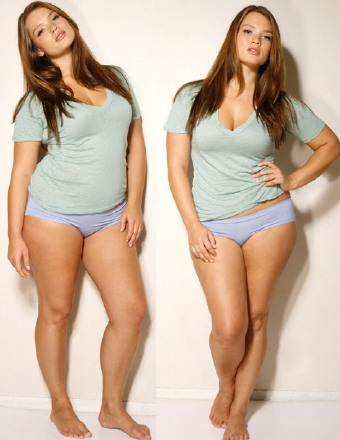
Tara Lynn- a so called "plus-sized model"- reminding us that on some women thighs are allowed to be bigger than ankles!

Currently on Australian television, there are at least two anti-fat (fatphobic?) shows screening. Sure, this kind of thing has been around for years. But amazingly, they seem to be reaching new lows on the encouraging body-hate front. Yes, this year’s Biggest Loser program (as if it isn’t bad enough that they make everyone’s stated aim to be a “loser”), is all about the “singles”. That is, those people who supposedly can’t get a date because of their weight (cos like, no one wants to date a fattie right?).

Since when did being weighty make you unloveable? It seems like a lot of the people on these shows have major self esteem problems, that actually probably go hand in hand with their weight gain due to some other reason. But rather than dealing with those kind of underlying factors, the aim of the game is to lose lose lose and be a normal skinny person – hooray! And rather than getting fit and stopping at some still full and voluptuous weight, these people are encouraged to keep going until they practically fade away. And I’m pretty sure that for most people, a “normal” weight range (whatever that means) is actually pretty vast. I downloaded an app the other day that told me I could literally put on another 20 kilos and still be a “healthy” weight.

It turns out these TV shows sure ain’t the only fat-hate going down at the moment. The recent Strong4life campaign being run in Georgia USA has been advertising a serious war on children’s weight. Apparently you can’t actually be a kid now if you’re fat- as one Strong4life tagline tells us, “being fat takes the fun out of being a kid.” This argument reminds me of the whole “we have to correct intersex conditions or those kids will be incessantly teased”. It seems to me like when we run campaigns that say what’s okay and what’s not okay, or perform surgeries to reinforce what is “normal”, well, actually that’s bullying- through defining what is normal in the first place.

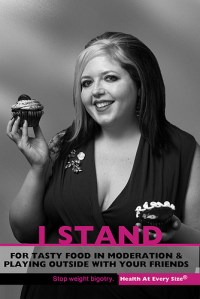
Queer fat femme standing against weight-hate. She's pretty much the bestest femme ever. Check her out at queerfatfemme.com

Somewhat hearteningly, there has been a backlash against Strong4life called “Stand4kids” (not to be confused with the terrifying missionary group of the same name) which aims to target weight bigotry (you can join them on Facebook here).

When it comes down to fat-hating TV (and lets be honest, most of the film and television industry is pro-skinny), I think we have to take a hard look at ourselves and ask where the enjoyment for these shows comes from. Maybe it’s interesting to watch before and after journeys. Maybe it’s that we want to watch people struggling to exercise and eat well, just like we all do. Or, maybe it’s just that we want to watch some “freaks” get tortured and shamed for being “different”. Oh dear.

But the more I look around me, the more I notice curvy chicks oozing confidence and being proud of their bodies. And why shouldn’t they be. What I wouldn’t give for some cleavage…

David Bowie in Tights: How My Childhood Got Saturated in Feminism

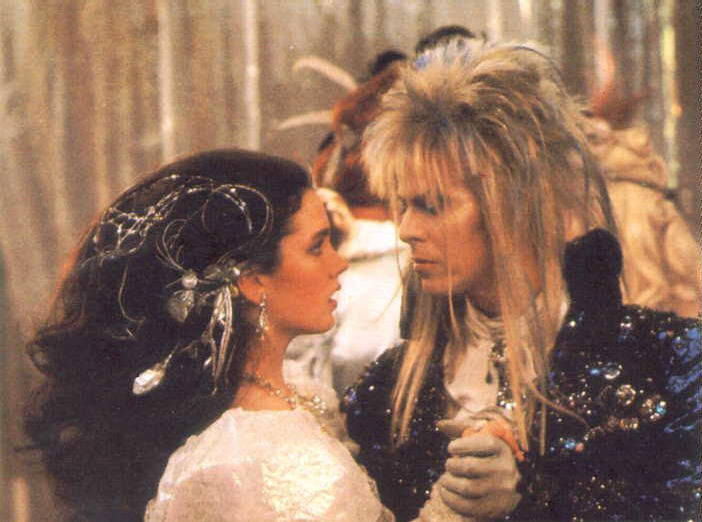
Not even Jareth's sparkly blue hair could detract Sarah from her mission

Something BLINDINGLY OBVIOUS occurred to me today. The Labyrinth is overtly feminist. If you haven’t seen this 1986 fantasy wonder film, stop right now and get onto it (you are literally committing a crime to your brain otherwise). Spoilers ahead, so seriously go rent that thing now!

Seen it? Okay then.

My feminist realisation is a lot overdue, given that I watched this film probably every week of my childhood. Sure, I noted the whole, “you have no power over me” thing, but I always took a very vague feminist reading – that it was simply Sarah’s (played by Jennifer Connelly) affirmation that she is a strong woman that controls her own destiny. Today while riding my bike home, for no apparent reason I suddenly thought, wait a minute, that whole darn thing is a feminist parable! I’m really far behind the times with this one (see here for an excellent feminist de-construction). This film is quite literally the opposite of any James Bond (on that note, see Judith Halberstam’s queer reading of Austin Powers here).

Jareth (played by a spunky David Bowie) says to Sarah at the end, “I have reordered time, I have turned the world upside down, and I have done it all for you”. But Sarah doesn’t stand for it. Jareth may have given Sarah all of the material things in the world (as apparent in the scene with the trash lady) and will even give her “the child” she seeks if she gives into his demands- but she doesn’t owe him anything, she’s a free woman! And she does get the child she wants anyway (a metaphor for the possibilities of single parenting?). The film also sees Sarah become the belle of the ball, the fantasy Cinderella, but she pulls that apart too- she wants something more in life. So, if Jareth and his goblin-man-kingdom represents the patriarchy (who knew oppression could be so hot and androgynous in lycra!), Sarah sure does smash that thing down.

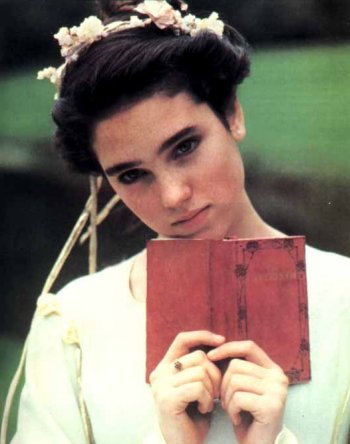
Sarah looking rather bridal at the beginning of the film

But then I started to worry, what about the very end of the film? Sarah might not need a man, but she does need her friends- what to make of this new form of codependency? Perhaps problematically, Sarah’s friends are all male. But then again, Hoggle is not your typical hero-man (he’s ugly and well, gross), Sir Didymus is an effeminate fox, and Ludo is actually pretty non-gendered apart from the masculine beast voice (and everyone’s reference to him as a he). They might be a rag tag bunch, but clearly the end of the film doesn’t leave Sarah as an independent woman. Adding to my concern is Sarah’s loathing for her step mother (cos step mothers are evil, duh), and the use of Jareth turning into an owl- a symbol of protection and intelligence.

Nevertheless, I still love this film, and can’t help thinking that it pre-wired some feminist questions in my brain that have probably significantly affected the way I see the world. Plus David Bowie is ten kinds of awesome, and I’m sure, a feminist too.

Getting real

"He doesn't smell right!" he exclaimed. "He isn't a rabbit at all! He isn't real!" "I am Real!" said the little Rabbit. "I am Real! The Boy said so!" And he nearly began to cry.

Yesterday I saw a production of the children’s classic, The Velveteen Rabbit. The story is about a little stuffed bunny’s relationship with a young boy, and the soft toy’s desire to be a “real” rabbit. After much time, the velveteen rabbit does become real in the boy’s eyes. At the end of the story, a fairy gets involved and the rabbit becomes really real, and goes to play with the other bunnies in the woods. The particular theatrical version I saw opened with something wonderful like, “realness isn’t how you look, it’s something you hold in your heart”. It got me wondering, what does it mean to be real?

The other reference to “realness” that came to mind (apart from Pinocchio), was Jennie Livingston’s documentary Paris is Burning. Set in New York in the late 1980s, the film explores the world of underground drag-ball culture. At these balls, gay men and trans* folk (of predominately African American and Hispanic backgrounds), would compete performing various categories of “drag”. Several categories necessitated the effective portrayal of “realness”– for example, Butch-Queen realness was judged on whether the competitor could pass as a heterosexual in the sub-categories of executive, thug, pretty boy, etc. Below is a clip from the film about realness:

For the participants in drag balls, demonstrating realness was a way of showing your potential, if boundaries such as race, class and gender didn’t exist. However in Bodies that Matter, Judith Butler discusses the way in which doing realness creates the boundaries of realness itself- the rules of realness are reinforced. Butler teaches us that getting real is tricky business.

Aside from the drag-ball scene, the realness issue seems pervasive across so many experiences of sexuality and gender. As discussed previously, it’s easy to find oneself in a situation or community where you feel that you don’t meet the “criteria” for acceptance. The trans* community is very often subjected to the rules of realness, as this piece by Tobi Hill-Meyer reminds us (e.g. “you’re not a real transsexual woman if you don’t wear dresses and skirts all the time“).

Haters gonna hate

But back to Velveteen. I think we can take a lot away from this story on the subject of the real. When the rabbit encounters some “real” forest bunnies, they mock the toy for having no legs (“fancy a rabbit without hind legs!”). And while the fairy at the end assures the velveteen rabbit that for the young boy the rabbit was 100% real, she still changes the rabbit and says, “now you shall be real to everyone”. Despite this ending, when the forest bunnies tease earlier in the story, the velveteen rabbit exclaims, “I know I am Real!”. Maybe then, this little rabbit really does teach us that it’s what’s in our hearts that makes us real- despite what we look like, or what the haters say. And when the fairy transforms the rabbit into a real forest dweller (though she may be reinforcing what it means to be a real bunny), we know that actually, the velveteen rabbit  was real all along.

When is enough, enough?

I came across the above clip the other day. In the video, a young man identifies his troubles being recognised as “trans” within the trans community, given that he no longer wishes to take hormones, have surgery, or do a number of other things that might be seen to be important to passing as a man (such as packing). Importantly, the guy in this video is expressing a desire to be recognised for who he feels to be (a trans boy), whether that means being less masculine than stereotypically expected, or not altering his “female” body. This perspective seems incredibly radical, as it troubles all of our notions of what it means to be a “man” or a “woman”. He’s not saying that people shouldn’t have surgery or take hormones, etc, but is saying that this approach isn’t for everyone that is trans.

I do not identify as a trans person, but this issue of feeling that you have to meet particular “criteria” to fit in definitely extends beyond the trans community. We all want to be seen to be who we say (and feel) we are. This raises issues of visibility – “how can I be seen?” – and sending the right message – “how can I effectively communicate who I am?” (see also previous discussions on femme).  When we have certain assumptions of what being X, Y or Z means and want to conform to those meanings, we also reinforce and reiterate their very basis.

sometimes we want to be seen to stand out from the crowd...

For example, the stereotype that “all butch lesbians have short hair”, might lead a baby butch to feel that she needs to cut her hair off to ensure both visibility and the right message (after all, can you really be a “boyish” lesbian with long hair…). There’s nothing wrong with this strategy- until it means you ignore those people still speaking an identity but not conforming to the expected image that goes with it (for example, if you denied someone that said, “I’m a baby butch, and I have long hair like Fabio dammit!”).

Unfortunately we’re all part of this process- and indeed, many people might claim that my “feminine” disposition means that I am also supporting a system whereby female = feminine = woman. This really hit home for me when I suggested to a friend that we start a femme group at our university. When we started thinking about the “criteria” to join we got stuck- if we write rules about what being “femme” is, we’d just be undoing all of our queer beliefs about gender and sexuality (we couldn’t come up with any good reason why everyone couldn’t define as femme if they wanted, straight, gay, bi, man, woman, whatever!).

...and sometimes we just don't want to feel like the odd one out

In the end I guess we settled on the idea that as long as the person felt they were femme and wanted to identify as such, then that would be fine by us. But then came issues of how we would explain our group, and what activities we’d do together. Sure, I may want to watch Mean Girls and wear pink eating cupcakes every Friday, but presumably this proclivity would not be shared by all…

This is tricky stuff. But I’m excited to see that the boundaries of gender are continually being critiqued, through mediums like the public video blog above. So, when we’re finally out of the semantic mud and into the post-postmodern quicksand, at least we’ll all be in it together.

Oh to be a Teddy Girl!

Teddy Girl: you're doing it right

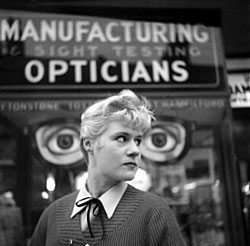
Today I came across the term “Teddy Girl” which – as I discovered typing into Google images – is a completely stylish subculture that had its heyday in the United Kingdom post World War II. Apparently there is almost nothing written about this youth culture that formed around a shared sense of disenchantment and malaise with society at the time. There is only slightly more written about Teddy Boys.

Some of the fashions associated with Teddy Girls include: men’s suits, drape jackets, shirts with high collars, black velvet ties, pointed collars, hobble skirts, pencil skirts, cameo brooches, rolled up jeans, short “mannish” haircuts, coolie hats, boat shoes, headscarves, pony tails and plastic earrings. Considering this list and looking at teenagers here and now, it seems that maybe the Teddy rage is back.

After all, maybe Teddy Girls were the original hipsters?