The Trouble with “Natural Beauty”

tumblr_ni42kbIse21u8oyeuo2_500

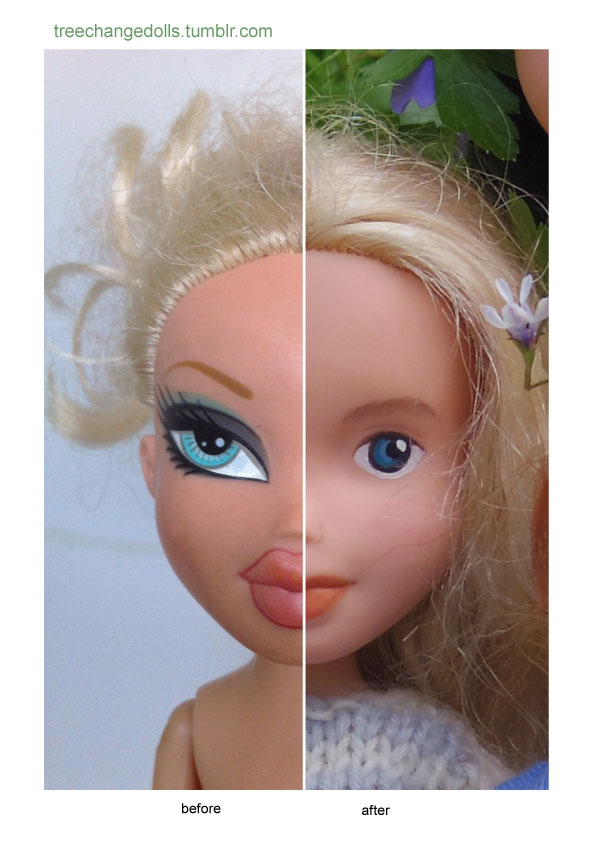
An image from the Tree Change Dolls’ tumblr site

Today a friend sent me a link to a new trend that basically caused me to have a rage blackout: dolls that have been “made-under”. Labelled “Tree Change Dolls“, these are generally hyper-feminine styled dolls (such as Bratz) that have been found at op-shops and transformed through changing their hair, shoes, makeup styles and clothing, to look more normal and natural. In the words of their creator, Tree Change Dolls involve “swapping high-maintenance glitz ‘n’ glamour for down-to-earth style”.

But before you all rush off to procure a Tree Change Doll of your own, it’s worth unpacking what it means to “make-under” a doll. Is it more ethical (as the subtext of the Tree Change Dolls website would suggest) to have a doll adorned with the natural beauty look, rather than the hyper-feminine aesthetic more commonly seen? And why is a make-under really any different to a make-over?

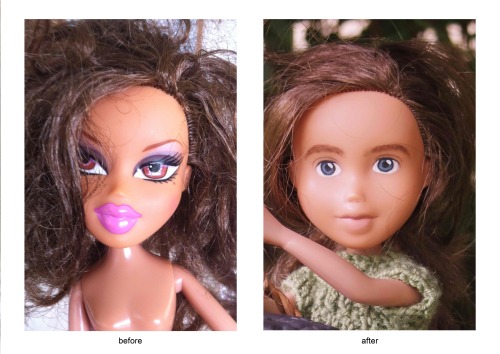
Firstly, let’s look at one before and after image from the site and what a make-under involves:
tumblr_nianihXYdz1u8oyeuo1_12801. Reducing prominent and cartoonish features such as the eyes and lips
2. Removing signs of obvious makeup
3. Conditioning and relaxing the hair which is worn out rather than having it styled up
4. Starting with a naked doll and finishing with a clothed one
5. Maintaining a clear complexion one the face of the doll free of any abnormal markings

Here we can see that the effect of “stripping back” actually mimics a “putting on” of layers. Quite literally the features of the dolls are transformed to conform to a different standard, that of “down to earth style”. In effect, the dolls are not made-under, they are made-over, with the same dramatisation of before and after we would expect from any other visual representation of stylistic aesthetic change.

Another Tree Change Doll, so liberated

Another Tree Change Doll, so liberated

Rather than radically challenging or interrupting expectations of femininity, the Tree Change Dolls set up a new system of signifiers in hyper-femininity’s place: the end result being a set of dolls that all look remarkably similar. The dolls featured on the site all have similar “natural” faces, wear knitted jumpers and 50s-style feminine skirts or alternative-style dungarees, creating an overall effect that looks like the dolls have stepped right off the pages of an alternative women’s magazine (such as Australia’s Frankie), which fetishises the domestic, the home-styled and the “real”. This styling supports a fantasy that one can retreat into a more authentic world of natural beauty, eschewing the limits of oppressive gender norms and escaping the fakery epitomized by the glamour of the pre-made-under dolls.

The pre-made-under dolls have a striking resemblance to drag queens

The pre-made-under dolls have a striking resemblance to drag queens

But, I hear you ask, isn’t a “stripped-back” simple style a less problematic norm than the make-up caked faces of the pre-tree-hugged Bratz dolls and Barbies? Perhaps not. The idea that we might adopt styles of self-presentation as if in a cultural vacuum, supports the circulation of more insidious gender norms. It presents us with the idea that there is a way to look like a “real” girl: and it certainly doesn’t involve wearing visible makeup.

Me playing drag queen at home in my 20s

Me playing drag queen at home in my 20s

When I was a child one of my favourite party themes was “make-up”, and on three separate occasions I held parties where my friends were expected to do-over their own and other’s faces – the only thing being that it was about being crazy, drag-queenish and fun. On my eighth birthday I ended up with green sparkly leaves coming out of my nose, purple fangs and giant blue eyes. The point of this story is that make-up can be about repeating expected styles of beauty, but it can also be very fun. While Bratz dolls might present a beauty style that is over-the-top and homogenous across dolls, the Tree Change Dolls also opt for conformity over experimentation.

As I have written previously, Bratz dolls encapsulate a sheer excess of femininity that is an indulgence rather than a necessity to attract a male gaze. Indeed, with the cult of natural beauty comes a sense that you can’t play around with beauty products or clothing if you want to – you’d just be reinforcing an always-already-oppressive style.

4731141834_dd3530bbf3_b

Monster High Dolls: similar yes, but experimenting with the limits of acceptable presentation

The reason to be deeply concerned about these Tree Change Dolls is that they represent a broader trend toward securing a fixed sense of what a real girl looks like – rather than disrupting the normal when it comes to gender. In fact it seems that Bratz dolls have evolved in recent years – into the now popular “Monster High Dolls”, which, though shiny and long-haired and “pretty”, adopt quirky, strange, monstrous stylings, transforming previous limits around normal looks. While there could be a lot more diversity of styles of gender presentation in these kinds of toys, the worst thing we could do is try and offer a “stripped-back” look that returns us to some kind of original “natural” point. Sometimes the natural might actually be the most fake of all.

Feeling Femme: Observations from Femme Hive 2014

The main Femme Hive venue at Villa Neukölln, Berlin

The main Femme Hive venue at Villa Neukölln, Berlin

This October I was lucky enough to be supported by the YWCA Canberra and the ANU, to attend the Femme Hive conference in Berlin. With my PhD work focusing in large part on femme identity, the conference provided a rare opportunity for me to meet femmes outside of an Australian context.

If you’re currently wondering “what even is femme and why is there a conference on it?”, check out this great explanation of femme identity from Queer Fat Femme Bevin Branlandingham. Many people have not come across the term femme before, and even some people I spoke to at the conference were unsure of what the term meant. While the conference was organised around feeling empowered about being queer and feminine identifying, some people were there because other people had labeled them as femme (e.g. lesbian couples are often confronted with the question “so who’s the woman and who’s the man in the relationship?” as if every time there must be a butch/femme pairing). A lot of people at the conference just wanted to find a space where they could feel comfortable being accepted as queer, where their feminine appearance was not simply dismissed as heteronormative.

femme pres 2

Contemplating femme at Femme Hive 2014

Unfortunately when I first received the grant from the YWCA, a local gossip magazine here in Canberra ran an article on me titled Queer Femme Is? which challenged the legitimacy of femme identity and biphobically mocked me as “a gal who likes hanging around with lesbians but prefers the closer company of a boyfriend”. This hostility was the first reminder of exactly why femme is an important topic for discussion – because so many people can end up feeling marginalised both within LGBT scenes and in the broader community, just because they are more “feminine” and therefore don’t fit within a neat set of assumptions about “deviating” from the norm.

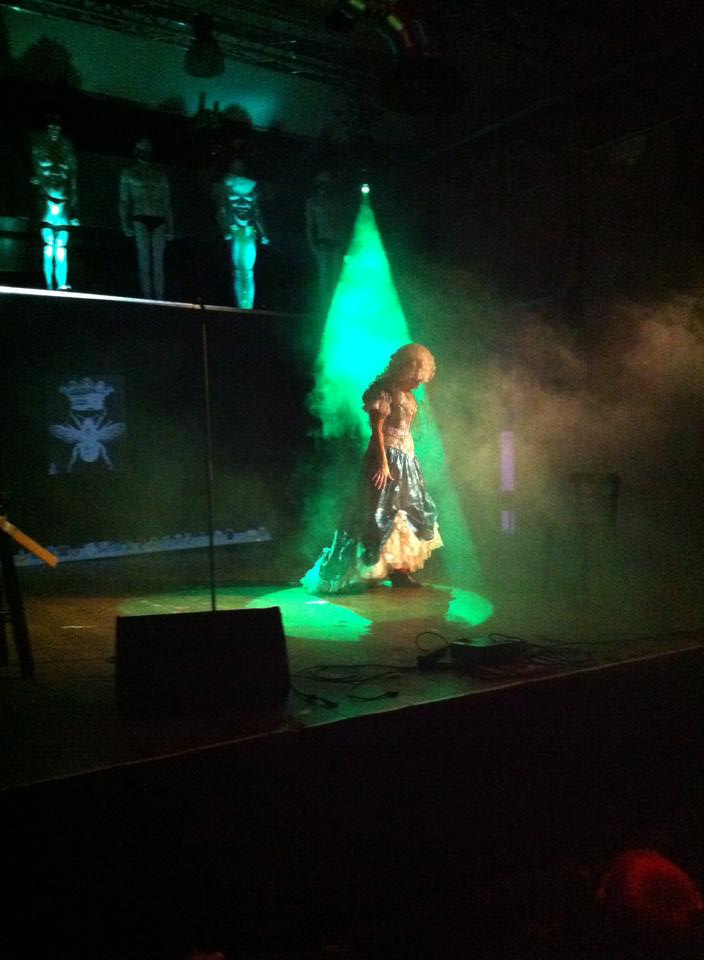
Blush performing at the Femme Party, Schwuz

B.L.U.S.H. performing at the Femme Party, Schwuz

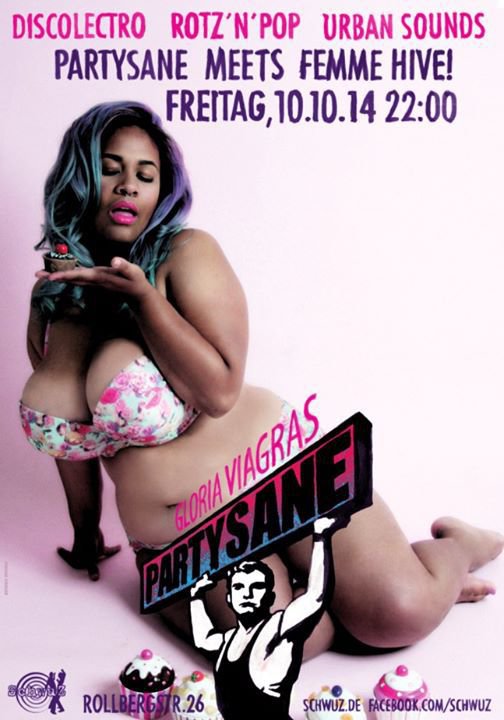
While the conference program was full of wonderful workshops, the best part for me was just listening to people’s own experiences of being femme within a queer community. Apparently in Berlin femme identity doesn’t carry much cache in the queer scene, and it was interesting that the conference organisers talked about “cultivating a culture of desiring femme” as one of their main goals. Significantly, the opening night of the conference involved a burlesque/drag/musical show, with a very diverse range of acts from across Europe exploring the theme of femme. The venue, Schwuz (a club that had a long queue, entry requirements of an airport and sold grapefruit beer), was packed, with more people sporting undercuts than I had ever seen gathered in one room. The acts revealed the complexity of femme, with each one so different from the last that it was impossible to settle on a concrete idea of femme identity’s common denominator.

The flyer for the Femme Party

The flyer for the Femme Party

One particularly interesting piece focused on fat femme identity. Presented by the burlesque group B.L.U.S.H., one of the performers came out wearing a dressing gown, reading a women’s magazine. After showing disappointment that her larger body did not match the bodies shown in the magazine, she tore it up and stripped down entirely. Her body was round and tattooed. She slowly put on knee-high stockings, high heels and lingerie. To a huge cheer from the audience she took out a chocolate brownie from a box and smooshed it into her face, broke off several pieces and threw them into the audience. Openly didactic, this performance was interesting in terms of exploring the body politics of femininity (what is an acceptable “size” for feminine bodies). Indeed the question of “normal” bodies and the marginalisation of fat queer feminine bodies was a key topic of discussion in the conference overall. The performance was also interesting because it alluded to the “putting on” involved in femininity, without marking this as a negative thing (as femininity is so often accused of being a “masquerade” in feminist and other writing).

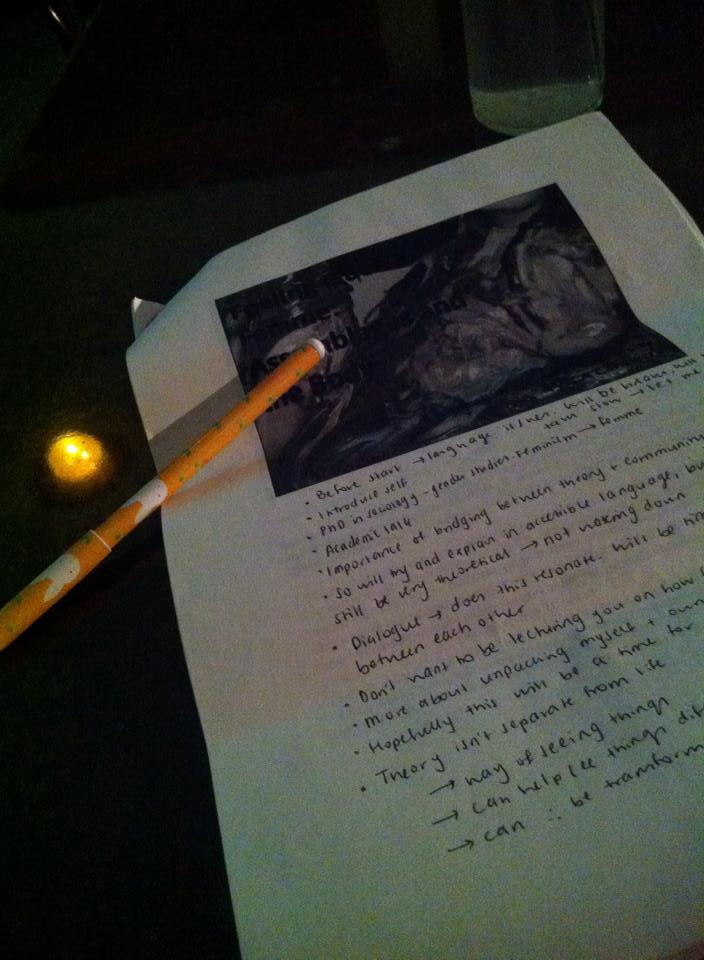
Getting my ideas together prior to presenting at Femme Hive

Getting my ideas together prior to presenting at Femme Hive

Of course it wasn’t all burlesque and glitter. A weekend of workshops followed and I was lucky enough to present my research work on the last day. My presentation was called “Feeling Queer Femme: Assemblages and the Body” and in it I explored the troubles of representing (trying to “pin down”) femme, as well as the corporeal and sensory aspects of embodying femme (a theme that emerged in my interviews with queer femmes in Australia). Though it was a bit strange presenting my version of femme to a room full of femme people, it was amazing to hear that attendees found the session so helpful for clarifying their own experiences and ideas on the topic, even though this was something they were living out day to day in their own lives.

Overall the experience was amazing and my ideas on the topic of femme have both been affirmed and expanded through attending Femme Hive. Now to finish writing that thesis of mine…

Makeovers and Mistakes: What Does Bravery Look Like?

Princess-Merida-before-an-009

Merida “before” (left) and “after” (right)

The recent controversy over Disney’s “makeover” of Brave character Merida, has been troubling me. CGI-Merida, hero of the 2012 the film, was stylistically re-designed as part of a re-branding of many of the Disney Princesses. Last week, website A Mighty Girl started a change.org petition to have Disney revoke Merida’s new look. The content of the petition gives a sense of the kind of reaction the new image garnered. It states:

The redesign of Merida in advance of her official induction to the Disney Princess collection does a tremendous disservice to the millions of children for whom Merida is an empowering role model who speaks to girls’ capacity to be change agents in the world rather than just trophies to be admired. Moreover, by making her skinnier, sexier and more mature in appearance, you are sending a message to girls that the original, realistic, teenage-appearing version of Merida is inferior; that for girls and women to have value — to be recognized as true princesses — they must conform to a narrow definition of beauty.

What is perhaps more concerning than the "new" looks is how their heads each differ vastly in size. Snow White looks like she could literally eat Cinderella.

What is perhaps more concerning than the “new” looks is how their heads each differ vastly in size. Snow White looks like she could literally eat Cinderella.

As it is, the campaign quickly gained over 200,000 supporters and Disney have apparently withdrawn the new Merida concept from their website (though they have manufactured a doll version that people aren’t happy about either). I first heard about Merida’s new look through my university women’s department, and my response was (literally, a Facebook comment): “Brave can be sexy too?” But it seems I was in the minority with this viewpoint. And while I can support the argument that representations of princesses should perhaps include more diversity in general, I have found most of the reactions deeply troubling and indeed to be inadvertantly reinforcing gender stereotypes. Let’s consider what people have been saying about Merida and the “makeover” (I’ve highlighted some of the more troubling bits):

  • The Mail Online writes: “Unlike most other Disney heroines, the animation character of Princess Merida looked like a real girl
  • The LA Times writes: “Among the modifications: Merida’s long mane of red curls has been defrizzed, her neckline has plunged, her waistline has narrowed and her wide-eyed, round face has been angled. She’s also got eyeliner.”
  • The Christian Science Monitor writes: “Let’s review the chief problems:They took a strong character and weakened her; They took a natural beauty and glamorized her; They took a youthful 16-year-old and made her look like she’s 22; They disrespected the fact that Merida is a princess who goes against the grain, eschewing the trappings of being a princess in favor of being an individual.”
  • Jezebel writes: “As you can see, her eyes are wider, her waist is smaller, her hair is sleeker, and her dress is sparkly as shit.”
  • Brave co-director Brenda Chapman has also been reported as saying, “‘When little girls say they like [the new toy] because it’s more sparkly, that’s all fine and good but, subconsciously, they are soaking in the sexy “come-hither” look and the skinny aspect of the new version.”
towardthestars

“Keep Merida Brave!”: one of the most problematic slogans of the campaign

However, there was one voice that went against the grain. Disney. Executive Catherine Connors writes: “It doesn’t matter what iterations of Merida are out there in the culture – Merida is Merida, and the essence of who she is is defined by the girls who embrace her”

While I remain skeptical about the intentions of any big-wigs intent on selling things to people, I can’t help but agree with Connors. Aside from the fact that I think a lot of the descriptions sensationalised how different the new image is (“plunging” neckline?!), much of the backlash focused on how the image of “new” Merida somehow inherently contained messages that:

  • There is such a thing as looking like a real girl (and it’s not “new” Merida!)
  • Things like wearing makeup and being sparkly/glamorous signify weakness (never bravery!)
  • This is all part of the sexualisation and brainwashing of children (let’s not teach our children critical thinking skills, let’s try and eliminate these kinds of representations!)

As someone who cares a lot about the possibilities of “femme” and subverting expectations despite “heteronormative” appearances, the language and assumptions of the Merida petition concern me. When we suggest chucking out one representation for another, what other norms are we in fact supporting or reinforcing? What limits are we too putting on expression?

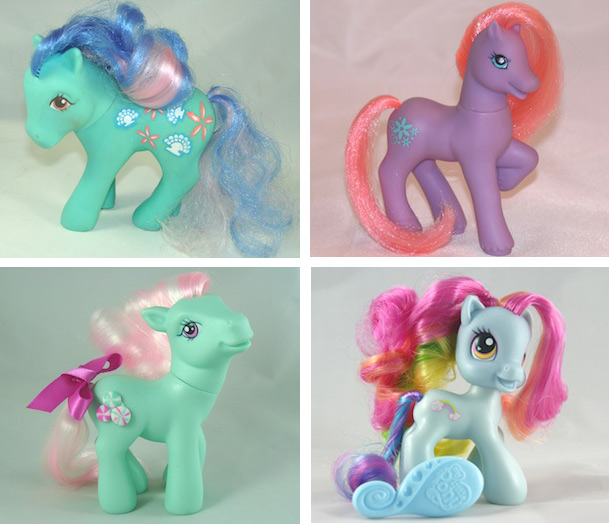
My Little Ponies have changed a lot over the years... yet they are still just as awesome (if not awesomer) than ever

My Little Ponies have changed a lot over the years… yet they are still as awesome as ever

I love this post from The Afictionado that argues for acknowledging that all kinds of different “types” of girls can wield power. They write: “You can be a tomboy or a girly girl, or a hard-working student or a lazy scatterbrain, and it’s all okay. And any of these qualities still allows you to pick up your wand and save the world.”

So, when Disney says, “Merida exemplifies what it means to be a Disney Princess through being brave, passionate, and confident, and she remains the same strong and determined Merida from the movie whose inner qualities have inspired moms and daughters around the world” maybe we should listen. Maybe we need to take a look at the kind of assumptions we are making about what a “typically” feminine appearance can versus cannot possibly signify. After all, isn’t courage about being, not looking, brave?

Babyz in the Hood: Girlhood Aspirations Then and Now

Yesterday I came across this amazing song from the Muppet Babies circa 1984:

I had a dawning realisation that 1984 is getting to be quite a long time ago now (*gasp*) and that the kids that would have watched Muppet Babies would already be in their mid to late thirties. With this in mind, I started to think: do the lyrics of the song give us some insight into girls’ childhood aspirations of the time, and, are these aspirations playing out in the lives of the thirty somethings as we speak?

Baby Miss Piggy sings: I’m gonna be a movie star/ And I’m gonna learn to drive a car/ Gonna be a veterinarian too/ And I’m gonna always love you/ I’ll be the cutest model you ever saw/ Then I think I’ll study criminal law/ And I’m gonna scuba dive too/ And I’m gonna always love you/ I’ll be a doctor for diseases/ And help you with your sneezes/ And practice neurosurgery on your brain!/ Gonna climb the Matterhorn/ But only after all our children are born/ ‘Cause I want to be a good mommy too! / And I’m gonna always love you!

The song conveys the idea that baby Miss Piggy aspires to be good looking, outgoing, have children and a successful career. I couldn’t help being reminded of all of the contemporary writing on the “problem” of the modern woman that thinks she can have it all. There’s a lot of writing on it, so I won’t go into the debate here. Suffice to say that my take on it is that perhaps we need to focus more on supporting shared parenting responsibilities and part-time work arrangements rather than arguing either that: women should be and do everything OR that women should simply choose. While I’m not sure that Muppet Babies are to blame for this particular issue, it did get me wondering what kind of girlhood aspirations are currently being represented on television.

Then I came across this (I suggest only watching two minutes maximum, it is quite painful):

This clip is care of the Bratz Babyz film 2006. The lyrics for the song at the beginning of this are: Put on your makeup/ Fix your hair/ No time to take up deciding what to wear/ It’s now or never/ You can’t slow down/ Gotta get it together/ Cos time is running out/ Final count down/ Get ready now/ 5, 4, 3, 2, 1/ Gotta be hotter than hot/ You just have to rock/ No time to stop/ ready or not/ Gotta look hotter than hot/ Gotta show what you got/ No more time on the clock/ Ready or not

As the lyrics and visuals reveal, girlhood aspirations portrayed in Bratz are heavily tied up with wearing makeup and overcoming the burden of choice, that is, what colour dress to wear (!) Amazingly, the characters in the clip shown are babies, not full grown “Bratz”. The baby Bratz world reveals that even toddlers are concerned with matching their lipstick with their outfit. Now, I don’t want to get all down on femininity. I love lipstick. I do. But babies concerned with being “hotter than hot”? I have to admit this is slightly concerning. Not least because it infuses a focus on consumption even further into childhood. As a member of society well and truly down that rabbit hole, I would only hope that people in their younger years could put this off as long as possible.

A girl showing her Bratz inspired face paint

But aside from capitalist concerns, it also seems to flatten aspirations- sure, baby Miss Piggy wanted to be a hot model, but she wanted to perform neurosurgery on your brain too! On the other hand, while some may say it is precisely toys such as Bratz dolls that contribute to the media’s sexualisation of children, the Bratz movie also reveals an abstraction of femininity from sexuality. No longer is femininity about being a perfect woman for a man, it’s just about indulging in femininity, pure and simple…

By my calculations (considering that the Bratz range came out in 2001), the Bratz generation should be in their mid-late teens/ early twenties by now. In the end, what future do these lyrics foretell for the up and coming generation of women? How will they differ from the Muppet Babies generation before them? Only time will tell…

Not quite girlfags: Kylie Minogue and femme-queer identity

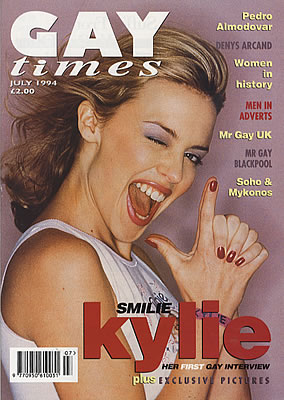
Kylie: gay icon

Recently, I was at a party where a Kylie Minogue CD was on rotation (I think it might have been Ultimate Kylie), much to the enjoyment of one of my femme friends. This got us talking about the “gay” icons that we enjoy like old Madonna and Lady Gaga, our love of the colour pink and our preference for a queer rather than straight description of ourselves. Following this, we considered the notion that maybe we could identify as being gay men in women’s bodies.

I wondered if such an identity descriptor was already in existence, and it was this that led me to the term “girlfag“- which refers to women that identify as being sexually attracted to gay men and/or gay subculture. I also discovered that several (straight) stars have described themselves as being “a gay man in a woman’s body” (for example, Posh Spice and Mila Kunis, though note: neither of them use the term girlfag!). On reflection of this sentiment however, I realised that it was somewhat problematic. Mainly, the trope of “trapped in the wrong body” is commonly cited by transgender people, who report gender dysphoria. Considering this, it wouldn’t be good if the expression my friend and I favoured was read as an offensive parody of trans identities. However, even if we nuanced our statement to reflect that we were akin to gay men in women’s bodies but that this didn’t impact upon our gender presentation, there are still further complications. Basically making this claim about our identity would entail making a parallel claim about what it is to be a gay man, which is therefore not cool on the reinforcing stereotypes stakes.

Despite these issues, I still think that there is some merit to the girlfag positioning. Basically my friend and I were reflecting a desire for queering our supposed girly-ness. Mapping our love for certain feminine things onto a gay paradigm allowed us to queer our femininity. I have always felt that there are things that I love that align with classic gay iconography (but then again this might be because there has been a lot more said about gay icons than lesbian, bisexual or other ones). And certainly the idea that I had more in common with a flamboyant gay man than a straight girl would ring true for me (for example, I once took a date home and played her the best-of CD “The Magic of Doris Day”, which didn’t really set the lesbian tone I was hoping for…).

So, maybe we’re not quite girlfags, but then again maybe we can embrace our “stereotypically-gay” tastes as part of a new lesbian/bi/pan dynamic of queer femininity. I hope so.