Rethinking Pink

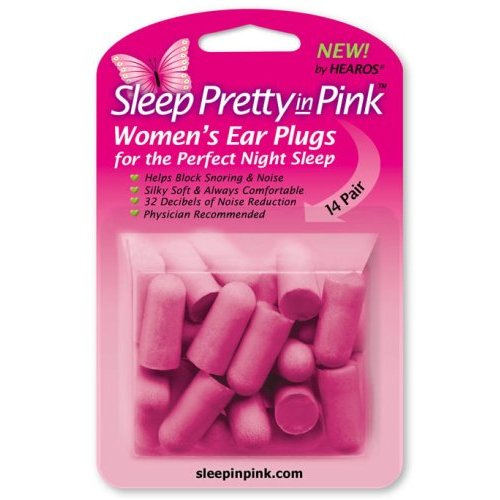
earplugsEvery week there seems to be a new story about how offended we should be about a new product marketed especially to women. You know the deal, it’s usually a rather ordinary object (like a pack of pens) that is selling itself as:

– PINK!
– FOR HER!
– GLITTERY!
– JUST FOR GIRLS!

And of course, this is deeply annoying. It seems to reinforce the idea of woman as the “marked” gender and man as the “normal”, natural state of things. It feels patronising and seems to reduce women’s interest to a colour, as if the marketing executives are using Elle Woods from Legally Blonde as their model woman.
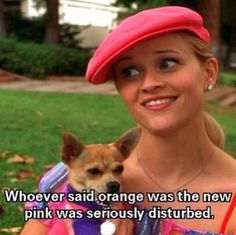
elleAnd you know, I love Elle Woods. My phone case is pink. I like the idea of wearing pink on Wednesdays (though I always forget). But I don’t want my interest in the world to be reduced to pink. On the other hand, if I want a pink version of something, so be it. Sometimes I like pink.

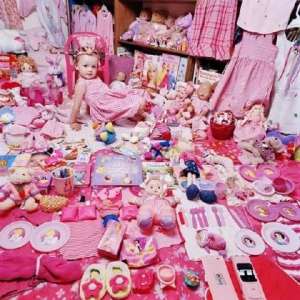
Venturing into the land of children’s toys however, presents a more complicated problem. Girls’ sections are a pinkwash of epic proportions. Understandably, this upsets a lot of parents.
love-pink-toys-07

In her book Living Dolls (2010) Natasha Walter argues that this “pinkification” of girlhood is in part responsible for contemporary raunch culture in so far as girls aspire to be like the dolls they play with – sexy, passive and plastic-looking. Others are also on the “kill pink” mission: UK site Pinkstinks states “We believe that all children – girls and boys – are affected by the ‘pinkification’ of girlhood. Our aim is to challenge and reverse this growing trend.”

Challenging traditional roles and stereotypes (and not just for girls) sounds great. But when you look at what exactly gets targeted in this, a lot of what’s being lumped under problematic “pinkification” is literally just pink stuff, as this screenshot from their front page shows:

pink

Now, I get that the fact if girls stuff is always pink that’s super boring; just as I described with the case of adult women, girls shouldn’t be reduced to a colour. I also understand that a lot of the stuff that these sites campaign against are things marketed at girls to encourage the to be homemakers or princesses or beauty-obsessed people. Obviously the problem is that there’s not a diversity of options being put on the table for girls. Like we tend not to tell girls: you could be a mother AND/OR a builder AND/OR an engineer AND/OR a makeup artist (though I have to say, Barbie has done a good job of having a lot of different occupations). 

But I think one thing that often gets missed in all this is that a lot of toys marketed to girls are just sometimes boring compared to what boys are encouraged to play with. The much heralded Goldie Blox came along last year to try and introduce engineering concepts to girls. Again, pink became a signifier of all that is problematic about how toys are gendered, as we see in this opening shot from one of their ads (kids on screen dancing around in pink, girls watching super bored):
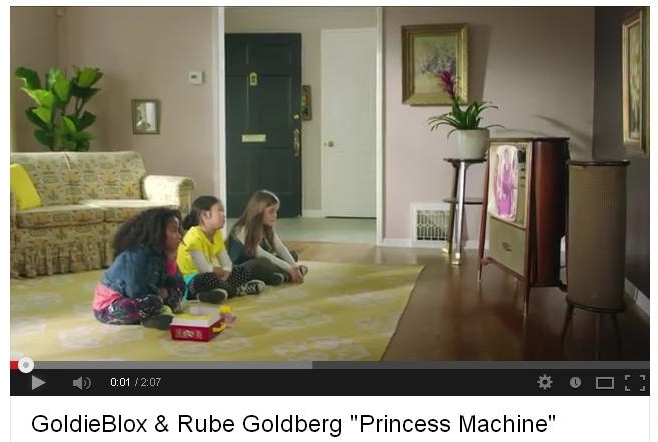
goldieNow, I should note here that in the actual Goldie Blox product, there are a few pink pieces (like a ballerina dolphin – rad). But the point is, clearly the rhetoric of Goldie Blox is trying to tap into anti-pinkification sentiments.

And the thing is, it turns out Goldie Blox itself is really boring for a lot of kids. It doesn’t have the imaginative radical potential of other toys, like Lego, that also teach principles of engineering. The problem isn’t pink, it’s the actual toys.

Speaking of Lego, this recent article reflects on how Lego has changed its marketing to girls over the years, with the girl from the 1981 “What it is is beautiful” ad showing how boring Lego “for girls” has become.
lori-then-now-lego-meme-630x416

There is a great point here: going from blocks that can become anything, to already-built pieces that have pre-determined (and often gender stereotypical) story lines is lame-o-rama. But so much of the article focuses on pink – for example they point out several times that in the original ad the girl is “without a hint of pink”. Pink has become symbolic of all that is wrong with the gendering of toys, and as a result pink is often one of our main targets, rather than judging toys on their capacities.

lesbian-barbiesWhen I was a kid I had to beg for a Barbie doll. When I eventually got one, it had blonde hair and this AMAZING pink disco outfit with a light on her belt that would flash on and off when you turned it. She had permanently bent elbows, which annoyed me because she was kind of hard to move about. I then obtained a second Barbie and a Ken Doll from an older best friend. I cut Disco Barbie’s hair short and she shacked up with new Barbie, who liked to wear ballgowns. They lived with Ken in a suitcase apartment that I made, with a white plastic cat. They had good queer times together.

Cool truck

Cool truck

There were lame aspects of pink Disco Barbie, like her immobile limbs (perfect for cuddling other Barbie though), but the pink wasn’t the issue. I was still inventive with my Barbies and though they never taught me about structural engineering, I had fun with them. Some of the “girly” toys I wanted in childhood were really inert and useless, like Fairy Winkles, but they weren’t bad because they were pink. I’m pretty sure that at the end of the day I was just subject to marketing and a desire for “status” like all the other kids (like, when I got connector pens I thought I was so cool).

I think we should promote kids to be interested in a range of dynamic stuff. But at the end of the day it’s not pink that stinks, it’s our attitude to gender that matters.
My Struggle With Feminism

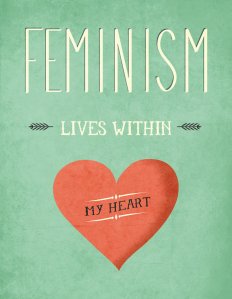
This lovely print from dothandmade really sums it up (check out her etsy page)

This lovely print from Michelle Scott of dothandmade really sums it up (check out her Etsy page)

Feminism and I go way back. For one thing, my grandmother used to write STEREOTYPE in big, bold letters underneath problematic pictures in my colouring-in books, such as wart-nosed witches, or coquettish Disney Princesses getting married off to their rather dull princes (if nothing else, this instilled in me a fervour for cultural criticism at a young age). I also had my mother, less the radical-separatist type, more a non-identifying new third-waver, which largely explains that my first tape at the age of four was Madonna’s Immaculate Collection (which I have to say ensures some rather awkward conversations, like when you jump around the lounge room singing “Like a Virgin”, which leads your mother to ask, “Do you know what that word means?”, a series of lying nods, and “the talk” before you’ve even got this Kindergarten thing down pat). I read The Paper Bag Princess, played with Motherpeace Tarot cards, and went to all number of Reclaim the Nights, and pro-choice rallies.

This is exactly the kind of style I would go for

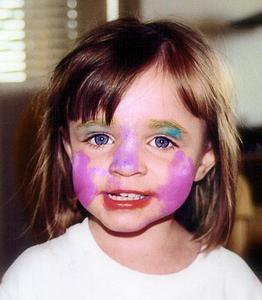
This is exactly the kind of make-up style I would go for

Of course with this kind of upbringing, I didn’t identify explicitly with feminism. That was just assumed, background information, something everyone was au fait with (I thought). In fact, I actively rejected many of the feminist critiques I was exposed to. Much to the chagrin of my family, I demanded to wear dresses. I loved pink. Fairies. Ballerinas. Makeup. In my lifetime I have managed to have not one but three makeup-themed parties (though, on all occasions I was less interested in beautification than I was drag-queening).

Later, despite choosing university majors in psychology, political science and philosophy, I managed to write about sex, gender and sexuality whenever possible (a trend unfortunately only evident in hindsight). But it wasn’t until I began my honours in philosophy, that I finally read Simone de Beauvoir’s The Second Sex – which was a revelation. After that I took a giant leap straight into Judith Butler territory, sparking a rather dense love affair with her textual genius. But theoretically, I jumped from a foundational second-wave text to a pretty intense critique of all things gender. I’ve spent the years since then catching up on a lot of the feminist texts in-between and since the great Gender Trouble, but it’s fair to say I’ve taken the queer theory path rather than the recuperative one you see feminist writers like Angela McRobbie taking now (in Aftermath of Feminism McRobbie levels that the work of JB contributed in part to feminism undoing itself). 

This for example, is some crazy bullsh*t

This for example, is some crazy bullsh*t

The point is, a lot of the time, I find myself challenging many of the encompassing explanations of oppression presented by feminist writers and thinkers, instead proposing sneaky little queer readings of things that might otherwise be held up as extremely problematic and supportive of the patriarchy (for example, the much condemned antics of Gaga, Miley, Britney, Katy – I just can’t help falling in love with these women and I will defend them to the death god dammit!). But then at odd and unexpected times, I find myself confronted with street harassment, anti-abortion preachers, or even just vaguely misogynistic comments on social media, and I am reminded hey wait a minute, feminism isn’t always perfect….but it’s still pretty tops. After all, feminism doesn’t mean just one perspective – for me at least, laying claim to feminism in part just means caring about questions of gender.

It sure is

It sure is

As Butler put it herself in the 1999 preface to GT, “I was writing in the tradition of immanent critique that seeks to provoke critical examination of the basic vocabulary of the movement of thought to which it belongs”. In other words, one can write from a critical space that is also ultimately founded in feminist thought. And while I can’t help agreeing with some authors like Janet Halley, that it can be productive to “take a break” from feminism sometimes, I can also never forget my feminist roots.

Girls, Girlhood and Feminism

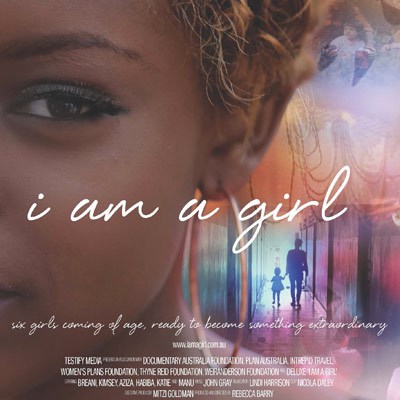
i-am-a-girl-poster-file-edited2Last night I was lucky enough to be asked by the YWCA of Canberra to speak at a film screening of the documentary I am a girl. Below is a transcript of the speech I made following the film.

I am a Girl
In light of the remarkable documentary I am a girl, and as we come up to the International Day of the Girl Child, I thought today it might be interesting to look at some of the ways in which the concept of the girl has been considered in an academic context, and how we might see this film as doing work in contributing to this conversation. So briefly I want to talk about three things:

  • First, what has been said about the girl in academia, specifically, feminist writing?
  • Second, how might we see even the title of the film I am a girl functioning as a powerful statement and intervention in conversation about the girl?
  • Third, why should we care about the girl in academia and feminism?

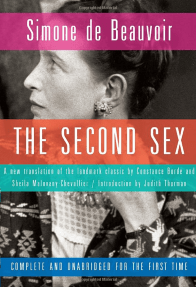
Second_Sex-20100831

What has been said about the girl?
At face value, girlhood implies a period of flux, of change. As Simone de Beauvoir famously said, “one is not born, but rather becomes, woman” (283). And in de Beauvoir’s account in The Second Sex, the girl is but one step in this process of becoming. However, for de Beauvoir girlhood is not a stopping point – the girl is always caught up in being compelled toward her future state, woman. As de Beauvoir explains, “She is already detached from her childhood past, the present is for her only a transition; she sees no valid end in it, only occupations. In a more or less disguised way, her youth is consumed by waiting. She is waiting for man” (341).

Germaine Greer takes a similar perspective to de Beauvoir in The Female Eunuch, insofar as she acknowledges the weight of expectations imposed upon girls, but she writes, “I would not be doing justice to girls if I were to imply that they accepted their enculturation without struggle” (78). Greer goes on to state that, “the pre-pubescent girl, however sluggish and confused she may seem to the disenchanted observer, is a passionate creature” (80).

the-female-eunuch-germaine-greer-feminism-books-270611-large_newThis conflict between identifying the structural limitations imposed on girls, while at the same time acknowledging the agency of girls themselves, continues to be a persistent tension in feminist writing.

Furthermore, often feminist writing has not settled on the girl as a focus for attention – often the girl is only discussed as a marker of transition on the way to what is often given more significance- the question of woman. However in very recent times we have seen the rise of “girlhood studies” which is attempting to give questions of the girl centre stage.

Theorists in this new field of study, such as Jackie Kirk, Claudia Mitchell and Jacqueline Reid-Walsh, have attempted to provide a map for understanding discussions of the girl in a contemporary global context (16). Three dominant themes that have emerged from this research are that:

  • Girls are often pathologised as victims of material deprivation and restrictive gender roles, particularly in development contexts (20-22);
  • Girls are seen as problematic consumers of “tween culture”, particularly in Western contexts (22-23); and
  • Given these restrictions, girls are seen to be already coopted and lacking the agency to have their own opinions or speak for themselves (24).

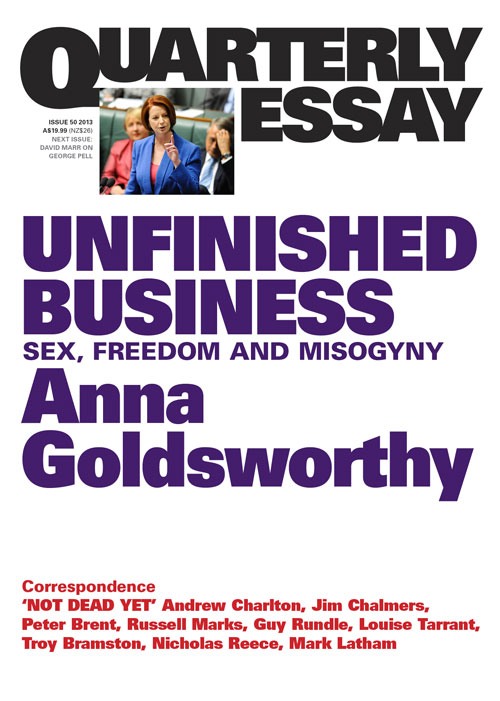
unfinished-business-anna-goldsworthyWe might note that even with the best critical intentions, sometimes discussion of the girl can carry a heavy weight that reduces the girl to a dupe of systemic oppression. Take for example, Anna Goldsworthy’s recent piece for the Quarterly Essay, Unfinished Business: Sex, Freedom and Misogyny. In part, Goldsworthy considers the dangers of girlhood today, framed as young womanhood, particularly the self-objectifying practices girls are taking part in online, as she writes, “the young woman is the celebrity at the centre of her Facebook universe, which might look like self-esteem but is ultimately a form of self-effacement” (37). That is to say, Goldsworthy argues that girls may be in charge of the creation of their self-image, but these are images that are in fact erasing girls. She asks, “is it only by photographing herself that she knows she’s real?” (38).

Now, this might be a compelling argument for some people, but I think it is vital that we pay attention to how these accounts are framing girls. Though there may be processes operating whereby girls are disempowered at one level, simultaneously these same girls may be empowered in other ways. Complexity should not be brushed over in favour of more simple explanations when it comes to investigations of the girl. We need to hear from girls about their own experiences- when we do, often extraordinary things are revealed.

How does I am a girl intervene in this discussion?
The title of this documentary alone provides a fascinating entry into this discussion of the girl. The power of the declaration “I am a girl” becomes ever apparent with comparison to the perhaps more prolific statement – “it’s a girl”.

cat-photo-gallery-payton-21274560As gender theorist Judith Butler has pointed out, we are “called into being” by identity statements – the phrase “it’s a girl” at birth enmeshes us in a process of being “girled” (xvi). That is to say, being labeled a girl is involved with a whole set of role expectations and bodily styles of the “feminine”. As Iris Marion Young argues in Throwing like a Girl, assigning the marker “girl” functions as part of creating less powerful bodies; she writes: “The girl learns actively to hamper her movements. She is told that she must be careful not get hurt, not to get dirty, not to tear her clothes, that the things she desires are too dangerous for her” (154).

08d14868_md

Of course Young’s work plays on the idea that often the statement “throwing like a girl” is used as an accusation or insult. To call something “girlie” is to emphasise that it is underdeveloped or infantile. With age, the proclamation at birth of “it’s a girl” transforms into the charge that one is “just a girl”.

But the title of this film, I am a girl refigures these notions – girlhood is claimed as a position one can be proud to occupy. To say “I am a girl” is to erase the “just” and proclaim this subject position as something to take ownership of. Importantly, the title is not “Nearly a woman” or “I am a young woman”- it marks girl out as a category that might carry a weight of social implications, but that deserves special attention in itself.

And further, the title implies an idea of the girl speaking for herself, but that this is a subject position the viewer can also relate to. Here the “I” functions as the voice of the girl, but also as a space of empathy- it calls for us to put ourselves in the place of the girl as we hear her story.

So from this perspective, we can see the documentary as making an intervention on the topic of the girl, in that we are encouraged to consider:

  • What possibilities are imaginable for these girls; what kinds of women are these girls compelled to become?
  • And, how can we acknowledge these difficulties without making girls victims?
  • But also, where can we see small points of resistance emerging from the girls themselves, and how can we work together across different cultural contexts to make sure these girls are supported to transform boundaries and limitations imposed upon them?

Why should we care about girls?
9780231119139The final point for consideration today is why the girl is important? Why should we care about girls in feminism and academia broadly? As a leading theorist in the field of girlhood studies, Catherine Driscoll, has commented: “As a future-directed politics, as a politics of transformation, girls and the widest range of representations of, discourses on, and sites of becoming a woman are crucial to feminism” (9). Driscoll implores us not to erase girlhood in the question of becoming woman which is central to feminism.

But Driscoll also notes that the question of the girl is not only relevant because it refers to a developmental stage prior to the “independent woman as feminist subject” (9). We need to make sure that while we acknowledge the importance of the girl in relation to the question of woman, the girl does not get lost in this discussion.

652cf38361a209088302ba2b8b7f51e0_500x735It is vital that we hear from girls themselves – as I am a girl implores us to do. And while identifying limitations that are socially placed upon girls, let girls tell these stories so as not to erase their voice in this process, but also so that a diversity of perspectives might ring out. After all, we cannot expect that the needs of girls should be the same across all contexts, or that all girls will share the same experiences. In acknowledging the category “girl”, particularly across cultural boundaries, we need to make sure that difference is held as key.

On the one hand, it is crucial that we see the girl within a future trajectory – what are her possibilities of who she might become? And to this point, a sense of hope is important for imagining different futures. But by the same token, the girl in the now needs to be considered- not just who she will become or who she might be, but what she has to say in this moment. Because it is only in this acknowledgment – that the present is actually the future – that we can hope to come together not to rescue girls but to amplify their voices as they mark out their own space in a changing world.

References
Beauvoir, Simone de. The Second Sex, Trans. Constance Borde and Sheila Malovany-Chevallier. New York: Alfred A. Knopf, 2010 [1949].

Butler, Judith. Bodies that Matter: On the Discursive Limits of “Sex”. London; New York: Routledge, 2011 [1993].

Driscoll, Catherine. Girls: Feminine Adolescence in Popular Culture and Cultural Theory. New York: Columbia University Press, 2002.

Goldsworthy, Anna. ‘Unfinished Business: Sex, Freedom and Misogyny’. Quarterly Essay. Issue 50, Collingwood: Black Inc., 2013.

Greer, Germaine. The Female Eunuch. London: Granada Publishing Limited, 1970.

Kirk, Jackie, Claudia Mitchell and Jacqueline Reid-Walsh. ‘Toward Political Agency for Girls: Mapping the Discourses of Girlhood Globally’. Girlhood: A Global History. Ed. Colleen A. Vasconcellos and Jennifer Helgren. New Brunswick, N.J.: Rutgers University Press, 2010.

Young, Iris Marion. Throwing like a Girl and Other essays in Feminist Philosophy and Social Theory. Bloomington; Indianapolis: Indiana University Press, 1990.

Sisters, Doing it for Them-selfies

WDN_18-04-2013_ROP_01_WAR170413selfie_t460

A “typical” selfie pose

Recently an article, Dark Undercurrents of Teenage Girls’ Selfies, has been doing the social media rounds. Selfie literally refers to taking a photo of yourself, and as the papers would have it, this is a dangerous trend being taken up predominantly by girls. While the author – a grade eleven student – admits that “There isn’t anything inherently wrong with uploading self-portraits”, part of this piece also claims that the underlying motivation is popularity, ultimately judged by men: 

Who do we blame for this moral mess? As feminists, we correctly blame patriarchy because boys are securely at the top of the status game. Boys end up with the authority. They have their cake and eat it.

On the weekend The Observer also jumped on the bandwagon with an ominous appraisal over this “global phenomenon”. Journalist Elizabeth Day argues that even though the selfie allows for a modicum of control over images, “once they are online, you can never control how other people see you”. And as Anna Goldsworthy recently remarked in her piece for the Quarterly Essay:

And so the young woman photographs herself repeatedly, both in and out of her clothes, striking the known poses of desire: the lips slightly parted, the “come hither” eyes, the arched back or cupped breast.

tumblr_mfobi2itwF1rm5ngbo1_500By all accounts, young girls today are not just in big trouble, they are trouble. Unlike every generation before them, these girls are the lewdest, excessively raunchy, most aggressively hypersexual… What we have on our hands is a moral panic that combines two things we love to fret about: technology and women’s bodies.

I think that whether or not selfies are ultimately empowering vs. disempowering is actually a moot point. After all, this line of questioning can only really disseminate along two opposing lines:

  1. Empowering – Girls are in control, and the elements of choice and agency involved in self-constructing images is key. This perspective necessitates extrapolating individual claims out to the whole.
  2. Disempowering – Girls may think they have control when they produce a selfie but really as outsiders we know better: they are the victims of a patriarchal culture that compels them to auto-objectivise. This perspective necessitates making generalisable structural claims to the detriment of considering individual experience.

Both of these lines of argument involve making wide-spread claims to provide a definitive evaluation that the practice of taking selfies is either good or bad. From this black and white approach, the possibility that something might be at once empowering and disempowering, is obscured. But – let’s take an imaginative leap here – what if we decided that actually, the answer to the empowerment question is actually kind of fuzzy…

It's not just young people that get in on selfie action...

It’s not just young people that get in on selfie action…

It is almost certain that, as Olympia Nelson claims, many young people are playing popularity games through selfie posts. But what if we considered the ways in which online environments are opening up new avenues for exploration of identity and selfhood? Capacitating the formation of new communities? Creating space for young people to experiment with different modes of self-expression? Selfies are just one more form of image being produced and reproduced in this world. But why flatten girlhood through this story of the scourge of selfie, and miss the other aspects at play in this question of growing up in an era where online expression is the norm?

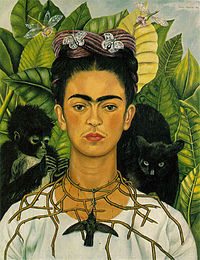
Frida Kahlo: doing selfies before it was cool

Frida Kahlo: doing selfies before it was cool

Nelson herself admits that “The real problem relates to conformity” – but unfortunately her morality-tale (clearly sensationalised by the paper, e.g. the byline “a cut-throat sexual rat race”) doesn’t leave room for a more in-depth look at how she herself engages online aside from her general, mostly generalised, examples. It seems to me that there are more interesting questions to ask about being a young person on social media if we can put aside our immediate reactions, dry our sweaty brows for a minute and calm our anxiety over the “youth of today”.

The point is, why not suspend judgement and condemnation of these girls and their online practices? Let’s think of some new ways to engage with questions of technology, sexuality and gendered bodies…without all the panic.

Makeovers and Mistakes: What Does Bravery Look Like?

Princess-Merida-before-an-009

Merida “before” (left) and “after” (right)

The recent controversy over Disney’s “makeover” of Brave character Merida, has been troubling me. CGI-Merida, hero of the 2012 the film, was stylistically re-designed as part of a re-branding of many of the Disney Princesses. Last week, website A Mighty Girl started a change.org petition to have Disney revoke Merida’s new look. The content of the petition gives a sense of the kind of reaction the new image garnered. It states:

The redesign of Merida in advance of her official induction to the Disney Princess collection does a tremendous disservice to the millions of children for whom Merida is an empowering role model who speaks to girls’ capacity to be change agents in the world rather than just trophies to be admired. Moreover, by making her skinnier, sexier and more mature in appearance, you are sending a message to girls that the original, realistic, teenage-appearing version of Merida is inferior; that for girls and women to have value — to be recognized as true princesses — they must conform to a narrow definition of beauty.

What is perhaps more concerning than the "new" looks is how their heads each differ vastly in size. Snow White looks like she could literally eat Cinderella.

What is perhaps more concerning than the “new” looks is how their heads each differ vastly in size. Snow White looks like she could literally eat Cinderella.

As it is, the campaign quickly gained over 200,000 supporters and Disney have apparently withdrawn the new Merida concept from their website (though they have manufactured a doll version that people aren’t happy about either). I first heard about Merida’s new look through my university women’s department, and my response was (literally, a Facebook comment): “Brave can be sexy too?” But it seems I was in the minority with this viewpoint. And while I can support the argument that representations of princesses should perhaps include more diversity in general, I have found most of the reactions deeply troubling and indeed to be inadvertantly reinforcing gender stereotypes. Let’s consider what people have been saying about Merida and the “makeover” (I’ve highlighted some of the more troubling bits):

  • The Mail Online writes: “Unlike most other Disney heroines, the animation character of Princess Merida looked like a real girl
  • The LA Times writes: “Among the modifications: Merida’s long mane of red curls has been defrizzed, her neckline has plunged, her waistline has narrowed and her wide-eyed, round face has been angled. She’s also got eyeliner.”
  • The Christian Science Monitor writes: “Let’s review the chief problems:They took a strong character and weakened her; They took a natural beauty and glamorized her; They took a youthful 16-year-old and made her look like she’s 22; They disrespected the fact that Merida is a princess who goes against the grain, eschewing the trappings of being a princess in favor of being an individual.”
  • Jezebel writes: “As you can see, her eyes are wider, her waist is smaller, her hair is sleeker, and her dress is sparkly as shit.”
  • Brave co-director Brenda Chapman has also been reported as saying, “‘When little girls say they like [the new toy] because it’s more sparkly, that’s all fine and good but, subconsciously, they are soaking in the sexy “come-hither” look and the skinny aspect of the new version.”
towardthestars

“Keep Merida Brave!”: one of the most problematic slogans of the campaign

However, there was one voice that went against the grain. Disney. Executive Catherine Connors writes: “It doesn’t matter what iterations of Merida are out there in the culture – Merida is Merida, and the essence of who she is is defined by the girls who embrace her”

While I remain skeptical about the intentions of any big-wigs intent on selling things to people, I can’t help but agree with Connors. Aside from the fact that I think a lot of the descriptions sensationalised how different the new image is (“plunging” neckline?!), much of the backlash focused on how the image of “new” Merida somehow inherently contained messages that:

  • There is such a thing as looking like a real girl (and it’s not “new” Merida!)
  • Things like wearing makeup and being sparkly/glamorous signify weakness (never bravery!)
  • This is all part of the sexualisation and brainwashing of children (let’s not teach our children critical thinking skills, let’s try and eliminate these kinds of representations!)

As someone who cares a lot about the possibilities of “femme” and subverting expectations despite “heteronormative” appearances, the language and assumptions of the Merida petition concern me. When we suggest chucking out one representation for another, what other norms are we in fact supporting or reinforcing? What limits are we too putting on expression?

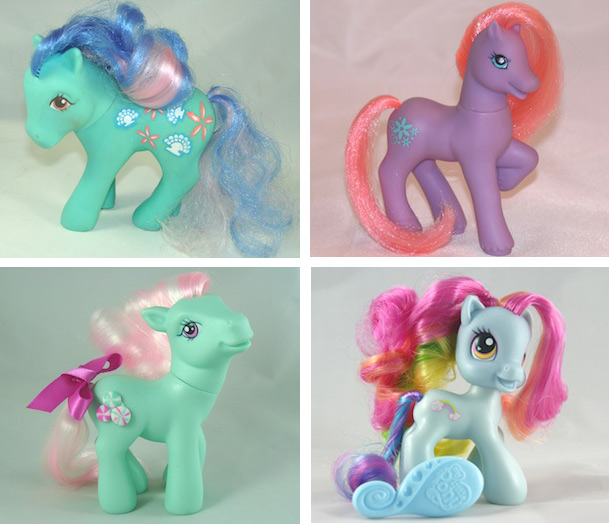
My Little Ponies have changed a lot over the years... yet they are still just as awesome (if not awesomer) than ever

My Little Ponies have changed a lot over the years… yet they are still as awesome as ever

I love this post from The Afictionado that argues for acknowledging that all kinds of different “types” of girls can wield power. They write: “You can be a tomboy or a girly girl, or a hard-working student or a lazy scatterbrain, and it’s all okay. And any of these qualities still allows you to pick up your wand and save the world.”

So, when Disney says, “Merida exemplifies what it means to be a Disney Princess through being brave, passionate, and confident, and she remains the same strong and determined Merida from the movie whose inner qualities have inspired moms and daughters around the world” maybe we should listen. Maybe we need to take a look at the kind of assumptions we are making about what a “typically” feminine appearance can versus cannot possibly signify. After all, isn’t courage about being, not looking, brave?

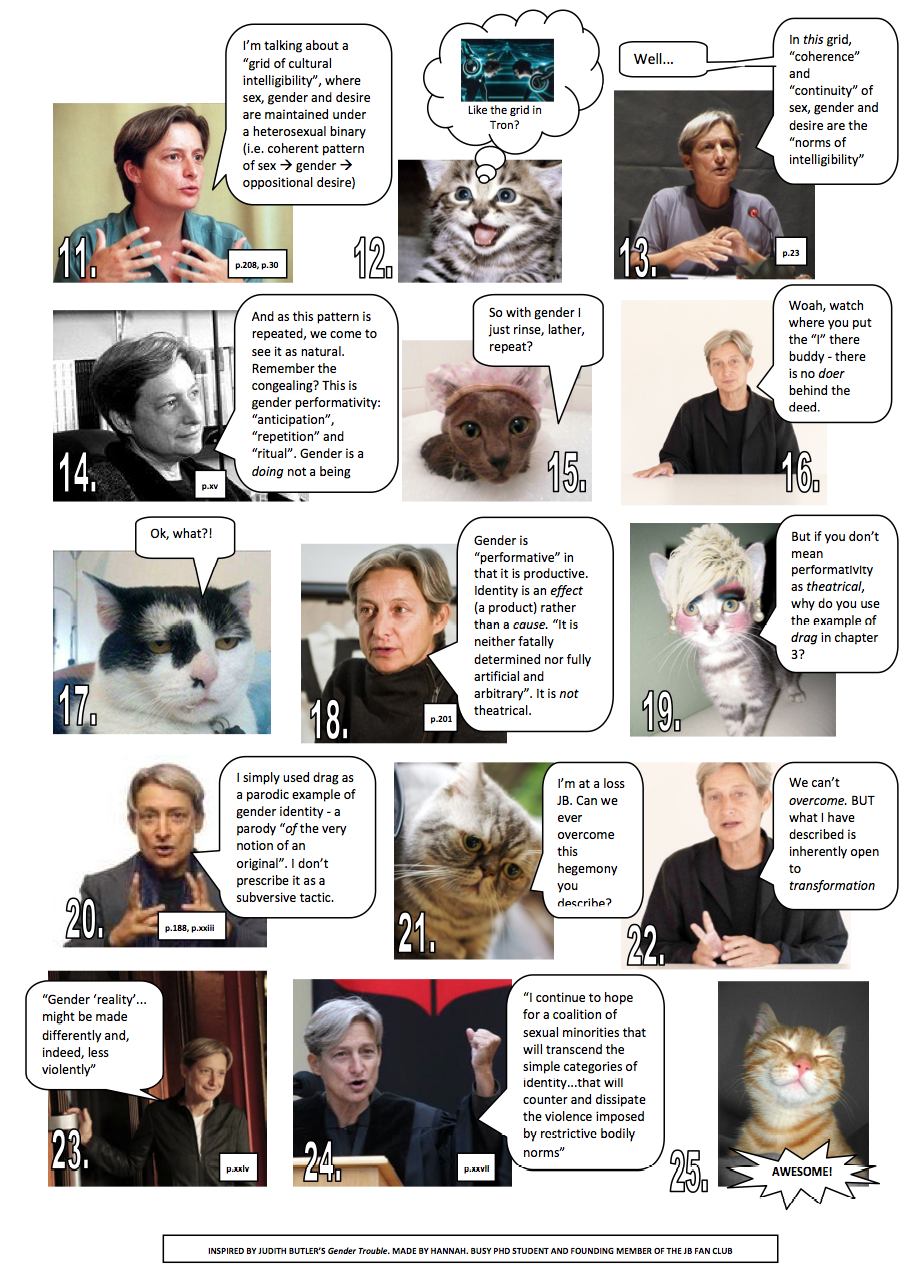
Judith Butler Explained with Cats

Following hot on the heels of Foucault Explained with Hipsters, here’s JB’s Gender Trouble  explained in Socratic dialogue style. With cats.

B1

B2


All page references from Butler, J. (1990 [2008: 1999]). Gender Trouble: Feminism and the Subversion of Identity. New York; London: Routledge.

Got any more ideas for philosophy/sociology/gender theory you’d like to see explained in comic form? Let me know in the comments below.

Spectacular Satire? Seth MacFarlane and Boobs at the Oscars

Seth MacFarlane: practically a Nazi

Seth MacFarlane: practically a Nazi

There’s a lot going around today about the fiasco that was Seth MacFarlane’s hosting performance at the Oscars on the weekend. Most notably this has focused on his “We Saw Your Boobs” opening number that had him sing out a list of all the women’s boobs that have appeared on film. And as salon.com covered today, many of these references refer to films in which women are exposed during rape or other violent scenes.

I had a few mixed feelings when I saw the clip. These included: an initial reaction of confused laughter and OH MY GOD I CANNOT BELIEVE THIS IS REAL*; amazement that the broadcast also showed the uncensored disdain of the women mentioned as they listened from the audience*; agreement that Anne Hathaway’s boobs in Brokeback Mountain were memorably great; and disgust at the likes of Hilary Swank’s boobs being noted considering it was in the context of Boys Don’t Cry. All in all I found the whole thing both upsetting and spectacular for what it illustrated.

544205_489351247767905_351580930_n

Naomi Watts and Charlize Theron react to the song*

It’s too easy to critique MacFarlane, creator of Family Guy (arguably a whole other kettle of satire or problems depending on how you look at it), as the douche who sang a rapey song about boobs. I’m sure he’s going to cop some hate mail and death threats over this incident (that seems to be the common response to offence in these days of identity politics). But how did this actually happen in the first place? Given the notoriously male-dominated arena that is the Oscars (not to mention the fact that no women directors pretty much EVER get nominated), doesn’t this whole episode kind of say in big blaring letters- Hollywood: Reducing Female Actors to Boobs Since 1929?

Anne Hathaway: wonderful boobs, incredible actor

Anne Hathaway: wonderful boobs, incredible actor

Rather than look at MacFarlane as an individual sexist they just happened to let run the gig why not see it for what it shows up? The women mentioned were clearly not ok with this reduction of their acting to their body parts, and nor should they be. The internet has leapt up and started talking about just how not okay it is.

I’m not heralding MacFarlane as some kind of comic genius, but I think we need to look a bit deeper.  And I don’t give a shit about intention, but clearly whether he intended it to be satirical or not, that song caused a lot of offence and probably on the flip side of that a lot of laughter not based on how absurd the premise is. I’m not saying “lighten up”- the specific references in the songs were horrifying. But surely this means we could be focusing on this aspect: wow, how fucking insane is the idea that women are only good as boobs in films. So insane in fact, we might laugh…

*NOTE: Since writing this post I have been made aware that the segment was not “real” in so far as the song was framed within the context of “imagine if…” (much like movies that end poorly with “it was aaaall a dream”) and that the reactions of Watts and Theron were thus pre-recorded. The points of this article however, stand, particularly considering how easily this material is accessed on the internet out of “context” and the reaction it has garnered as a result.

Babyz in the Hood: Girlhood Aspirations Then and Now

Yesterday I came across this amazing song from the Muppet Babies circa 1984:

I had a dawning realisation that 1984 is getting to be quite a long time ago now (*gasp*) and that the kids that would have watched Muppet Babies would already be in their mid to late thirties. With this in mind, I started to think: do the lyrics of the song give us some insight into girls’ childhood aspirations of the time, and, are these aspirations playing out in the lives of the thirty somethings as we speak?

Baby Miss Piggy sings: I’m gonna be a movie star/ And I’m gonna learn to drive a car/ Gonna be a veterinarian too/ And I’m gonna always love you/ I’ll be the cutest model you ever saw/ Then I think I’ll study criminal law/ And I’m gonna scuba dive too/ And I’m gonna always love you/ I’ll be a doctor for diseases/ And help you with your sneezes/ And practice neurosurgery on your brain!/ Gonna climb the Matterhorn/ But only after all our children are born/ ‘Cause I want to be a good mommy too! / And I’m gonna always love you!

The song conveys the idea that baby Miss Piggy aspires to be good looking, outgoing, have children and a successful career. I couldn’t help being reminded of all of the contemporary writing on the “problem” of the modern woman that thinks she can have it all. There’s a lot of writing on it, so I won’t go into the debate here. Suffice to say that my take on it is that perhaps we need to focus more on supporting shared parenting responsibilities and part-time work arrangements rather than arguing either that: women should be and do everything OR that women should simply choose. While I’m not sure that Muppet Babies are to blame for this particular issue, it did get me wondering what kind of girlhood aspirations are currently being represented on television.

Then I came across this (I suggest only watching two minutes maximum, it is quite painful):

This clip is care of the Bratz Babyz film 2006. The lyrics for the song at the beginning of this are: Put on your makeup/ Fix your hair/ No time to take up deciding what to wear/ It’s now or never/ You can’t slow down/ Gotta get it together/ Cos time is running out/ Final count down/ Get ready now/ 5, 4, 3, 2, 1/ Gotta be hotter than hot/ You just have to rock/ No time to stop/ ready or not/ Gotta look hotter than hot/ Gotta show what you got/ No more time on the clock/ Ready or not

As the lyrics and visuals reveal, girlhood aspirations portrayed in Bratz are heavily tied up with wearing makeup and overcoming the burden of choice, that is, what colour dress to wear (!) Amazingly, the characters in the clip shown are babies, not full grown “Bratz”. The baby Bratz world reveals that even toddlers are concerned with matching their lipstick with their outfit. Now, I don’t want to get all down on femininity. I love lipstick. I do. But babies concerned with being “hotter than hot”? I have to admit this is slightly concerning. Not least because it infuses a focus on consumption even further into childhood. As a member of society well and truly down that rabbit hole, I would only hope that people in their younger years could put this off as long as possible.

A girl showing her Bratz inspired face paint

But aside from capitalist concerns, it also seems to flatten aspirations- sure, baby Miss Piggy wanted to be a hot model, but she wanted to perform neurosurgery on your brain too! On the other hand, while some may say it is precisely toys such as Bratz dolls that contribute to the media’s sexualisation of children, the Bratz movie also reveals an abstraction of femininity from sexuality. No longer is femininity about being a perfect woman for a man, it’s just about indulging in femininity, pure and simple…

By my calculations (considering that the Bratz range came out in 2001), the Bratz generation should be in their mid-late teens/ early twenties by now. In the end, what future do these lyrics foretell for the up and coming generation of women? How will they differ from the Muppet Babies generation before them? Only time will tell…

The difficulty of speaking about “women”

I went to a Women of Letters event yesterday – a fantastic evening listening to some well-renowned women (including the fabulous Melanie Tait and Eva Cox) read out letters on the theme of re-writing history. After the letter-reading session, there was a panel on “divergent ways” hosted by Scissors, Paper, Pen of Canberra. But when one of the curators of Women of Letters, the talented Michaela McGuire (the other being the spunky  Marieke Hardy), was asked a question about letter-writing as gendered, I was surprised at her response. Michaela suggested that perhaps letter writing and the desire to express oneself with pen and paper (or computer and paper!) is more of an innately womanly pursuit. Furthermore, Michaela pointed out that yes, Women of Letters was made up of mostly “female” speakers.

Now, Michaela has stated in the past that she questions whether she calls herself a feminist or not, and has got some flack for running predominately woman-focused events. So given this acknowledgement I wouldn’t want to call Michaela out for her essentially essentialist statement on women. But it did remind me of the struggle that I often personally encounter with talking about “women” versus “men” as well as the problematic interchange I often make between the words “woman” and “female”.

de Beauvoir: espouser of the sex/gender distinction

Simone de Beauvoir famously stated, “One is not born, but rather becomes, woman” (in the new translation by Constance Borde and Sheila Malovany-Chevalier). Following de Beauvoir, feminist writers have been keen to highlight the difference between sex and gender (of course not everyone sees it that way). On the surface of things, this argument amounts to the idea that sex is in reference to a determination male vs. female made at birth based on genitalia, while gender involves a process of acculturation, learning the expectations of what it means to be a “real” woman or a man (e.g. real men wear suits not dresses). Of course, then Judith Butler came along and posited that sex is caught up in a similar process, but that’s another story…

The point is that for the most part, much feminist writing has attempted to draw a very clear distinction between sex and gender- i.e. “female” and “woman” carry very different meanings. So while we might want to say that femaleness is biological (though this is questionable and hardly clear-cut as JB points out, and as intersex conditions demonstrate), the category of woman holds the weight of a history of socialisation involving certain gendered roles.

Then again, transgender/trans* came along and reminded us that there is a lot more to gender than just socialisation- some people desire transition from one sex and/or gender to another (or something in-between or outside of). PLUS trans* reminds us that gender isn’t just about masculinity or femininity- e.g. you can be assigned female at birth, become a man, but present as feminine (see Femme FTM). So what does it really mean when we say “woman”, “feminist” or we attempt to categorise what “women” are like? And doesn’t an awareness of the sex and gender distinction render attempts at answering any of these questions really really difficult?!

Academic and poet Denise Riley expresses her apprehension toward identity categorisations, reminding us that terms fluctuate in meaning over time and context. Nevertheless, Riley acknowledges, “While I can’t think why I’d want to utter that chilling phrase ‘speaking as a woman’, I can think of situations in which it could be my lot to cough pointedly from the back row, ‘But what about the women here?’” While I hold many concerns about using the term “feminist” (noting its tricky devotion to the gender binary), I still fill with rage, for example,  when I think about the under-representation of women in the philosophy discipline (see my philosophy women tumblr here, they do exist!- Did you know that a bunch of Pythagoras’ teachers were women? No? Well, they totally were!).

Toilet door symbols remind us that being a woman is about wearing triangle dresses

On so many recent occasions I have found myself struggling to express my feminist sentiments in non-essentialising ways. Certainly relying on the interchangeability of the terms “female” and “woman” is something I trip up on. When talking about even the most general things, such as the difference between dating men versus dating women, I am prone to making the most lurid generalisations that blur the line between sex, gender and “natural” traits. And, while I know I am guilty of this, I still cringe when I hear women speaking about their natural proclivities for sharing, being supportive and caring, etc. While we continue to promote these ideas about innate difference, we in fact produce them.

Are women more prone to letter writing? Maybe. But surely that is not something we are born with.

What Disney Princesses taught me

I came across this today-

A reading of what Disney princesses teach girls

Sure, I have considered the rather un-feminist implications of a lot of the princess story lines before. But I’ve never really sat down and thought about it. My reaction to this picture was to think that I could see how these readings were plausible, but that for me, reinforcing hetero-norms is not the first thing I think of when I see the princesses (which is odd, cos that’s basically all I see in everything).

Okay, on the surface they all want their prince to come, etc, etc. And they’re all feminine and beautiful, and fairly non-diverse (until Princess Jasmine, Pocahontas, Mulan and Tia cracked the scene). While I distinctly remember adoring little mermaid Ariel growing up, my mum loved Ursula, and was pointed to note that not all short-haired plump women were actually sea witches. Looking at the older princesses (Snow White, Sleeping Beauty, and Cinderella) compared to the newer ones, there is a marked difference between their representations. Princesses have had a lot more ‘tude since the 1980s.

Totally.

I went back and watched Colours of the Wind from Pocahontas. It reminded me that, wait a minute, these chicks kicked ass in these movies. The prince thing was always just a distracting part of the story line for me, and I barely remember the prince characters. While the princes were all pretty generic (charming, rich, handsome…*yawn*), the princesses had exciting lives, amazing magical friends and, most of all, adventurous spirits. But, I guess that’s why it’s kind of depressing when they all end up “settling down” in the end.

No doubt, you could write a feminist tome deconstructing these animations (I’m sure they’re out there). Still, I can’t help looking back fondly at the Disney Princesses I grew up with. And I’m really not waiting around for my prince to come. Why? Sorry, too busy exploring the shore above, painting with the colours of the wind – I want much more than this provincial life, I want adventure in the great wide somewhere….