Date Night Films for Any Occasion

Watching-Scary-MoviesIt’s that time of the year again – the dreaded V-Day. If you’re not shacked up and hoping your partner will finally buy you flowers, you’re probably single and trying to avoid restaurants filled with loved-up couples. Either way, you may be looking for a movie to watch with your boyfriend/s/girlfriend/s/genderfriend/s this weekend (that is, unless you’ve decided to go see Fifty Shades or protest at the cinema). So just in time, here are my recommendations for snuggling up with your handsome self or your kissing buddies:

Great on-screen chemistry with these two

Great on-screen chemistry with these two

What If – When you need an offbeat but surprisingly good romantic comedy 
This quirky Canadian film came out in 2013, but with little fanfare upon its release, you may have missed it. Starring Harry “Daniel Radcliffe” Potter and MPDG Zoe Kazan as the strangely named characters Wallace and Chantry, the dialogue is delightfully relaxed and the side plots are just as entertaining as the central story. Offering a nuanced approach to the complications of love and commitment, this rom-com is well worth a watch.

Your fantasies of Lena Headey as a redhead are answered

Fantasies of Lena Headey as a redhead made real

Imagine Me and You – When you feel like a gay chick flick
Same-sex rom coms are few and far between, but this one is a real winner. It has a pretty crappy rating on Rotten Tomatoes, but this assessment is just factually and scientifically incorrect. This film stars Hot Cersei (Lena Headey) alongside Piper Perabo, and it’s a match made in lesbian imagination heaven. The best thing about the film is its adherence to all of the elements of your usual trashy romcom, but with a gay storyline. What more could you want?

Also Ginnifer Goodwin is super cute

Also Ginnifer Goodwin is super cute

He’s Just Not That Into You – When you feel like a chick flick that is truly terrible
I love this movie. With basically no redeeming features, this film is utter garbage, reinforcing every terrible norm of gender you could imagine (women are desperate to marry, men are either liars and cheaters or weaklings, women have no agency in the dating game, women are controlling, etc). I tried to do a feminist analysis of this film once, but after the opening scene had 8 pages of notes and had to stop. Because it is so devastatingly awful, this is one film where you can truly take a break from thinking. My favourite quote from the film is “It’s hard to focus on nutmeg when the guy who might be the guy of my dreams refuses to call me”

the-future-paw-paw

You can’t go wrong with a cat narrator

The Future – When you need a film that reflects the difficulties of relationships
Written, directed and starring the effervescent Miranda July, this film explores human connection, loneliness and making mistakes. Narrated by a cat, Paw Paw, this magically-real film is one to watch when you feel like something that reflects the messiness of making yourself vulnerable in love. This one’s a keeper.
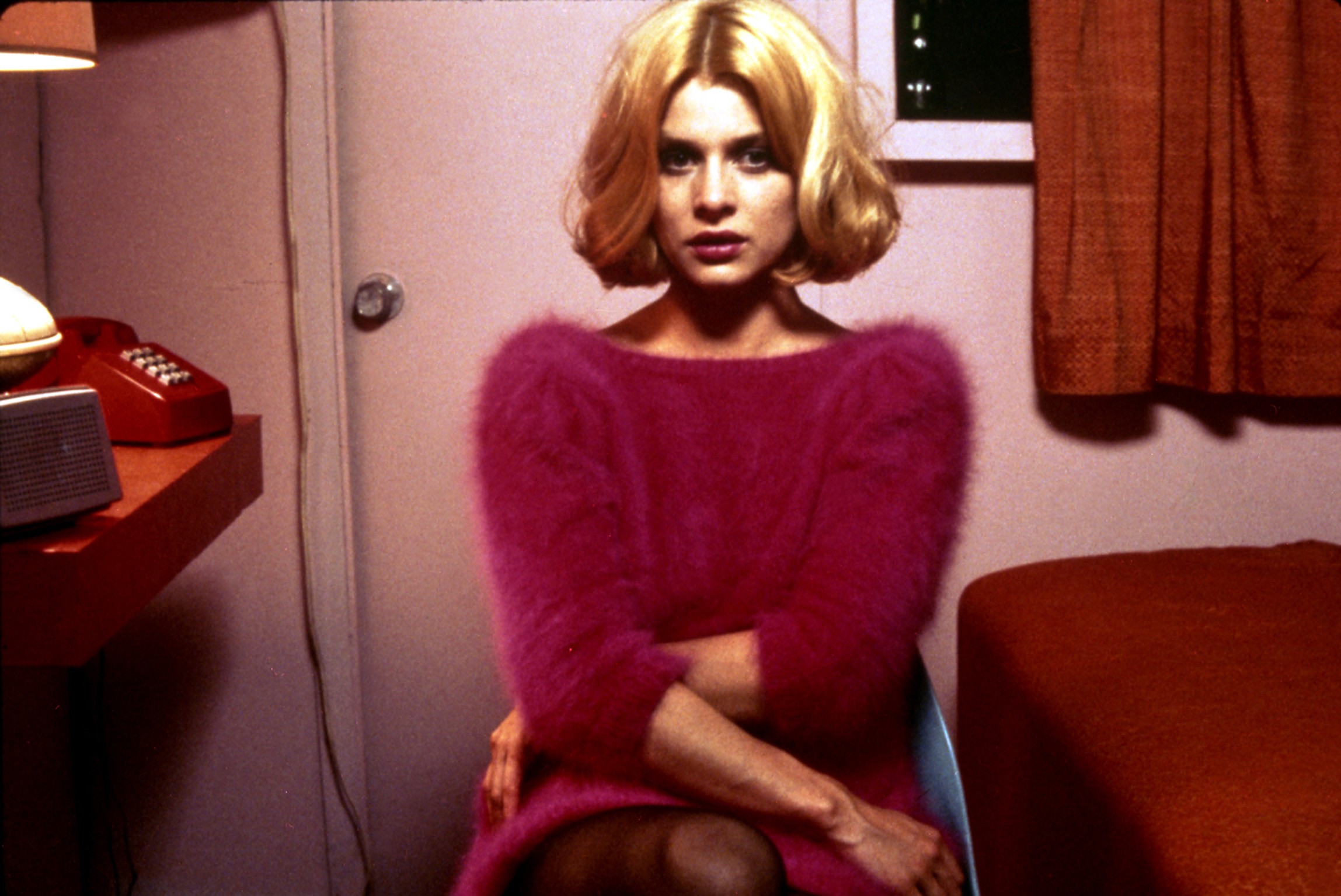
I just also really love this outfit that Nastassja Kinski wears at one point

I just also really love this outfit that Nastassja Kinski wears at one point

Paris, Texas – When you feel like epic cinematography with poignant themes
Directed by the visionary Wim Wenders, Paris, Texas is a quiet and compelling film. Exploring the complexities and old scars of family relationships, this film slowly sinks into your skin, as you bask in its desert landscapes. Hopeful but dark, this is one to watch when you feel like some existential reflection on date night.

It also stars Icelandic singer Bjork, so that's pretty cool

It also stars Icelandic singer Bjork, so that’s pretty cool

Dancer in the Dark – When you’re feeling like a gut-wrenching drama that will leave you audibly sobbing
So you feel like a big depressing cry – this is the film to go for. Directed by the sadistic Lars von Trier, this movie is a masterpiece of film making that uses Dogme-like techniques to make the film seem exceptionally real, even as characters consistently launch into song (did I mention it’s a musical?). I once re-watched it in a philosophy class, and when the lights went on at the end even the teacher’s face was dripping with tears. I was basically having a fit with how upset it made me.

The_Shining_4

Plus Shelley Duvall is weird looking and rad

The Shining – When you don’t feel like sleeping properly again
I felt like I should include a horror movie on this list, but since I haven’t seen many, this is one of the only ones I can recommend. Because apparently watching scary movies is fun for some people. It’s a classic, so if you haven’t seen it already, get on it and make snuggling up to your crush/es on the couch all the more necessary. To calm down afterwards, be sure to watch The Simpsons parody.
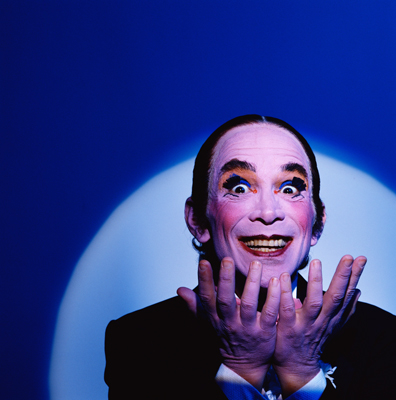
Because life is indeed a Cabaret

Because life is indeed a Cabaret

Cabaret – When you need a musical that’s edgy and political
I cannot get enough of Cabaret. The choreography, the songs, the historical political themes, the Liza Minnelli. This film literally has everything you could want in a film, let alone a musical. It’s the film to watch as a compromise when your partner/s can’t stand musicals but you desperately need some camp realness on date night. You’ll probably want to download the soundtrack afterwards too – and will be strutting down the stairs belting out the lyrics in no time, no doubt to your lover’s delight.
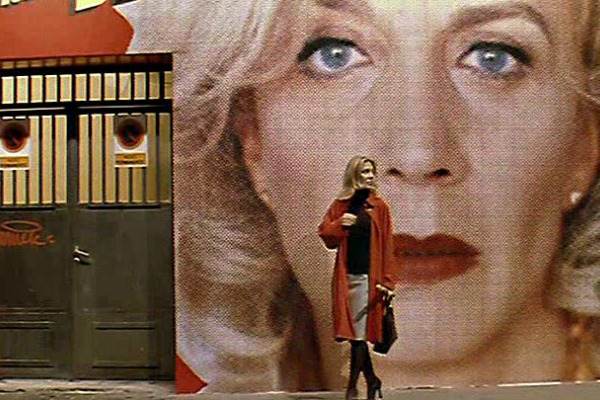
A film all about women

A film all about women

All About My Mother – When you feel like intertextual stimulation
The film to watch when you feel like having a discussion about the way it re-imagines the archetype of the Southern belle, and how it re-works the themes of A Streetcar Named Desire and All About Eve. Or, if you’re less of a wanker than I am, this film is enjoyable on the themes of motherhood and female relationships. Director Pedro Almodovar is a true auteur, and the film has sublime casting and beautiful character development. You don’t really have to be an English major to enjoy this one.
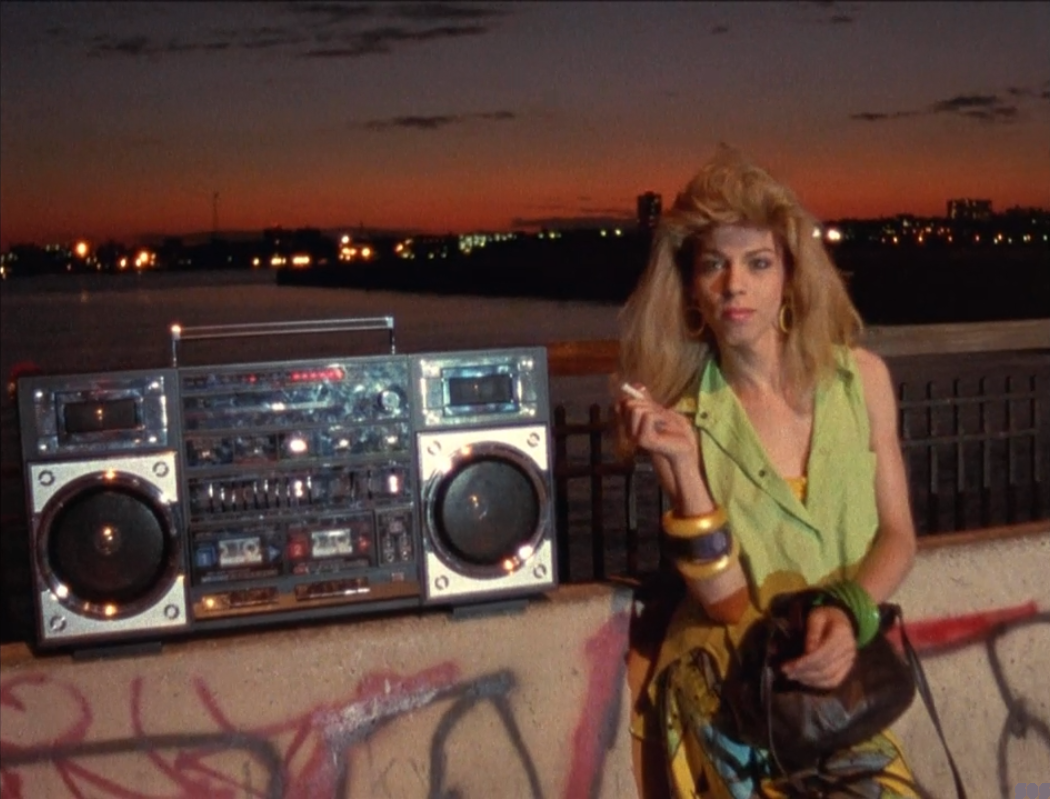
The powerful Venus Xtravaganza

The powerful Venus Xtravaganza

Paris is Burning – When you feel like a documentary
My favourite documentary of all time, Paris is Burning explores the drag-ball scene of late 1980s New York. Directed by Jennie Livingston, the documentary is told by the people living as superstars in this underground world. As much about race and class as it is about gender and sexuality, Paris is Burning is ultimately a story about being erased by “normal” society but finding family in the effort to achieve belonging.
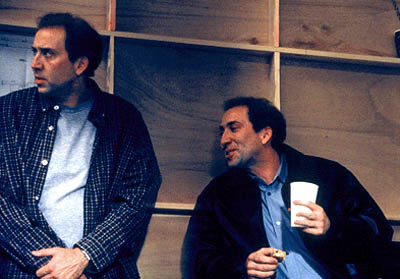
Double the Cage, double the excellence

Double the Cage, double the excellence

Adaptation – When you feel like great screenwriting and an unpredictable plot
Written by Charlie Kaufman, and starring Nicolas Cage and Meryl Streep, this film just couldn’t have more going for it. It’s funny, dramatic and a little bit off at times, which makes it very enjoyable. Plus did I mention Nicolas Cage? Playing twins? Double the Nicolas Cage can never be a bad thing. While you’re at it, please also watch Nicolas Cage Losing His Shit

Animated foxes with more style than most people

Animated foxes with more style than most people

Fantastic Mr Fox – When you realise Wes Anderson made a stop motion animation of a Roald Dahl book and you haven’t seen it
Admittedly I’m just listing films I like now. I love director Wes Anderson, even though he’s clearly a privileged motherf***er, he is damn good at making films. If you’ve got a whole weekend with your loves or yourself, I’d recommend just marathoning his entire oeuvre. Meanwhile, Fantastic Mr Fox is romantic and cute, full of adventure and beautiful to look at. A totally rompy delight. Do it.

Goldblum good times await you

Goldblum good times await you

Jurassic Park – When you feel like some Jeff Goldblum
If you’re one of those crazy crackers that hasn’t seen Jurassic Park since it came out at the movies (or indeed, if you were born post-1993), you need to watch this classic STAT. Not only is the fourth one coming out in July (i.e. this is planning in advance for a future date night), it is just literally one of the best movies ever. Also there is probably never a time when you don’t feel like some Jeff Goldblum, and this is peak Goldblum material. Yes. Oh yes.

Happy film watching!

The #Tay4Hottest100 Controversy

Taylor_Swift_Hottest_100_640x360Lately there’s been a bit of a kerfuffle going on in social media land about the recent bid to get Taylor Swift’s song ‘Shake It Off’ into the Triple J Hottest 100 this year. Instead of a straightforward essay-style argument about it, my girlfriend Geraldine and I decided to record a video of us discussing the issue. We had fun talking about it, so you might enjoy listening to it. If not, there’s always this instead.

Scourge of the Girl Crush: 7 Nearly-Gay Movies

Sam Frost and Lisa Hyde 4EVA

Sam Frost and Lisa Hyde 4EVA

I have this habit of erasing straightness from movies and TV shows, to the extent that I often remember things as explicitly gay, when really there’s heteroromance as a main focus. For example, in this year’s series of The Bachelor on Australian television, I was convinced that the main man Blake was gay, and that his top two women left at the end – Sam and Lisa – were in love (I still stalk their Instagram accounts and hold to this theory). When it all went to crap, I couldn’t help thinking it was probably because everyone was gay, and the new girl Blake picked was just the only one willing to be his beard.

It's like this see

It’s like this see

I was recently asked by a friend why I was so insistent on seeing queerness in straight romances, like, isn’t this some kind of reverse homophobia?! I answered that there are is so little queerness represented in the mainstream that by default I see queer storylines in some kind of attempt to open up space. As Jill Mackey writes about seeing the gay in the straight:

Despite [the] dearth of honest representations of ourselves and our lives, lesbians continue to see mainstream films, and we make up for the lack of representation of ourselves by “reading against the grain” for representations of women that we might appropriate and interpret as signs of lesbian love and desire

I'll save the queer reading of Princess Bride for another time

But I’ll save the queer reading of Princess Bride for another time

Of course I don’t see every romance this way and there are some “straight” partnerships I definitely love – Buttercup and Wesley, Elizabeth and Darcy and all of Love Actually, for example. But in many movies, I just can’t help seeing epic romances between the female characters, which leaves me in a state of perpetual disappointment and/or simply mis-remembering the endings (always tricking myself that the fanfic in my head actually happened). Adding to my angst is the fact that many films try and pass off any possible queer vibes as simple non-threatening “girl crushes” instead. This makes me pretty mad, because it suggests that there is a “safe” way for women to be nearly-queer, while still asserting an explicitly “no-homo” sentiment (many “bromances” also promote the message of safely-not-gay).

So, entertaining a mix of both delight and disappointment, here’s a rundown of my top seven nearly-gay-girl-couples (spoilers ahead):

drinking

“We got played by the same guy… do you want vodka or tequila?”

7. Carly and Kate, The Other Woman
The Other Woman
has an interesting premise – when Carly finds out that she’s actually the mistress of the man she’s been dating, she becomes unlikely friends with his wife Kate (and they team up to do awful things to him). The movie explores their burgeoning friendship and (if you ask me) there is a great deal of homoeroticism in their unintended ménage à trois, particularly when they discuss their desire to still have sex with the cheating guy, yet “withhold” for each other. All I’m saying is that there is a lot of sexual tension, drunken rollicking and under-wedding-skirt action. But really for me the unacknowledged love between the two women is cemented when Carly “falls” for Kate’s handsome yet fairly two-dimensional brother. It’s like seeing her choose to take the second prize in a raffle. The bro don’t cut it.

"You are more beautiful than Cinderella! You smell like pine needles, and have a face like sunshine"

“You are more beautiful than Cinderella! You smell like pine needles, and have a face like sunshine”

6. Rita and Becca, Bridesmaids
This one’s not quite as painful, because really the lesbian themes are pretty overt, so it’s not so much about reading into things as celebrating a minor storyline. These guys have a serious crush on each other, and the femme-on-femme action couldn’t be better. In fact I love them so much I can’t even remember how this storyline ends, despite seeing the film several times. I think they go back to their husbands, but in my head they get shacked up in Vegas. My only wish is that there was a lot more of the film dedicated to them and I’m still hoping for a gay wedding spin-off.

"A woman's touch can quickly fill the empty flower boxes on a window sill. One smile from her and zoom, little buds begin to bloom

“A woman’s touch can quickly fill the empty flower boxes on a window sill. One smile from her and zoom, little buds begin to bloom”

5. Katie and Calamity, Calamity Jane
What can I say about these two? They move to a hut in the wilderness and dance around singing a song called “A Woman’s Touch”. About how good the touch of a woman is. Yeah. At the end the Hollywood producers stick a weird double wedding scene in there where Katie and Calam marry some forgettable guys, but it’s pretty hard to believe. Did I mention that Calamity also sings at length about her “Secret Love“? Mmm. 

"It's time to see what I can do. To test the limits and break through. No right, no wrong, no rules for me I'm free!"

“It’s time to see what I can do. To test the limits and break through. No right, no wrong, no rules for me I’m free!”

4. Anna and Elsa, Frozen
Okay, stay with me on this one. I *get* that Elsa and Anna are sisters, but the queer themes here are out of control. I mean it’s really nice to see sisterly love represented as “true love” instead of romantic love, but it’s hard to overlook the intensely gay themes of the film. Funnily enough, when Frozen came out and was lambasted by a bunch of right-wing religious nut jobs, I agreed with their readings of the film as super gay (but obviously disagreed with the conclusion that this was a bad thing). The way I see it, there was some serious Freudian taboo stuff represented at the beginning when Anna gets “touched” by Elsa (representative of the sexual exploration that children do), but then Elsa is forced to hide her queer touch. When she runs away to the mountains and sings “Let it Go” it definitely smacks of coming out of the closet (plus she femmes up like a super high femme of excellence). Olaf the camp snowman is like a concrete manifestation of her queer desire, and not surprisingly turns up at the beginning, but doesn’t come to life until Elsa “comes out”.

"I just wanna meet I guy I like as much as you"

“I just wanna meet I guy I like as much as you”

3. Paige and Sasha, Life Partners
This movie is painful because it follows the story of Sasha, an openly lesbian woman (representation – tick), who is best friends with a straight woman Paige. When Paige gets a really straight boyfriend and stops hanging out with Sasha, everyone has a bad time, particularly anyone in the audience hoping the women would get together. Apparently this film was trying to push boundaries by representing this kind of relationship (and is based on a true story/ directed by the real-life Paige). But what you end up with is wondering why Paige stays with her super clean cut man, when Sasha is about a zillion times more interesting and dashing in every way. It’s like the film is an ad for homosexuality through painting a picture of a monotonous and droll heterosexual world. It’s very confusing.

"That's my jam. It's my lady jam."

“That’s my jam. It’s my lady jam.”

2. Beca and Chloe, Pitch Perfect
Oh Beca and Chloe! Or, as Tumblr kids refer to them, “Bechloe“. Pitch Perfect is one of my favourite movies (I would watch it as frequently as I watch Mean Girls, but I can’t deal with all the vomiting), but the non-eventuating Bechloe storyline is a killer. They have so much chemistry, they are pretty much literally on fire for each other. The shower scene! The party scene! The finals scene! OMG it’s a Bechloe love-fest! Except that it’s not, and when I re-watch I am continually reminded that there is some dude that Beca gets with at the end. I’m sorry but getting sentimental over Breakfast Club? Whatever. I’m sure Bechloe will live on in Pitch Perfect 2. And in my heart.

"I'm with Muriel"

“I’m with Muriel”

1. Muriel and Rhonda, Muriel’s Wedding
I re-watched Muriel’s Wedding on TV the other night, and was delighted to see the glaringly obvious gay themes in there that I’d never noticed as a kid. Not only does the film indulge in an uber-kitsch camp aesthetic, but it seriously challenges the institution of heterosexual marriage by mocking it at every turn. Rhonda sweeps in and transforms Muriel’s life, and the two are miserable when they part. There is also the scene where Rhonda discovers Muriel’s book of fake wedding pictures and is utterly distraught, and when Muriel finally does get (sham) married, Rhonda sits like an outcast at the back. But your heart skips a beat when they look at each other leaving Porpoise Spit at the end – practically on the verge of kissing at every moment.

There it is, my depressing/delusionally heartening list that would make for a super marathon of film watching. If you have any other films with similar not-yet-queer themes, let me know in the comments below!

How (Not) to Lose Friends and Alienate People

Australian model Jennifer Hawkins posing with the cup

Australian model Jennifer Hawkins posing with the cup

This Tuesday Australia was again witness to the “race that stops a nation”  – the annual Melbourne Cup. Amid the gaudy headpieces, peacocking men and drunken stumbling, another common tragedy struck: two of the horses died, one in its stall from a heart attack after the race, and the other put down for a broken leg after being spooked by the crowd. While horses often die because of racing (or are put down when they are no longer winning) this year’s events seemed to strike a chord with people, and there was an outpouring of grief on both social media and a huge amount of coverage in the press. This was not without backlash – some people reacted by highlighting the other human tragedies that happen every day, arguing with people along the lines of “why should we care about two racehorses when there are so many other things to worry about”. Indeed on the same day – and getting very little news coverage – it was reported that an Iranian refugee sent to the island nation of Nauru by the Australian Government, was stoned and then beaten, as tensions on the island escalated between locals and the refugees being forced to stay there.

A picture from Animals Australia shared on Facebook

A picture from Animals Australia, shared on Facebook

But with horror happening all around us, what are we to do? Can we really ask people to stop caring about horses being tortured while refugees are too, as if caring about one thing is a callous distraction? I thought about this for some time.

I decided that it is a bit of a dick move to call people out for caring about another creature’s pain. What the outpouring of grief for the racehorses says to me is that people are capable of a great deal of compassion and that caring about one thing is not mutually exclusive to another. What we may even be seeing is a critical point where people are actually feeling emotional about the current state of affairs generally, 978-0-8223-4107-9-frontcoverwhich gets crystallised around strange and unexpected events such as this year’s Melbourne Cup.
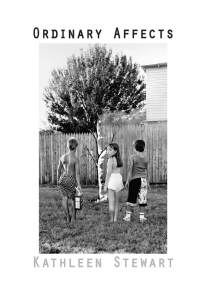
American theorist Kathleen Stewart’s Ordinary Affects explores this very idea – that in daily life we are subject to an overarching and low-burning trauma, as we are subject to all kinds of pressures and misfortunes. We can get by most of the time without noticing these negative daily “affects”- sensations felt in the body – but sometimes they boil over into big and unfortunate events, like a pressure valve momentarily releasing everyone’s pain and struggle.

An image of the march for Jill Meagher in Melbourne

An image of the march for Jill Meagher in Melbourne

Another example of the kind of debate over “what matters more” happened after the murder of Australian journalist Jill Meagher in 2012. In an unusual case, Meagher was subject to sexual violence and was killed by a stranger, after walking home alone at night in the busy streets of Brunswick. With her last moments eerily captured on CCTV, many Australians were deeply moved by the case, and a week after her death 30,000 people marched down Sydney Road in her memory. While some responded by criticising the march for not focusing on the “real” issues of violence facing women (such as the fact that being subject to stranger violence is much less common than domestic violence), this kind of critique only served to alienate people who were experiencing grief and concern. I imagine for many people it was precisely the low-lying “ordinary affect” of fear that many women experience on a daily basis (especially walking home alone) that was being expressed in the march. The Meagher case was a nightmare made real within a broader context where women experience violence and sexism every day.

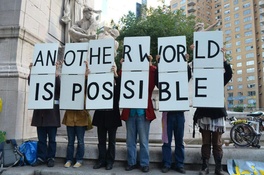
another_world_is_possibleThe lesson to take away from all of this is that when people demonstrate that they care about an issue, getting angry at them for not caring about something else isn’t going to work. Instead, it can be a good time to raise awareness of broader issues and how these connect up. After all, it is the same world that allows horses to be tortured for the benefit of billionaires, while refugees are used as political pawns. We don’t need to choose to have feelings about one thing and not the other. Perhaps we do need to think about the kind of world we want to live in, a world where neither of these things are possible – and how in fact we might get there.

Best Lesbian Date Movie Ever

pride5

A shot from ‘Pride’: Lesbians and Gays Support the Miners (LGSM)

Seeing as I usually only cover depressing Adam Sandler movies here at binarythis, I thought that it was high time I do a review of something more uplifting. Yesterday my girlfriend and I went to see Pridethe true story of how a gay and lesbian activist group joined forces with a mining town to fight the Thatcher government’s attacks on miners in 1984 -1985.

We assumed that it might be emotion-making – seeing as we both cried watching the trailer. But we didn’t expect quite the workout that our tear ducts got, and we laughed at our own sentimentality as our eyes welled up in pretty much every scene (to be fair to us, beforehand we accidentally primed ourselves for an afternoon of happy tears by watching Ellen Page’s coming out speech).

maxresdefault

Ben Schnetzer as LGSM leader Mark Ashton

Particular tear-jerkers for us were every time:
– someone mentioned the importance of solidarity
– people spontaneously sang union songs
– there was the shaking of hands/friendship between the gays and lesbians and the miners
– someone stood up for what they believe in, even though it was really tough
So yeah, pretty much the whole film.

As someone who has been involved in political struggles, particularly around students and education as well as refugees here in Australia (#HeyAsio), the movie struck a chord with me because it showed the way in which activism can fundamentally transform people’s views and bring them together to fight for a better world. This is summed up in my favourite quote from the film, from one of the miners who visits a gay club to thank Lesbians and Gays Support the Miners (LGSM) for raising money:

When you’re in a battle with an enemy that’s so much bigger, so much stronger than you, to find out you had a friend you never knew existed, well that’s the best feeling in the world. Can you see what we’ve done here, by coming together all of us? We made history!

Real-life Pride March, 1985

Real-life Pride March, 1985

Though I really wanted to know more about the struggle on the picket lines (and how they managed to maintain such an extremely long strike), the focus of the film was really the journey of the gay and lesbian group who supported the miners. It was so refreshing to see a film where intimacy between same-sex couples was the norm and where it was not made into a plot spectacle or reduced to a joke. Overall the film managed to cover a great range of struggles encountered in queer life (homophobia, parental relations, AIDS, coming out, and finding pride) as well as political organising (building coalitions, schisms forming, the difficulty of leadership, and the challenge of those who argue for “partying not politics”).

When we got home we listened to Bread and Roses as we made dinner, elated with a sense that history reveals human beings are capable of remarkable solidarity.

How to Smash the Patriarchy with a Small Book

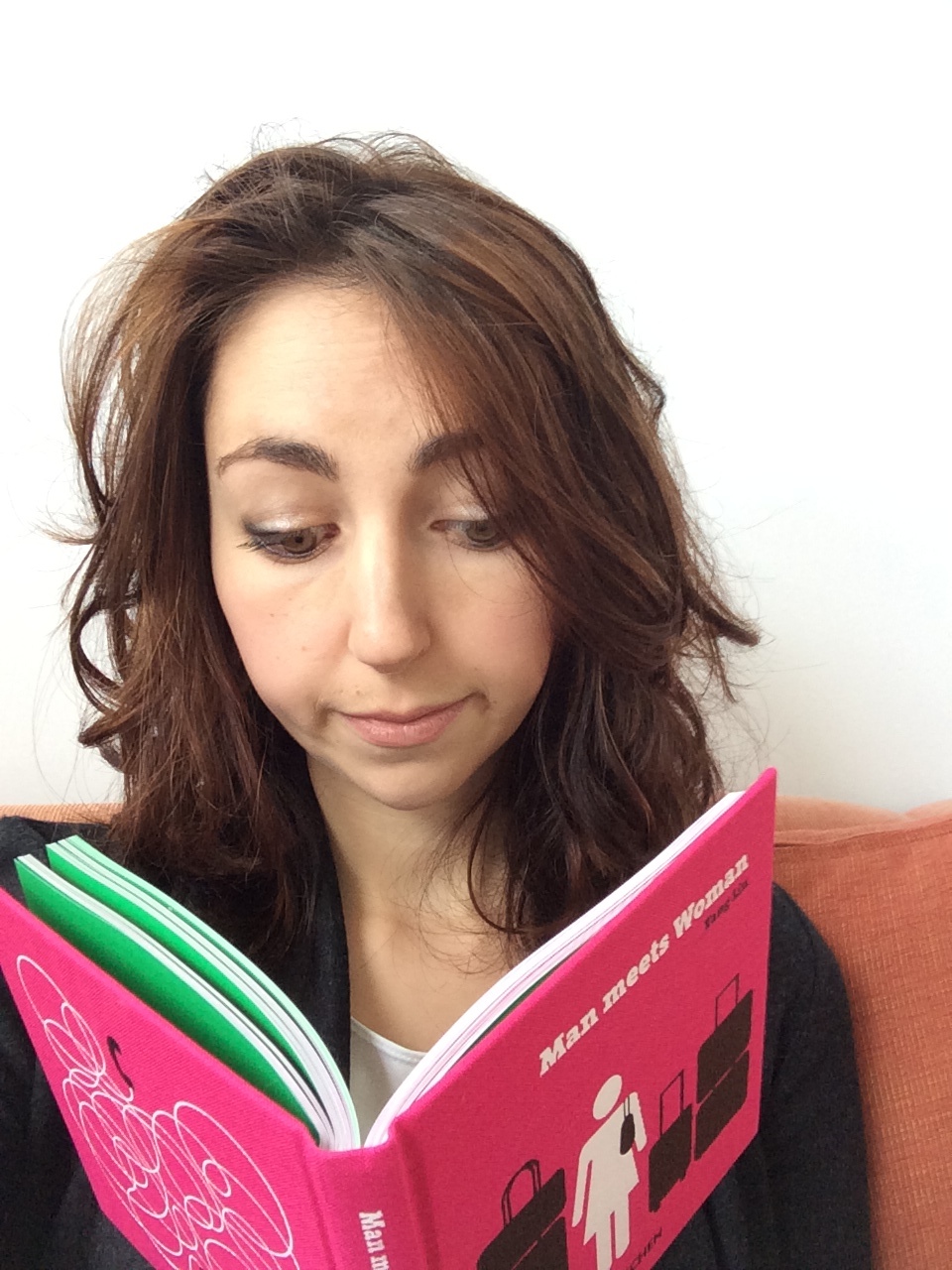
Perusing Yang Lin's new work

Perusing Yang Liu’s new work

Book Review: Man meets Woman by Yang Liu
You often hear of blogsters of the new world gaining financial – and product – benefits from their blogging pursuits. I’m thinking here mostly of the fashion and makeup bloggers that have risen to stardom, who are no doubt constantly being sent designer threads and cool new stuff to put on their faces. Well, here at binarythis.com, I’ve finally reaped the first free thing of my blogging days: a book about gender stereotypes (yes, I have obviously officially made it to the big time). Oh the spoils of blogging about gender! But enough of my bragging – let’s cut to the chase and get on with a review of the thing.

Taschen asked me if I might like to review Yang Liu’s new conceptual book, Man meets Woman. Yang Liu explains in the preface that her work seeks to document the differences in communication between men and women, that she has observed and experienced. The following pages are filled with complimentary sets of graphic images on particular topics such as shopping, sex and illness. Images appearing on the left, on a green background, represent a man’s view, with images on the right a woman’s view, on a pink background. For example, “mysterious objects” reveals that for men the unknown revolves around women’s makeup accoutrements, whereas for women tools and other hardware objects are mysterious.

Liu works with a range of stereotypes from the home to the workplace, providing imagery for many clichés – e.g. a man who sleeps with numerous women is a king, whereas a woman who sleeps with many men is considered easy. While the majority of pages focus on perceived differences between men and women with regard to heterosexual relationships, there is some commentary on same-sex partnerships. Liu’s images reflect a view that gay male couples in society are much more visible than lesbian partnerships.

While looking through Liu’s work, I couldn’t help bristle at many of the reflections on offer. It seems to me that there is a fine line between reflecting stereotypes, and reinforcing them through replication. Liu dances on that line, and I’m still not sure whether I really like the project. Part of the problem is that Liu’s motivations are somewhat difficult to deduce – she states that the images are reflections on a world that she perceives, yet it is not clear whether she is challenging these stereotypes, or merely describing them (and perhaps, reasserting them).

e1c4f9baa50e84d3c7a7329f6135d35f

Liu uses the classic iconography of “man” and “woman” symbols in her work

However, luckily we’re living in a postmodern age where the author is (figuratively) dead, so we can make of texts what we will. At the end of the day, I think that the greatest contribution Man meets Woman makes, is that it acts like a guidebook to stereotypes of men and women today. Do men really find beauty objects mysterious? Are women confused by hammers and screwdrivers? We don’t have to accept these as “truths” but Liu’s capture of these generalisations hints at the social expectations underlying the perceived differences between “men” and “women” in society.

But how are we to ensure that Liu’s book gets taken up in this way – as a challenge rather than a reinforcement of stereotypes (already there are a number of blogs reflecting on the “charming” and “witty” reflections of the book). Never fear – here’s a handy guide to using this small book to smash the patriarchy:

STEP 1: Visit parliamentary question time. Throw copies at the heads of known misogynist politicians.
STEP 2: Go on a guerrilla mission Valerie Solanas style – throw the book at all known misogynist pop artists.
STEP 3: Get someone to bail you out of jail.
STEP 4: Reflect on the stereotypes of the book, and realise that we live in an unjust world where men and women are socialised differently and driven apart.
STEP 5: Become a revolutionary gender warrior.
STEP 6: Use the book for kindling if you get cold while smashing the patriarchy.
STEP 7: The book also doubles as a nice coaster if you need to stop for a refreshing drink.
STEP 8: Show other people the book and talk about how it doesn’t need to be this way.
STEP 9: Work with others to fundamentally reassemble society into a world where gender is plural and fluid, not binary, and doesn’t separate us from each other.
STEP 10: Read the book again, as a bizarre historical artefact capturing an inequitable time.

Worst Lesbian Date Movie Ever

Fact: If you see this film, you're going to have a bad time

Fact: If you see this film, you’re going to have a bad time

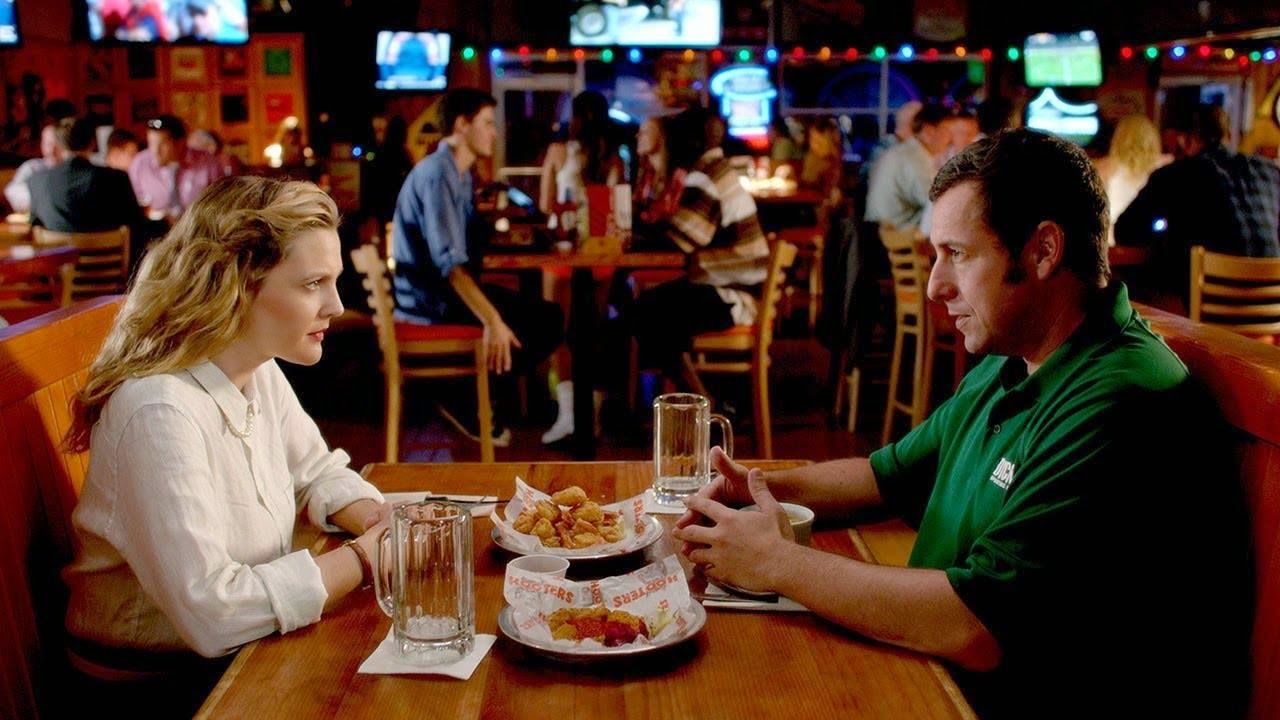
Not long ago my girlfriend and I went out to the movies together for a first date. We’d been seeing each other for a little while, but hadn’t had an “official” outing together, and a movie seemed liked a sweet pick. Now my girlfriend’s taste in film can be summed up thus: storyline about food/cooking, attractive older women (e.g. Helen Mirren), slightly progressive tone, feel good transformation of some kind, romantic. But with a dearth of The Best Exotic Marigold Hotel on offer, we had to settle for the romance factor promised by Adam Sandler’s new flick, Blended. Having not read even a single blurb about the film, our exact decision making process was Drew Barrymore? Yes. 

We were quite prepared for the heterosexual focus of the film – after all it is very unusual to find a mainstream romantic comedy that even includes LGBT side characters let alone central ones. We were not however, prepared for the barrage of homophobic insults included in the dialogue, the central messages of which were: it’s not okay to be a lesbian and it’s certainly not okay to be gendered differently. I guess that whole Adam Sandler continually making gender offensive films should have been a dead giveaway, but alas.

A distinct lack of chemistry

A distinct lack of chemistry

If you look up rundown of the film, you’ll get descriptions like this:
After a bad blind date, a man and woman find themselves stuck together at a resort for families, where their attraction grows as their respective kids benefit from the burgeoning relationship.

Jim positively ruins his girls by dressing them in comfortable gym gear, etc

Jim positively ruins his girls by dressing them in comfortable gym gear, etc


But an honest description would go like this:
A divorced woman with two boys and a widower with three girls are not very attracted to each other. They decide to shack up when they learn that they can actually teach each other’s children how to be appropriately gendered in society. The divorcee who cannot manage to control the freudian sexual impulses of her own boys, finds solace in applying makeup and hair extensions to the girl children. The widower who has managed to raise girls that are very successful at basketball and that dress in comfortable clothes, learns that he is also good at teaching boys how to “be a man” through sport and activity. They come together at a special camp for people struggling to learn how to build a normal family. 

Sounds bad? It was. And that’s not to even mention the overtly racist tones in the “Africa” (country not specified) scenes, where dark skin = dim-witted servant status at the resort they find themselves at. As per usual the darker skinned men in the film were also overtly sexualised (that old trope where  racist assumptions represent certain groups as closer to “nature”, “the body” and therefore sex).

Before: sporty, active, unhappy

Before: sporty, short hair, unhappy

After: quiet, inert, happy

After: shacked up, long hair, happy

The hardest thing for me was listening to the audience laugh at the openly anti-queer jokes, such as when Lauren (Barrymore) and her coworker are caught hugging and then make a series of funnies about how they’re not lesbians (not to mention they work at a wardrobe-sorting business called “Closet Queens” – hilarious). And then there was this beautiful scene, where Lauren approaches Jim’s (Sandler) eldest daughter who is staring wistfully at a boy that won’t acknowledge her existence:

Lauren: Maybe you should just go talk to him.
Hilary: Oh, no, no, I can’t.
Lauren: Have you ever considered changing your hairstyle?

Without blinking, the film gives Hilary a makeover from her “bad lesbian haircut” (as it is referred to) and she instantly gets the guy. Meanwhile Lauren teaches the six year old in the film how to apply makeup properly (unlike her father’s attempt, which makes her “look like the walking dead”) and Jim shows the boys how they can channel their sexual frustration into competitive sports such as boxing and throwing cricket balls at people’s crotches.

It was so unbearable that we were both quite hysterical with disbelief that such a film could still legitimately exist.

But what actually really worked for this film, was that it was so overt in its sexual and gender stereotyping, you could use it in any GEND1001 course as an exemplar par excellence of how heteronormativity functions in society. For example, here’s a few things I picked up from my viewing of Blended:

TBH you literally have to learn how to even touch each other

TBH you literally have to learn how to even touch each other

1. You have to work really hard at being heterosexual and monogamous. Most of the time people fail and become single, on the brink of slipping into gayness. In fact, most heterosexual couples have to go on training camps to really get their act together and make it work. If you don’t try hard enough as a woman, you might find yourself rejecting men altogether and spending too much time with your supportive best friend.

Everyone is a *lot* happier when they look like normal girls

Everyone is a *lot* happier when they look like a normal girl

2. Being appropriately gendered is something you have to learn. One is certainly not born a woman and there are many skills about self-presentation you will need to acquire. Having short hair is not going to cut it for getting a man. Ditto being good at sport or wearing comfortable shoes. Similarly, makeup is not something to play around with, it is serious. If you use too much everyone will see your gender efforts, so hold back. Once you’ve got the skills down, they can be handed from generation to generation via same-sex familial relations.

Stick it out for the good of humanity

Stick it out for the good of humanity

3. To avoid everyone being queer, different or interesting in any way, every family needs a mother and father. The only way to keep a lid on everyone’s non-normative gender and sexual expressions is to keep the family unit together. Sure there might not be much attraction between the mother and the father, but at the end of the day they’re going to have to close their eyes and go in for the kiss for the good of the family, and for the good of the straight world as a whole. It’s a small price to pay to make sure that we don’t get queerly gendered and sexed kids running all over the shop.

So as horrendous as it was, the takeaway from the film is that it is a parody of itself. For all you queer kids out there, let this be something to hold on to: this film reveals the truly laborious and unnatural task that it is to be “normal”.

Let’s Talk About Class: Hierarchies of Taste and Gender

Posh man: I ain't one

Posh man: I ain’t one

Recently, I found myself at a wine-tasting session with a friend, only to be confronted with the embarrassing reality that I had no idea how to act “appropriately” in the situation. The whole thing wasn’t helped by the fact that I was wearing an outfit much like Julia Roberts circa Pretty Woman, as I sometimes care to do (it’s a great look). Trying to “be myself” rather than affect a more refined countenance turned out to be quite the faux pas in terms of the disdainful/pitying/embarrassed looks I got from other patrons. While on the one hand I was rather “f*** you” about it, it also later resulted in me crying into my pillow.

Ladette to Lady: teaching us how not to be working class

Ladette to Lady: teaching us how not to be working class

Later, I came across this article about the UK’s Education Secretary Michael Gove, and his comments that working class children must learn to be middle class to get on in life. The basic gist of Gove’s sentiments is that upper-middle class kids are mostly the ones in charge and working class kids need to develop more refined cultural tastes so they can fit in with the elites and get a leg up. The whole thing reminded me of my wine-tasting misadventure. I thought, should I read the ancients, learn Latin, listen to classic music, learn what the f*** foie gras is, so I too can run the world one day? I’ve spent much of my life trying to dress and appear more middle-class than my background would suggest and I definitely understand the mobility that this has afforded me. This is not to mention the fact that the (relatively free) education system of Australia has allowed me to work my way up to doing a PhD and now I have the privilege of education giving me a leg up to even comment on all this. 

Struggling with this issue, I showed the Gove article to my first year sociology classes yesterday. They rightly pointed out that while Gove brings to light the important issue of cultural capital, his solution reinforces the same hierarchy of inequality he’s talking about (<3 my students those smart little beans). 

In Australia we refer to working class people with "unrefined" tastes as "bogan"

In Australia we refer to working class people with “unrefined” tastes as “bogan”

The idea of cultural capital comes from sociologist Pierre Bourdieu, and as this handy quote from McLaren (1994) suggests, cultural capital is “the general cultural background, knowledge, disposition, and skills that are passed on from one generation to another. Cultural capital represents ways of talking, acting, and socializing, as well as language practices, values, and types of dress and behavior.” So, the whole wine-tasting biz revealed my lack of cultural capital in this arena – probably owing to the fact that I was raised in a single-parent welfare-dependent family in a rural area and wine-tasting was something we had no access to, let alone interest in. But cultural capital isn’t just about etiquette, it’s about taste, as Bourdieu (1984) himself states, “…art and cultural consumption are predisposed, consciously and deliberately or not, to fulfill a social function of legitimating social differences.”

Pro-tip: don't mention Miley at your next wine-tasting event

Pro-tip: don’t mention Miley at your next wine-tasting event

I talked about the hierarchy of taste with my classes and asked them what was at the top versus the bottom – i.e. if someone loved and knew lots about X what would make them seem really sophisticated, but if they loved Y would be looked down upon? People had some difficulty identifying what would be at the top – Mozart perhaps, Kafka? But when I asked them what was at the bottom, they all knew instantly – pop music, Justin Bieber, Miley Cyrus, basically anything that was seen as the stuff of the masses. I joked with my students that I decide what I like based on what carries the least cultural capital, because f*** that sh**. When I came across this article in The Guardian about how horrifying it is when “pop and rock collide” I couldn’t help thinking it might be because pop is seen as such a low art form that it contaminates all “true art” that it comes in contact with.

Game of Thrones: So sophisticate. So amaze (for reals).

Game of Thrones: So sophisticate. So amaze.
(FYI I do love it also)

You may be thinking, well hang on, rock is also the stuff of the masses isn’t it? Why would rock be above pop in this crazy hierarchy of taste? Jimmy Hendrix ain’t no Mozart…right? Here we come to the gendered aspect of this culture war. I can’t help but see how within evaluations of “good” versus “bad” taste, often what is seen as of interest to women (or made by women) is way down the ladder. For example, what ridicule do writers or readers of romance fiction face compared to those of crime novels? How often have you heard someone bemoan how problematic Girls is, but how amazing Game of Thrones is? Or how Kanye West is some kind of genius and gets played on alternative radio stations, but Beyoncé stays within the realm of commercial radio (unless she’s featured by Kanye)? It’s as if something carries more cultural value if it’s seen as belonging to the realm of men’s taste, men’s stereotypical areas of interest like action-adventure, if it’s made by men or simply features men being awesome.

While Kanye is a world away from the cultural capital Michael Gove is talking about, the gendering of taste also plays a huge part in what counts right at the top of the hierarchy. The ancients, classical artists and musicians, the writers of classic texts and operas…predominately men (well, at least the ones we value/know about – the erasure of women from history in all this is another story). 4916523Feminists and cultural theorists have been fighting this for years, to try and turn the tables around. That’s at least part of the reason why you see university courses geared toward taking popular culture more seriously, particularly that which is seen as “women’s interest” areas (like romance).

Of course none of this means we shouldn’t critique popular culture for its downfalls and the way it reproduces other problematic norms around sexuality, bodies, consumption, race, ability, etc. But it does mean we need to hold ourselves to account when we’re critiquing these things. When we judge “popular” culture who are we judging along with it? The working-class? Women? The under-privileged? And we might also ask ourselves: what are we going to do about it?

Queer Music Review – Fun Machine’s ‘Bodies On’

FunMachine_PressShot1

Fun Machine

As a slight departure from the usual gist of BinaryThis (i.e. critiquing dominant discourse and/or pictures of academically-themed cats) I’ve decided to do a music review. While considering music from a queer theory perspective is nothing new, it’s not often that we turn our lens from the pop culture machinations of the super-famous, to what’s being produced locally. So even though I know sh** all about music, I thought I’d take some time to consider a band from my hometown of Canberra, called Fun Machine and their newest album ‘Bodies On’. My feeling is that while we spend so long trying to recover interesting meanings from the big-name songs we hate/love, sometimes we might miss the very queer happenings right under our noses. Also I have a special place in my heart for this band- they did an ode to Skywhale (Canberra’s many-breasted whale hot air balloon) with Hannah Beasley last year, which is probably the best song OF ALL TIME (listen here!).

This is not the band, but it is what comes up on Google image search when you type in "fun machine"

This is not the band, but it is what comes up on Google image search when you type in “fun machine”

But before we begin, here’s a SUPER quick run down of what I mean when I say “queer theory perspective” (for a longer explanation of queer theory, see here or here). Questions I considered for this review are:
– How is the fixity of identity (such as sexuality, gender or human-ness) being challenged?
– What are the ways in which ideas of “normal” are being critiqued?
– Are there any other openings being made for ruptures/transformations of the way we usually understand the world?

An image from the band's page: apparently you can "NEVER have too much glitter"

An image from the band’s page: apparently you can “NEVER have too much glitter”

As you might notice from those questions, though queer theory has its historical foundations in gay and lesbian activism, a “queer” perspective (though connected to questions of identity) can be about more than just gender and sexuality: doing queer theory involves challenging the way we think. In this sense, “to queer” can mean to make the familiar seem strange. While I have literally no idea how these guys identify in terms of gender or sexuality, that’s not what a queer perspective necessarily needs to involve – it’s about shaking things up. Having said that, sometimes queer is just about glitter – which incidentally, these guys are definitely into.

One thing that I really love about this band is the way they switch between different vocalists, styles, instruments and subjects…Listening to their new album in full for the first time, I had no idea what to expect from one track to the next. They’re also certainly not one of those bands where all their songs sound the same (as a side note here, honestly when the Lana Del Ray song ‘Young and Beautiful‘ came out last year, I genuinely thought it was a re-release of one of her earlier songs. Silly me). Point is, Fun Machine are far from boring. But what of their queer themes? Oh god get to the queer themes already! I hear you say. Okay, here goes…

The first song on their album, ‘Naked Body’, has a rather exciting clip filmed right here in Canberra, involving a crowd of sweaty, body-painted locals:

The clip is richly queer: a montage of skin fills the screen in an ode to hands, breasts, hair, feet and sequins. Blending voices, singers Bec Taylor and Chris Endry sing/shout the lyrics Girl it’s just my naked body/You’ll never touch my naked body/Get your hands off this naked body claiming freedom to nudity, and ownership of their own bodies. Then there’s some loud guitary-drumy bits (I said I don’t know sh** about music) and on repeat we hear Don’t trust unnaked bodies followed by orgiastic images of a dancing crowd smeared in paint and glitter. We see the words “naked”, “fun”, and “rock” literally written on their bodies.

Exposed flesh bursts forth in 'Naked Body'

Exposed flesh bursts forth in ‘Naked Body’

The whole scene adds up to a reclamation of the exposed body as something to embrace, but “fun” is located in your own enjoyment and relationship with your body rather than becoming object to someone else’s desires. At the end of the video clip we see a “money shot” of glitter in an orgasmic rock finish. Transcending boundaries of gender and heteronormativity, music is the polyamorous lover that brings bodies to climax. Here, nakedness is not about being seen, but about being “true” to yourself and your own desires, not the expected norms of sexiness.

‘Shave’ is the fourth track off their album, which also boasts a locally made vid. This was obviously done on a shoe-string budget (I love how you can see the pieces of paper they’ve pasted together for the backdrop):

shave

Brady Bunch for the 21st century in ‘Shave’

The clip starts with a colourful grid of local faces, a kind of modern-day Brady Bunch where “family” is no longer recognisable as the norm of mother-father-children, but rather the connections you have to your community and the people around you. The video involves these faces (also sporting neon makeup and jewels) lip-syncing Come back to me my love/And watch me as I shave. Faces are interspersed with surreal scenes that push the limits of reality: Barbie’s head has been replaced with the Hulk; a plastic wolf is bleeding from the mouth; a monkey mask is covered in candy bananas. The song finishes by asking Are you dancing/Gorgeous/Chaos/Hard Lust? More glitter bursts from a balloon, and a picture of Australia’s Prime Minister is smashed with an egg. ‘Shave’ opens up the limits of what we might take pleasure from and exposes a multiplicity of desire directed at rupturing “reality”. That the PM ends up with ‘egg on his face’ in amongst the scenes of multi-coloured surrealism, suggests that a different political future might be possible – things might be otherwise if we raise our voices up and shout Hey!

d196c0889d1ee562136dc85ec21180e9-640x360

Fun Machine: a veritable glitter-fest

Other songs on their album are also strange and wonderful. ‘In the Jungle’ has helpful tips for what you might want to have handy in the Jungle: You need a hat cos it is sunny/And penicillin never goes wrong, just don’t forget your games console…But I like to play my way/Play Nintendo in the Jungle. With a melody that reminds me of a late 80s sitcom blended with nostalgic videogame tones, this song may seem frivolous on the surface. But I can’t help but think that one message in this is that in order to survive we need more than just the practicalities of life, we need to play. In other tracks we hear about zombie girlfriends (‘Set You on Fire’), how we change each other in relationships (‘Alchemists’) and the possibilities for change (‘Ready for the Fight’). I couldn’t quite understand all of their songs- I think ‘Souvenir Teaspoon’ might be about taking drugs with your grandma, but I’m not sure. The album drifts from gruff deep voices to the softest lilting melodies – this is a musical landscape of difference and transformation.

As a final point, we might note that amongst “80s german minimalist techno” and “pop” they also classify their musical genre as “gay punk” and “genres are weird”. To me, this sums it up: Fun Machine are queer as f*** because you can’t put them in any one box. I encourage you to listen to their new album or go see them if you can: you’ll probably end up dancing around naked and covered in glitter. And as we all know, you can NEVER have too much glitter.

Photoshopocalypse: there’s more to be worried about than airbrushed legs

rs_634x890-140115075550-634.Lena-Dunham-Vogue-Cover-Annie.jl.011514

The Vogue in question

This week popular feminist site Jezebel embarrassed itself by offering $10,000 to anyone who could provide the before-photoshop shots of Lena Dunham’s US Vogue cover. Now, I love reading Jezebel on a daily basis. It’s a bit hit and miss, but generally I appreciate its mixture of popular culture and feminist analysis. Though this latest stunt has got me wondering: when it comes to cultural analysis, what is worth spending our time worrying about?

This has really been on my mind since I read this article from The Guardian, that asks “should popular culture be a site for political debate?”. Aside from the bit about the “deluge” of Miley Cyrus analysis (which gave me pangs of PhD fraud-guilt), I generally agree with the gist of the article. We should be careful not to get too caught up in deconstructing particularities of entertainment, lest we forget the bigger issues – of binary gender, economic disparity, racial prejudice, and so forth. 

I_have_no_idea_what_I_m_doing_here-4195

When we focus on the small stuff we can get lost (or stuck in the refrigerator)

In other words, we want to be careful that we can still see the political forest despite the pop culture trees.

Given that popular culture is a huge part of daily life and a source of enjoyment for many people (whether we agree it should be or not) it certainly warrants attention. But I do agree we should make sure our critique doesn’t become so narrow and specific that we miss the point. From what I can see going on in the Dunham-cover debate, there is a pretty narrow focus not on a tree, but on a tiny bug sitting on a leaf.

And it’s not like the issue of photoshopping doesn’t deserve attention, it’s just that we have the same conversation time and time again. It goes something like:

Photoshop: making celebrities look slightly alien since 1988

Photoshop: making celebrities look slightly alien since 1988

Prosecutor:
“BEFORE this woman looked NORMAL and BEAUTIFUL…
But then society deemed that she was NOT BEAUTIFUL ENOUGH.
Oh the TRAVESTY that we can’t just be our bumpy NORMAL selves”

Defendant:
“What do you EXPECT, the public want to see BEAUTIFUL people.
I mean, if you want to see FAT and UGLY just go out on the street.
This is FANTASY, this is fashion, it is MAKE BELIEVE”

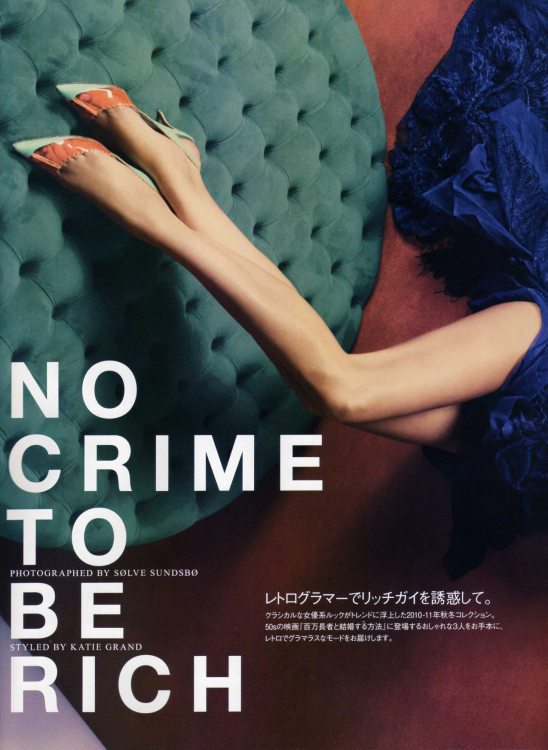
Vogue-Nippon-No-Crime-to-be-RichAnd so the banal conversation continues, until we have it again next time someone’s leg or muffin top is lopped off by photoshop. And we’re so busy having this debate over whether it is permissible for fashion magazines to have shiny airbrushed people in them, that feminism goes over to the corner and dies from boredom.

I mean, if we’re going to spend our time and money ($10,000, really Jez?) critiquing Vogue, why not look at it’s full-on reinforcement of class disparity? Why not look at it holistically, as a cultural artefact: what does it keep us aspiring to? That it proposes a vision of beauty that isn’t just a particular form of femininity, but is perhaps more grossly white, upper-class and heterosexual?

Is it just me, or are "real women" all veeeeery similar looking...

Is it just me, or are “real women” all veeeeery similar looking…

And part of the problem with focusing on photoshopping as *the* political issue, is that we then so readily accept “normality” as a selling point. Take the various Dove campaigns around “natural beauty”. We dance in jubilation – finally a company willing to show normal women! Never mind what might be left out, or the fact that this is all done in the name of profit.

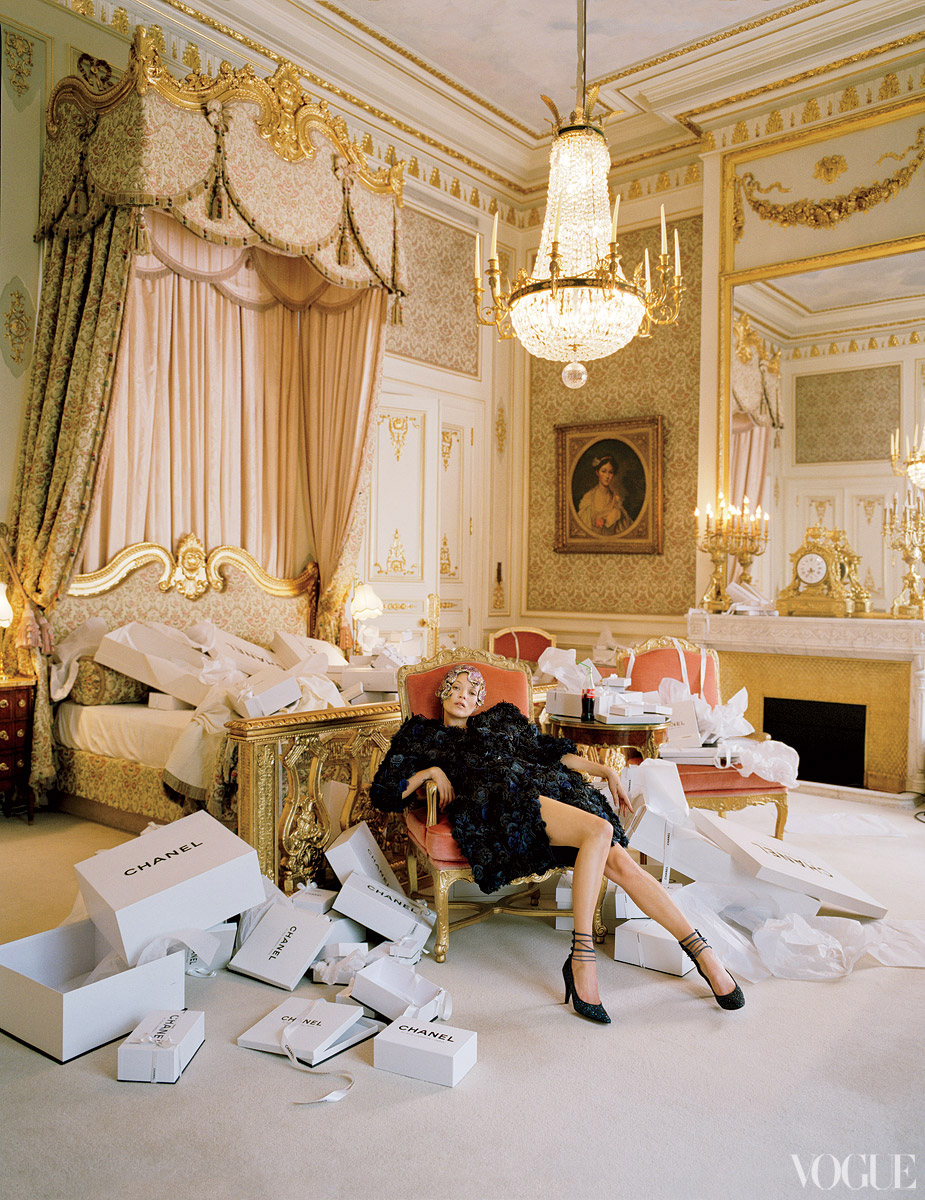
ritz-kate-moss-0412-VO-WELL61_112745722452

No photoshop here? No worries!

When we’re doing these analyses, why don’t we ask: who is the *real* enemy?
The women posing, willingly participating in their objectification?
The individual photoshoppers, for being so brutal with their brush?
The editor of Vogue, for dictating what is socially normal and acceptable in fashion and beauty?

…Or, something bigger?…

I’m not saying that individuals are devoid of ethical responsibility. I’m not even saying we should stop reading Vogue or Jezebel, and strip off all our clothes and makeup and run into the bush and live like a hermit (that’s a different conversation). But I am saying that when we invest our time in critical analysis and commentary, we also need to make sure we focus on the wider picture.