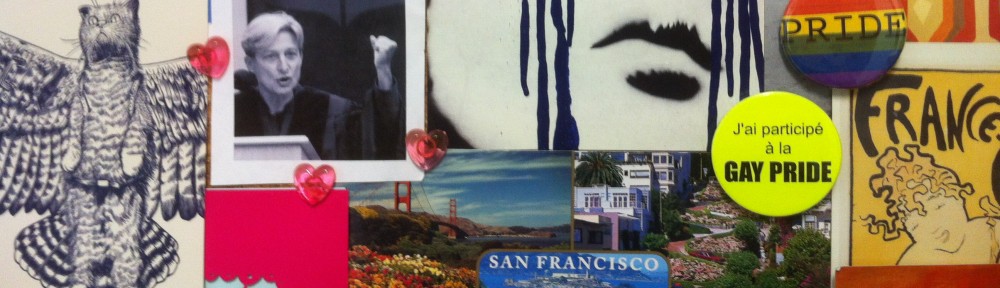
“A certain affective reanimation needs to transpire if a disabling political pessimism is to be displaced” – José Esteban Muñoz

Weighing up her original country fan base versus the gay market?
If you’ve ever been to a Taylor Swift concert, you’ll know that she is not only one of the greatest singer songwriters of our time, she is an industrial complex. The changing merchandise. The cross-promotion. The advertisements. Worth $360M, Swift is number 60 on Forbes‘ dubiously named “self-made women” list (though notably well behind Madonna at 39, Celine Dion at 46, and Beyonce at 51). As one Swiftie tweeted this week – after Taylor announced not one but four versions of her album companion booklet – “You can’t spell capitalism without Taylor Swift”.

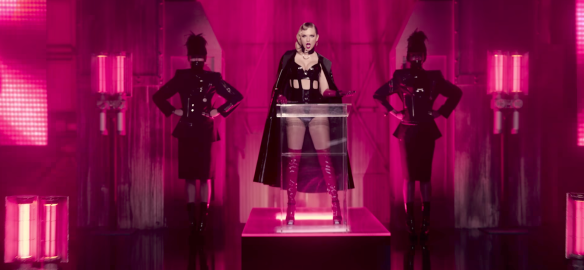
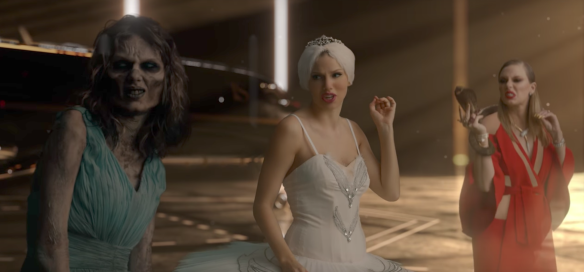
Taylor being subtle
So perhaps that’s why when Taylor released the new single from her upcoming album, “You Need To Calm Down” (YNTCD) with its super gay content there was understandable outcry that Taylor is simply trying to cash in on a lucrative gay market (the so-called “pink dollar”). This is a reasonable claim. I doubt that Taylor and her team have ever made any decisions without considering the bottom line.
The whole thing raises the sticky questions of: how can we celebrate queer culture when capitalism is intent on devouring everything good, and selling it back to us? If there is no ethical consumption under capitalism, how should we orient toward a distinctly queered Taylor Swift?

We get it
Some of the answers lie in looking to Taylor’s fandom, specifically those who believe that Taylor is a (closeted) gay icon: the Gaylors. While “capitalist Taylor Swift” is an important reading, it is limited. It misses the impact that Taylor being more overtly queer, rather than just covertly queer (which she has been doing for years, as I have written about previously) has on these queer-reading fans. The online Gaylor community (which is mostly made up of Kaylors – those who believe Taylor and model Karlie Kloss have been in a relationship for years) has spent over a decade dissecting the queer elements of Taylor’s oeuvre.
For these fans (which let’s be real, I am one), Taylor’s new queer-ified era represents a turn from subtext to text, and importantly a big alienating middle finger to Taylor’s conservative fanbase.

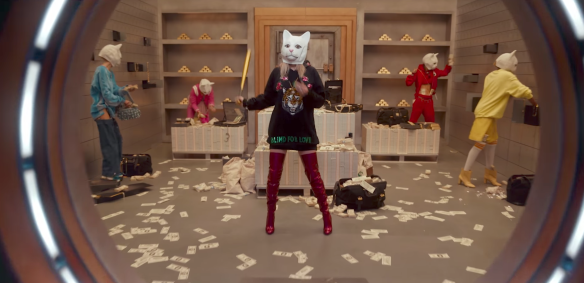
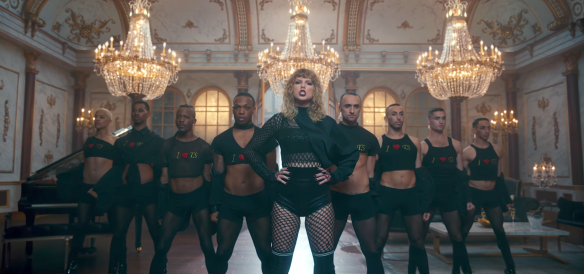
Some of the drag queens from YNTCD
For the Gaylors, Taylor wearing rainbows, promoting the Equality Act, and making a video full of queer people hasn’t been seen as a grab at their cash (which they already give her!) but rather, validation.
This isn’t to suggest that we should defend industrial-complex Taylor simply because she means something to fans, but rather, that this example (like everything under capitalism) exemplifies the contradictions of the system. The pursuit of profit doesn’t bludgeon out all the good things in life, it repackages them. But despite these conditions, human creativity and human relationality relentlessly persists, and breaks through in unexpected ways that show us a glimmer of a different possible world, the one that we might hope for if this wasn’t all enrolled in the machinations of big business.

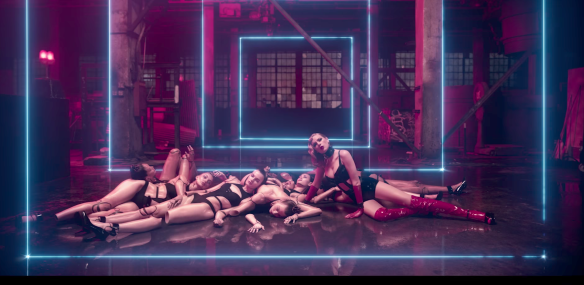
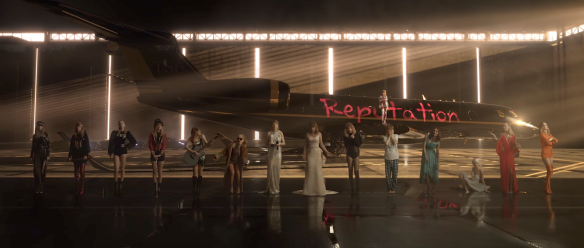
The scene: described by some as a “gay-lor park”
As José Esteban Muñoz argues in Cruising Utopia: The Then and There of Queer Futurity, we can gain access to a sense of queer utopia in the everyday, even in the face of mass production and consumption. This utopia, as queerness, is a potentiality, always flickering as a promise on the horizon – if we can just learn to see it.
Arguably, Taylor’s YNTCD offers precisely such a glimpse, a queer potentiality that is never fully realised. Of course many commentators might call this “queerbaiting” – because queerness is never solidified into stated identity (Taylor has never identified her sexuality).
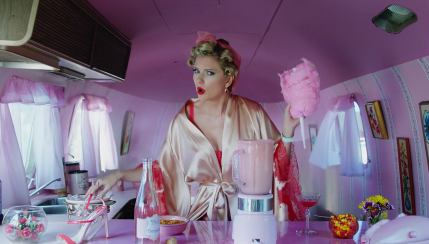
She burns it all down
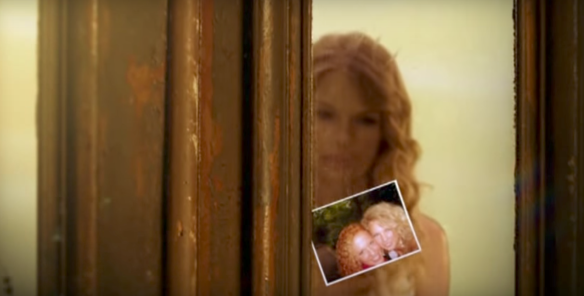
However the call in YNTCD is not to identity but rather a queer utopia, a land (in this iteration, a trailer park) solely dedicated to queer living. Taylor starts by burning down her caravan of normative femininity (read: closet), enters the queer village, dons the colours of the bisexual flag in her hair, and adopts an aesthetic that can only be described as “queer Tumblr circa 2015”.
While this world is populated by celebrity queers, it is no ordinary palatable pride parade. In fact, it’s not a pride parade at all, it’s just queers swanning about and drinking piping hot tea. While some read the anti-gay protestors in the videoclip as specifically classed (“the great unwashed”) we might instead see that the trailer park setting casts the entire scene as the realm of the working class. This makes the sharp political point that not all views are created equal and that reactionary working class ideas should be marginalised (the ideas, not the people – that some of the protestors leave to join the fun at the end is significant).

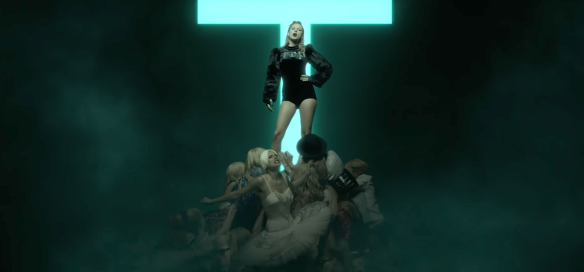
Kiyoko, also known as Lesbian Jesus
Furthermore, while some commentators called the video “sexless“, this shows a distinct lack of understanding about queer women’s fantasies: Hayley Kiyoko as Legolas; Ellen getting a tattoo while biting her nails short; a food fight a la Fried Green Tomatoes. Plus, there is no corporate sponsorship in this world, and perhaps that is precisely why people read Taylor here as the stand-in for corporate pride. We’re so used to seeing social media companies and big banks as the mode of our queer representation, that YNTCD seemed jarring to people’s queer sensibilities. There must be something wrong! Is it even a stretch to suggest that Taylor makes a nod to the demand for cops out of pride with her line “cop out”? I think not.

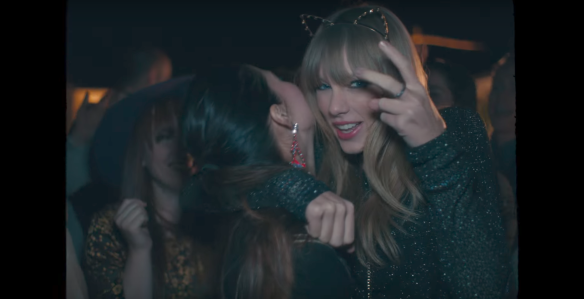
This image screams femme and yes this Gaylor thing is the hill I will die on
Importantly this is a vision of a queer utopia that is not actualised: it doesn’t exist in reality, and is indeed its possibility is threatened under present conditions. But, it offers a hint. When we’re so busy fighting for queer rights (like the Equality Act that Taylor has been plugging) sometimes we forget to stop and imagine exactly what we’d like the world to look like. YNTCD suggests a quotidian garden of gay delights, where even Taylor Swift, everyone’s “classic” het girl, is no longer simply the hen’s night crashing the gay bar, she’s as gay as the gay bar.
So, think on this: queer utopian dreaming with Taylor Swift might open us up to a world of gay visions and fantasies, a different version of the present. It might inspire collective action, be that the resilient queer readings of the Gaylors, or overt advocacy of equality legislation. Much of this might get eaten up and spit back out for consumption. But at the end of the day it’s not that you hate Taylor Swift, it’s that you hate capitalism. Make that your mantra for Monday morning and the queer horizon awaits.









 While the closure of the film was a little clunky (and I wondered if they actually had a few different endings in mind), overall First Girl I Loved is utterly engrossing. The opening scenes are framed tightly and closely around the protagonists, and we remain at eye level, almost as if we are right there with them – behind the softball fence, lingering at the doorway to the bedroom, walking down the street sipping $4 wine. We’re next to them all the way, not as a voyeur, but as a friend along for the ride.
 Gelula’s performance is very commendable. She strikes a delicate balance between unbearable apathetic teen, and captivating hero that we want to succeed. Through Anne we see just how brilliant and strong teens can be, even if they’re totally clueless. Teens are often denigrated by society writ-large for being naive, but First Girl I Loved shows the pain and beauty of fumbling through, the intelligence involved in not knowing but pushing on nonetheless. The awkward innocence of Anne and Sasha’s interactions is wonderfully executed, and there was something so familiar about their veiled giggling banter that I felt like I was watching my young self up on screen.
 As I sat watching the film unfold, I found myself desperately wanting things to work out for the characters. I wanted it to end happily not only because I was so engrossed in the story, but because happy endings for gay characters are so few and far between. It’s been great to see more films coming out that address romance between women, like
  While I can imagine some queer theorists arguing that the lack of traditionally happy endings for gay films is welcome, because who wants to live up to that heteronormative expectation anyway, it’s also pretty shit to constantly have popular culture either ignore your relationship or portray it is an inevitably difficult affair. While there is something to be said for representing the reality of homophobia and the difficulty of queer life, it is a pain that everyone else gets the option of fantasy (because let’s be real it’s not like heterosexual life really ends happily for everyone) except for gays who must remain proper realists.
 First Girl I Loved is no romcom, and it is serious. But it does manage to deal with difficult issues and give us a sense of both catharsis and hope, even as it leaves many things unresolved. It doesn’t make the empty promise that so many teens are barraged with that “it gets better”, but it does suggest that queer kin can be found and that inner strength is possible while traversing difficult and unknown terrain. First Girl I Loved gifts its audience a small beam of light for navigating this path, and for that it should be celebrated.




 BINARYTHIS