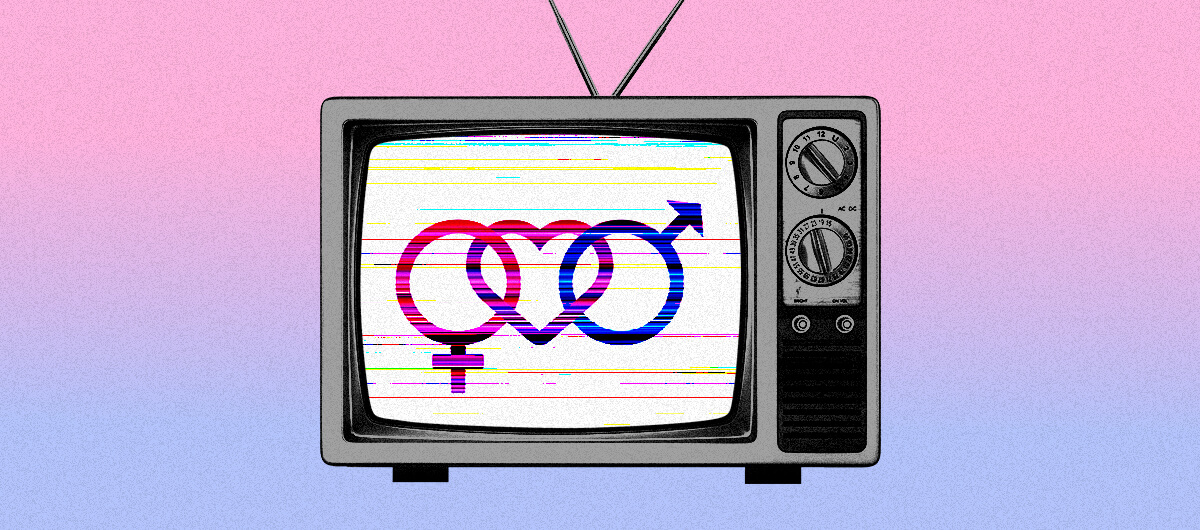
The rise and rise of the disaster bisexual

Move over bury your gays, there’s a new trope in town and it’s about murderous bisexual chaos. (Note: some spoilers below for Passages, Poor Things, Saltburn and Love Lies Bleeding – I’ve tried to make it obvious where I discuss each so you can skip specific films you haven’t seen).
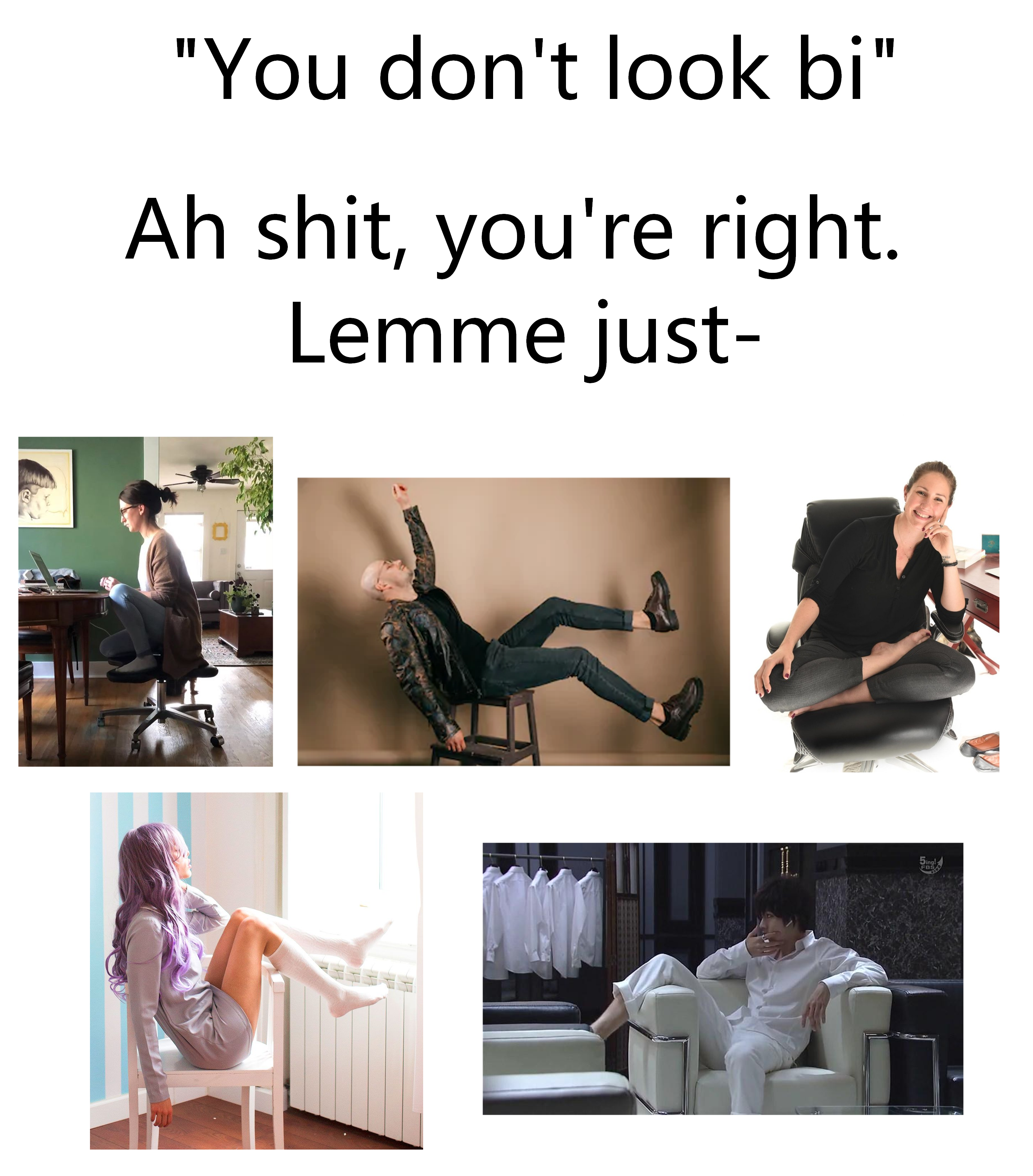
We bisexuals are constantly trying to claim things are bi, like bob haircuts, Freddie Mercury, sitting in chairs weirdly, lemon squares, and green velvet couches.

Not long ago I was reading through my high school diaries and found an entry musing on whether I was bisexual. I was sixteen. I did not use the word of course, I simply – coded and cautiously – mentioned that I had read an article in Cosmopolitan magazine about women who also like men and women both, and “y’know, maybe that’s me”. Skip forward several decades of grappling with my sexual identity, literally writing a PhD about being queer femme, and becoming a scholar who works on queer theory and sexuality… I am (fingers crossed) finally feeling pretty at ease with calling myself bisexual.

Sure we have the least exciting flag, but a few key insights for me have been: my affinity with other bisexuals (we just get each other, we see each other); the recognition that my desire does not transcend gender, but rather, is for all the genders (so many! I love them all! So hot!); that bisexual experience is about recognising shame that goes in multiple and maybe unexpected directions (e.g. feeling bad about having heterosexual desires); that the reality of homophobia deepens biphobia as we split into camps to save ourselves, but the need to have the grace to understand these structuring forces. Of course all of the angst I have grappled with over the years is probably just because I am a millennial – it seems that Gen Z are much more comfortable with their gender and sexual fluidity.

The gay agenda works!

But what of bisexual representation in these shifting times? I last reflected on this question in 2019 (“Twenty BiTeen”). Back then I concluded that negative tropes about bisexuality (of greediness, just a phase, and straight privilege) were, in a very small strand of emerging bisexual representation, starting to be reworked and resisted. In 2022 I also wrote a paper about bisexuality as “the refusal to refuse”, aka the refusal of choosing a single monosexual line of desire. In part this paper looked at the distinction between the “bury your gays” trope where homosexuality is represented as a tragedy (the gay character dies), versus straight rom coms where heterosexuality is represented as an inevitable comedy (replete with failure). I argued that in contrast bisexuality was rarely intelligible at all – neither tragedy or comedy, simply an impossibility.

But since writing these pieces, something new has emerged. Enter: the disaster bisexual.

[It’s me, hi]

A disaster bisexual is, just as it suggests on the can, loosely defined as a bisexual character or person who has chaotic energy or causes chaos. It seems to be a term used with some affection (“oh what a disaster bisexual!”) and often personal identification (“I’m such a disaster bisexual!” – to which everyone replies “yes”). The disaster bisexual is not your typical queer-coded villain, but rather, an anti-hero. The term seems to pleasurably press the bruise of internalised biphobia. When you cannot corral your desires into a neat monosexual storyline, this can feel chaotic.

According to the internet, the term originated from a D&D meme about sexuality in 2017, but it really took off as a concept in wider circulation in 2022/2023. I would argue that we are now seeing echoes of this discourse in representation on screen, in films like Passages, Poor Things, Saltburn and Love Lies Bleeding (and so many more I have not had the chance to see yet!). Notably in none of these representations is the word “bisexual” used, the characters are simply depicted as having sex with people of multiple genders. This continues a long trend in representation where bisexual desire is represented but not named.

However, importantly, these representations take the disaster bisexual into sinister territory. While queer publications like Them last year lauded the rise of “the nuanced bi characters we’ve been waiting for” I was somewhat perplexed by this celebratory tone. Journalist Billie Walker suggested that “It’s not that we don’t want bisexuals to do bad things on screen. We just want them to do more interesting bad things, and for more interesting reasons”. Hmmm. Let’s take a look at some examples…

I saw the French romance/drama film Passages at the Melbourne Queer Film festival in 2023. On the night it was introduced by festival curator Cerise Howard as addressing the historical gap in programming bisexual representation, to which (me included) the audience whooped and cheered. At the end of the film I turned to the person I was with and laughed “well…we wouldn’t call it positive bisexual representation would we!” In the film the main character Tomas takes a bisexual wrecking ball to his life and loves with such chaos that by the end of the film you are cheering his downfall. Walker suggests that it would be a “lazy” reading of the film to see Tomas’ bisexuality as the cause of crisis in the film, rather than look to his egotism. But sometimes surface readings are the most important to understanding how tropes congeal. The most obvious interpretation is that Tomas is a disaster bisexual, leaving a trail of emotional carnage in the lives of the monosexual characters who foolishly love him.

Similarly in science-fiction comedy/drama Poor Things, the sexual exploits of main character Bella are depicted as leaving destruction in her wake. Much of the film focuses on Bella developing a sense of self through her sexual adventures. She is a kind of Frankenstein’s monster, a gothic vehicle for representing society’s repressed desires. While she is the centre of the film, and we are essentially on Bella’s side (especially as she escapes the clutches of both wimpish and controlling men), she is also violently dangerous: unpredictably squashing, stabbing, or surgically destroying those in her path. Notably at the end we see Bella living in some kind of polyamorous bisexual utopia (albeit one with a slightly disturbing goat).

On violence, we can turn here to black comedy thriller Saltburn where our central disaster bisexual is perhaps the most ominous of all. Oliver is not simply violent, but a pathological liar and epitome of destructive Dionysian desire. Oliver lusts over the bodily and earthly – cum, blood and literal dirt – and it is at once disturbing and entertaining. Oliver is both compelling and scary. He is close to the material and earthly, and just as uncontrollable. At the end he is alone and happy, and everyone else is dead.

Finally, in romance thriller Love Lies Bleeding, our central protagonists are Lou and Jackie/Jack. While Lou is assuredly gay, and wary of sleeping with Jack in case she is just a “curious” straight, Jack notes that she likes “both” men and women. Arguably the central drama of the film is caused by a combination of Lou’s brother in law’s domestic violence, and the fact that Jack has slept with the brother in law. When Jack gets vengeance it is ambiguous as to whether she is trying to right the wrong of the brother in law’s violence, or, atone for the hurt caused by her bisexual exploits. While Jack is depicted throughout as uncontrollable, unpredictable, and totally chaotic, Lou is remarkably together and always cleaning up after her.

Of course there are many other things to say about these films that are not purely about the disaster bisexuality of it all – about rage and families and vengeance and kinks – but it is telling that all of these disaster bisexual films rather unusually mix up genres of comedy/romance with drama/thriller. This speaks to bisexuality sitting at the intersection of heterosexual (comedy) and homosexual (tragedy) tropes: an uncomfortable mash. As such these films do not end in classic “tragedy”, rather, we see the bisexual emerging intact despite the rubble from which they emerge.

Yes, these films are not all “about” bisexuality but in all of these films bisexual desires are at the heart of the drama and often the cause of crisis. Many of the scenes in these films are also highly visceral, focusing on blood, sweat, vomit, cum, and the bodily, with varying levels of gore (with the exception of Passages which is simply sexy and sweaty, with great crop tops). The disaster bisexuals are the spark and conduits of this viscerality. Notably, all the disaster bisexuals are hot, really hot – and I am not just saying that because I am a bisexual attracted to everyone – I mean, alluring. We are meant to understand the appeal of the disaster bisexual, even as we are warned to be wary, if not afraid, of this seductive power.
On this note, it would be wrong, I think, to say that these representations of bisexuality are “bad”. This is probably my disaster bisexuality speaking, but it is way more fun to identify with the villain than have really happy unproblematic bisexual representation. And of course in selecting these films I have left out other key bisexual representations we have seen recently – such as in Heartstopper and Red, White and Royal Blue – where the bisexuals are not really chaotic at all, just attractive and nice.

My point is to question: should we “celebrate” representations of disaster bisexuals? I am not convinced. Rather, I think we should keep tabs on the disaster bisexual trope and how it is playing out, what this trope has to say about sexuality and desire, how these representations connect with broader sentiments and politics around sexuality, and perhaps most importantly, how these depictions make us bisexuals feel. As we watch, we should attend to whether it pleasurably presses the bruise, or, sometimes, digs a bit too far into the wound.
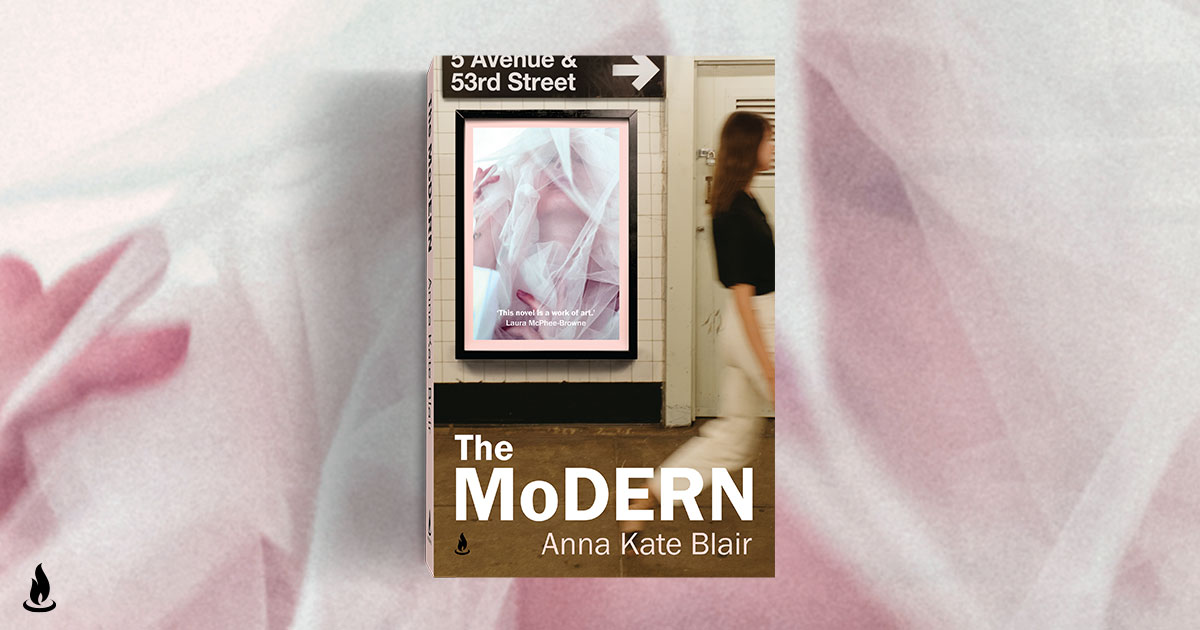
Book Review: The Modern by Anna Kate Blair

Dear Anna,

I have been thinking about how I might write a review of The Modern, given my love of it, but also given our prior entanglement. What are the ethics of critique when the personal is unavoidable? I am sure this is a legitimate genre of criticism and I am just being naive, but I am putting this in a letter to you (to everyone) to avoid any doubt about the conflict of interest.

When we first started dating I sent one of my friends a text: What do you do if your girlfriend turns out to be your favourite author? Wouldn’t that be wild? I will never know, we did not stay girlfriends.

You once said to me that you felt as if everything you wrote was for me, that you imagined me as the reader. I know that cannot – would not reasonably – be the case anymore, but it felt so special reading The Modern, knowing you, having known you, for some of the time that you were writing it. Against postmodernism, you as author were so alive to me in this.

I wanted to buy a copy in support, but I also narcissistically wondered if I was reflected in the text. I analysed your descriptions of Robert, Cara, Sally, Emily, and other subsidiary characters, for any hints. In fact, they all seemed more like versions of you. Maybe this is how writing always works. Everyone was much too erudite or cool or modern to feel anything like me, but on reflection I can see that some of the worst elements of my anxious-avoidant attachment style are, perhaps, in there.

I flinch, for instance, at Cara deleting all traces of Sophia on her social media: “It felt as if she was determined to erase memories of our pleasant moments, ashamed to admit that we’d spent time together, as if she was trying to create a narrative of her life in which I meant nothing”. I regret it. It made me think about how we efface surfaces when we cannot bare their depth. The desire to negate intimacy in order to stay a step ahead of rejection.

We don’t really get to know Cara in The Modern, she remains two-dimensional to the reader but hyper-real to Sophia. I think this is part of the point, an exploration of what it feels like to have an infatuation where the other person becomes a slate onto which you project. I read a review of the novel that described it as “solipsistic” but why aren’t women allowed to look in the mirror?

When you are falling in love, everything feels intertextual and full of portent. Songs playing in restaurants, whether flowers in a vase stay closed, the weather forecast – all take on special meaning. Yet I wrote in my diary I felt “haunted” by romance when we were together, that all of the beautiful things we encountered felt jarring with my internal unease. Perhaps it was, like Sophia, because I was in love with someone else. You and I talked openly about my other love, and I wondered whether your tolerance was simply because of interest in a writerly way. After The Modern, I think it is because you deeply understand the multiple directions love can pull you in simultaneously, and the odd formations that friendship can take. You have no judgement of it.

As you know, the last day with my other love involved rowing down the river to celebrate exactly one year of our friendship. As we ate our picnic floating on the water – and before I could declare my love – he played the song “Can’t We Be Friends” from his phone. I recounted all this to you later and you said it was too trite to be literary.

I cherish that this is a novel with Frank O’Hara and Grace Hartigan at the heart of it. Forgetting your love of them, I had serendipitously re-read Meditations on an Emergency only days before The Modern arrived in my mailbox. “In times of crisis, we must all decide again and again whom we love”. Most significantly, The Modern is radical in not shying away from love as the centre of analysis. It is not a romance novel, but it is all about romance. Crushes are often understood as frivolous, juvenile, and above all, feminine. The Modern rejects none of this, treating the “unserious” with extreme care and detail. I recall you giving me Lunch Poems when we were dating. You said you had a spare copy, it was no big deal, it really meant nothing. When I leaf through it now, I have questions. “Is this love, now that the first love/has finally died, where there were no impossibilities?” Frank and Grace’s love for one another is the model of the most beautiful “unrequited”, “unrealised” love.

I met a writer at a book event recently, and she asked if I read poetry, and when and why I started reading it. I told her earnestly that there were two influences: my year eight English teacher (Mr Mansfield) on whom I had an enormous crush, and you, who asked me on our first date who my favourite poet was, and I couldn’t really answer. After that date I was determined to commit to poetry, to know it. You and I don’t talk anymore, but I still read poetry.

The Modern‘s mode – the crush as literary – is what makes it so special. I know that it has/will be compared to other melancholic novels by women (ones which I also love), but it is standalone in its occupation of queerness. While others in this genre are haunted by bisexuality (The Bell Jar), or relegate conflicts about sexual identity to the background (Conversations With Friends), The Modern addresses the complexity head-on. You capture the tensions of bisexuality so perfectly. The mixed desires, the different social scripts, sex, bodies, the longing for queerness. This, for me, makes it a bisexual novel for the ages. As Sophia reflects, “I felt too nervous to go to the Pride March alone. I lay in bed looking at photographs of women in t-shirts that read BISEXUALS ARE NOT CONFUSED. I was confused, though…”.

Primarily, The Modern is so witty. I laughed aloud so many times at the pluck of it, forced my partner to hear excerpts. I loved all of the reverent references to artworks, even those I did not know and made me feel inculte. I loved the camp obsession with the bridal, reflections on the ambivalence of marriage. I didn’t believe Robert’s ability to quote Sophia’s favourite literary texts, but it is an interesting fantasy, I too can imagine loving such a Philosophy Boy. I loved all the references to the sweet and sugary, the way you describe fireworks, the throwaway comment about Sophia only eating pink foods when she was sad, as if that is normal sad behaviour. I am reminded of the summer that we ate fairybread for lunch, your serious and dedicated whimsy.

Years ago when you told me the title of your novel, I worried that it would be unsearchable, lost in more general results. Like that band that called themselves “!!!” that no one could pronounce nor look up, whose songs have been forgotten because their punctuation was too cool.

I hope people find and read The Modern. If they don’t, I hope you keep writing anyway. I can’t wait to keep reading you.

It is most modern to affirm someone“.

Love, H

You can read more about The Modern here and order a copy here.

Barbie Review: This Barbie is Trans

Note: The below review contains spoilers for the Barbie (2023) film! If you’d like a discussion that is spoiler-free (recorded before the film screened), check out my chat about bimbos and Barbies on NPR’s It’s Been a Minute with Brittany Luse.

I went and saw Barbie on opening night, and walked right back in and saw it again the next day. The hype around the film has been so immense that I felt like I was holding my breath with excitement and expectation for the whole first screening. Because Barbie is essentially two movies in one mashed together (Barbie and Ken’s stories), as well as kind-of but not-quite being a musical, and definitely a technicolour spectacle, the net result of my first viewing was overwhelm. When I saw it the next day everything made more sense, I knew what to expect. It was much more enjoyable and I highly recommend seeing it twice (or more…I’ll definitely go back).

There’s also an interesting point being made here about Barbies as judgemental mean girls

Despite the long lead up to the film’s release, and literally months of speculating about its content, I found Barbie to be so unexpected, joyously unique. I guess even with all my queer hopes I still thought that the film would be more like a traditional blockbuster, with a romantic narrative, or some easy arc to follow. What it actually feels like is an indie director being given the keys (and money) to make an expansively imaginative film, which is exactly what it is! However in being bold it was also sometimes messy, mostly because it was two distinct stories running in parallel: 1) A comedy drama about Stereotypical Barbie becoming human (an inversion of the typical moral panic around Barbie that human girls will try and become like her); AND 2) A musical about Beach Ken grappling with male entitlement and an inferiority complex. Quite different stories in both message, arc, and tone. When Ken walks off in the real world (to stumble across patriarchy), the film splits into two.

Feel the Kenergy

Ironically, comically, I hadn’t thought about Ken, or what his storyline might have to say about gender AT ALL in the lead up. What Gerwig gives us is a very funny meditation on contemporary white masculinity and patriarchy. Honestly Ken’s line that he wasn’t that interested in patriarchy when he realised it wasn’t about horses was so funny, I’ll be laughing about this for the rest of my life. I’ve been listening to “I’m Just Ken” on repeat. Will I buy some “I am Kenough” merch? Uh, yes. Gosling’s Ken, and the whole storyline almost steals the show from under Barbie’s flat feet, but Margot Robbie is so incredibly earnest in her performance that it’s really just a two-pronged circus the whole way through. I do wish Barbie got an equally big musical number to balance it out a bit though.

What is so wonderful about all of the scenes with the Barbies and Kens is how playful they are – as in, literally so silly that it reminds me of playing with toys as a child. The whole Ken fight scene is ridiculous but I can also completely imagine setting that up as a kid, having a war of Kens, on a beach, that turns into a Grease-like dance off where the Kens also kiss. 100% accurate.

If you need a toilet break, this is the scene to do it

The bits that truly sucked in the film were everything with the humans. The parts with the Gloria/Sascha mother/daughter storyline were so two-dimensional, mere props to further the Barbie storyline. Terrible lines. The most asinine feminist speech you can imagine. Inexplicable reactions (like when Sascha first meets Barbie). And the Ruth Handler saccharine ghost stuff? Just the worst. The Mattel humans were less boring, but really because they were more like the toys of the film, silly and hammed up, part of the melodrama, rather than boring interruptions.

I’ve also seen some critiques of the film along the lines of: this Barbie is capitalist. Gerwig tries to double-play the issue of Barbie as a consumer product, with the film nodding and winking to itself the whole way through. This is such a cheap (pun) shot at the film, because what else was Gerwig supposed to do? There is no way to make this film without that critique being levelled. I do think that this hyper-concern over consumption is reserved especially for things associated with femininity though. When the Lego film came out everyone just marvelled at its unexpected communist undertones, and then went and played with Lego. They didn’t bemoan the Lego industrial complex.

Would play with the convertible

Perhaps most importantly (given my projections) the real question is: how queer and feminist is the Barbie film? Well, in terms of its internally stated feminism: lacklustre. We see some lowest common denominator feminism in the dialogue, and interestingly though patriarchy is referred to throughout, the f word is rarely mentioned as an explicit antidote. If I was writing the script, I would have had Gloria the human give the Barbies some 1970s feminist books and start consciousness-raising groups to get them out of their brainwashing, but perhaps this is just my very specific taste as someone who lectures on gender (edit: as a friend pointed out, they kind of try to do this but for a general audience — but what I’m trying to say is it’s consciousness-raising lite!). In spite of this, my hope that this film could – ought to – usher in some feminist media analysis that takes femininity seriously rather than dismissing the text as postfeminist still stands. I would also like to see Ken’s arc analysed here using critical femininity studies, not simply deferring to masculinity studies as the place to explain what is represented (perhaps another post, for another time…).

Barbie has to want to know the truth: that she’s gay

The queerness of the film is stitched into its very fabric, and not just because loads of the cast are LGBTQ+. Though Stereotypical Barbie doesn’t get to make out with any other Barbies (I would have appreciated at least ONE scissoring joke) the implication is certainly that she is queer, because she is queer-coded. From Birkenstocks, to listening to Indigo Girls, to not being interested in Ken, to identifying with “Weird” Barbie, and the Barbie cinema playing Wizard of Oz (all Barbies are “friends of Dorothy”?), the strong hint is that Barbie is not straight. “Weird” Barbie is clearly a euphemism for Queer Barbie, not least because she is played by the famously gay Kate McKinnon, and the rag-tag team she assembles in her house when patriarchy takes over Barbie land also indicates that they are a queer bunch. From Allan (Ken’s “friend”) to Magic Earring Ken and Video (aka Cyborg) Barbie, these are the queer crew, discontinued by Mattel. By the end of the film, after their power-to-patriarchy-and-back-again journey the vibe seems to be that all of the Barbies are “weird”.

You’re telling me this is a group of straight Barbies? Ah, no.

Yet it is also the transness of Barbie that comes to the fore at the very end when she realises her humanness, rather than (as Ruth tells her) having to “want” or “ask” for it. I read this as a trans allegory, where Barbie’s true self is not something she “identifies” as, but something she affirms: she just is. That the last scene involves her visiting a gynaecologist furthers this reading. We don’t know how or when Barbie got a vagina, but she’s so pleased to have one. This doesn’t seem to be a regressive suggestion, that all women ought to have certain biology – and the fact that we learn Ruth had a double mastectomy seems relevant here – but that Barbie realised she was a woman, and wanted certain genitals, which she got. I truly hope this sends the trans-exclusionary activists out there into a tailspin.

Five stars, plenty of notes, but a film I will absolutely cherish forever.

A Theory of Femininity

Book cover

Released with Routledge January 2018

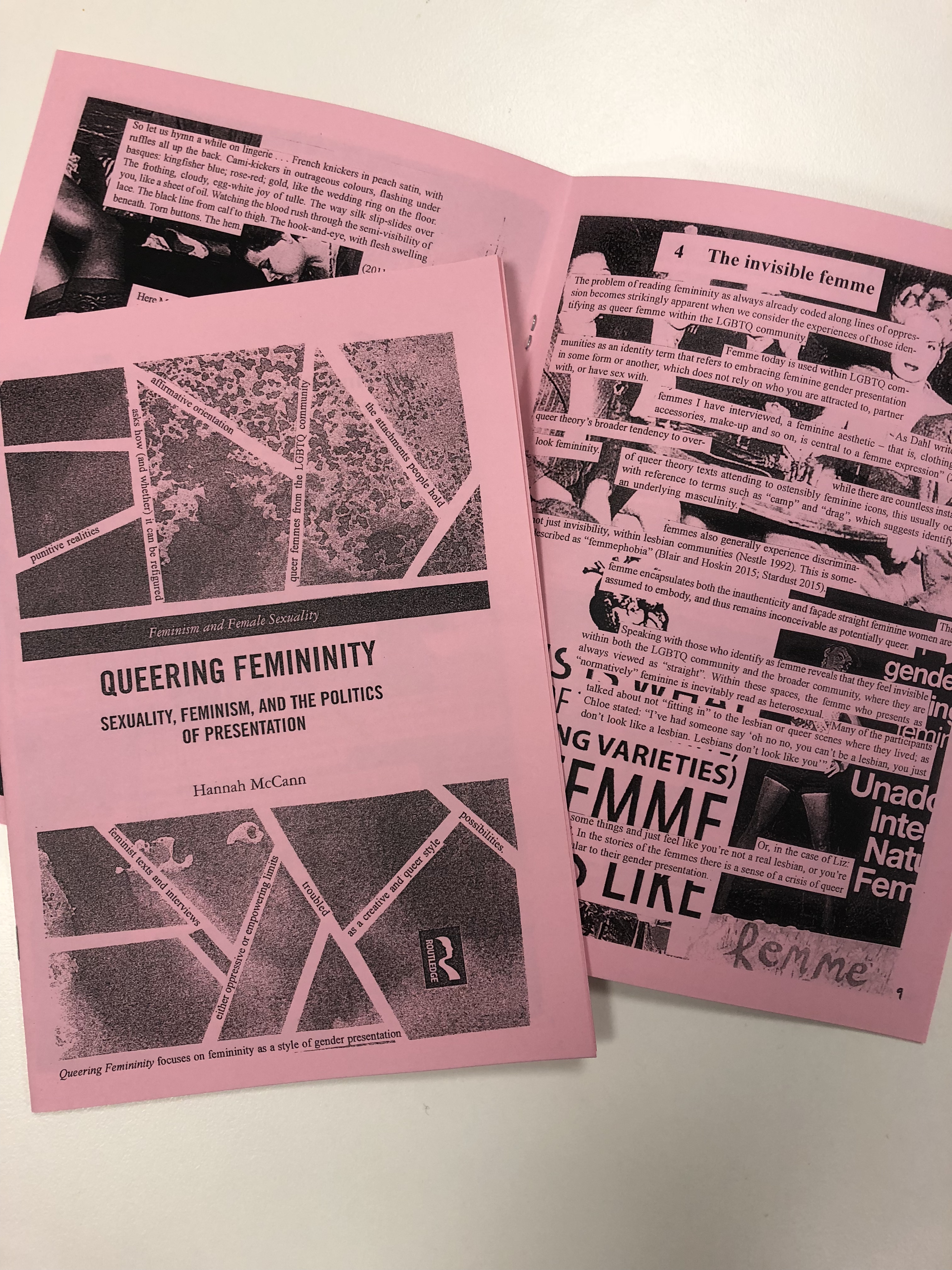
In January of 2018 my first book (based on my PhD research) Queering Femininity: Sexuality, Feminism, and the Politics of Presentation was published with Routledge. I also made the book into a zine for people to engage with given the prohibitive price tag. Queering Femininity engages with both an archive of Western feminist texts and interviews with self-identified queer femmes from the LGBTIQ community in Australia, in order to think through the queer potential of femininity. By ‘queer potential’ I mean, can we ever think about femininity as something that disrupts or ‘makes strange’? Or must we see femininity as always already problematic if we are to engage with it critically?


3DF00306-DC75-4159-A3EE-C29932724306

My zine based on the book

As I found in my analysis of feminist texts, there is (unsurprisingly) a long history of feminist critiques of femininity, where feminine styles of the body are understood as evidence of patriarchal oppression. Here, what is identified as femininity is often collapsed into surface and “masquerade”, even when talking about behaviors or roles. This issue of feminine styles causes issues for those who identify as queer femme, who often find themselves in a space of being unrecognisable as queer in both straight and LGBTIQ contexts (they are assumed to be heterosexual). Yet, I also found that the queer femme response to the inability of the world to see the queer potential of femininity was frequently to over-invest in feminine surface styles (for example, through exaggeration or attempting to signify queer ‘mistakes’ in their presentation). It seemed to me that in many cases this contributed to anxiety about being “queer enough” – an outcome that seemed antithetical to the concerns raised by queer femmes in the first place.

The argument that I attempt to make in response to this conundrum can be summed up in this lengthy paragraph from the conclusion:

To identify precisely who will always fail and who won’t, and in which ways, coheres the normative versus non-normative in ways that misdirect our energies. The aim of all of this must be to see that everyone is failing to meet normative expectations all the time. Everyone’s gender has queer potential precisely because of this ever-present failure. How-ever, we generally only imagine failure as going in one direction: not enough. That is, failure as a failure to meet expectations. However we can also understand failure in terms of “too much”. This is the realm of the “hyper”, the “fake”, the “excessive”. We often refer to “hyperfemininity” but don’t clearly articulate what this means. But we can understand this as meaning the “too much” – too much makeup, too much hair, the heels that are too high, the dress that is too short, the breasts that are too big, the desire that is too rampant, and so on. Interestingly femme often positions itself in this space of the “too much”, the overdone, failing femininity. However, we ought not to rely on the “too much” (or the “not enough”) as our site of resistance because a new norm inevitably fills this space – the norms of not being “too much” or “not enough” (expressed as “not queer enough”). In this way, I take the idea of queer failure to be incredibly useful, but I disagree with Halberstam that “all our failures combined might just be enough, if we practice them well, to bring down the winner” (2011, 120). Under such a rubric, those femmes who would dance around so-called normativity, who manage to “pass” as heterosexual, and who fail to fail enough are sidelined as irrelevant, or assimilationist. Such a view misses the necessity of adaptability to normative fantasies, and the need to pass, or the desire to. While we might imagine a world where our desires could go in different and changing experimental directions, it cannot be overlooked that imagined normative spaces offer cruel but necessary shelters. With this recognition we need not celebrate norms or anti-norms as emancipatory, but rather see that the necessity of such spaces only emerges under conditions where survival is key (2018, 144).

One of the key points I was trying to make in Queering Femininity is that in response to oppressive constructs we too often invest in our individual bodies and identities as the site of the political. This works to dismiss the complex attachments and relations with our bodies and identities that cannot so neatly be enrolled in political projects without serious psychic consequences. Yet, we must still acknowledge that there are normative “ideals” of femininity that are celebrated and encouraged in society, and conversely there are non-normative ways of being (“non-ideals”) that are punished and regulated in violent ways.

Since publishing the book I’ve been thinking a lot more about these claims and how we can effectively think through the relationship between norms, structure, and the activism we commit ourselves to in order to challenge these ideals in productive ways.

Final femininity image

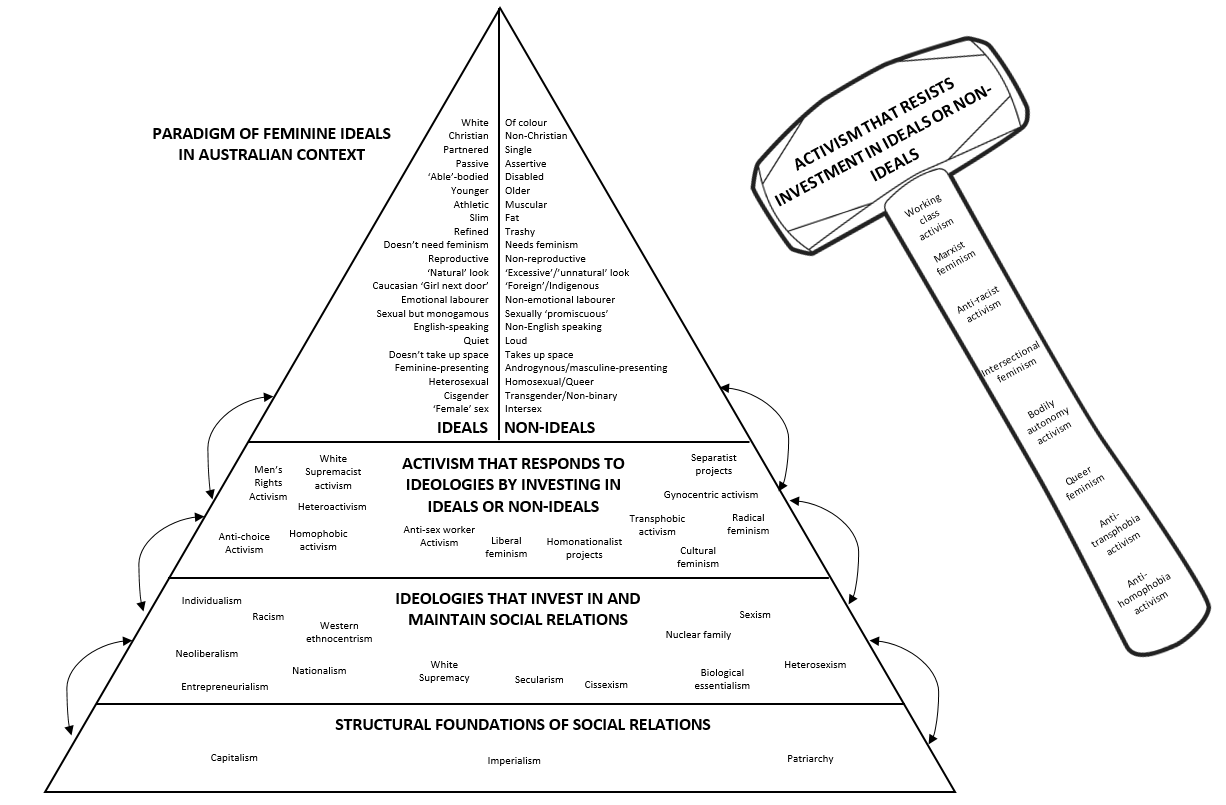
tumblr_static_1069I like to think in visual terms, and the diagram above (click on it to enlarge) is an attempt to sum up how we might connect structure, activism, and norms in a useful way. I’ve included a hammer here as a kind of nuanced update to that “If I had a hammer” image.
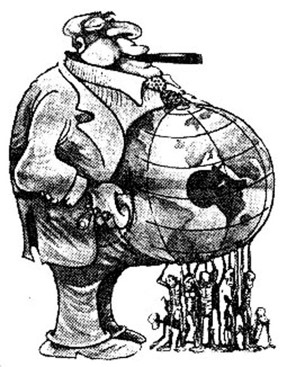
This above diagram relates to an Australian context, as a way to localise this discussion and acknowledge that alternative versions of this are needed for different contexts (even if structures are the same, their expression in local contexts may have wildly different effects in terms of “ideals”). This diagram reflects that “ideals” require an oppositional “non-ideal” in order to be intelligible (i.e. make sense). Yet rather than simply presenting the ideals versus non-ideals (which might suggest to the reader that we ought to invest our politics in embodying the non-ideals), this diagram attempts to unpack the activism, ideologies and structure that keep this system of ideals versus non-ideals propped up.

Picture3At the very base are the “structural foundations”, which accounts for the economic, colonial, and gendered power structures that are the foundation of the dominant organisation of social relations in this context. Flowing from this foundation, but also feeding back into it, are the dominant ideologies that invest in and maintain these social relations. For example, neoliberalism is an ideology that supports capitalism. Similarly White supremacy is an ideology that supports imperialism. Flowing from this, there are various forms of activism that respond to these ideologies in ways that either bolster these ideologies or reject them. The activism that bolsters these ideologies also works toward cementing what is understood as the “ideals”.

Picture2It is clear for example, that heteroactivism supports the feminine ideals of heterosexuality, cisgender identity, reproductive bodies, etc.

However, some activism that rejects the underlying dominant ideologies also inadvertently invests in “non-ideals” as a response. For example, lesbian separatist projects advocate for the “non-ideal” of homosexuality, as a political response to heterosexist ideologies. What this does is cement the boundary between the ideal and the non-ideal, by investing in the non-ideal.

This leads us to the heart of the debate around assimilation versus transgression: how ought we to respond politically to “ideals” without simply creating a new set of normative non-ideals in opposition?

This is where the hammer comes in. This represents activism that invests in neither the ideals nor the non-ideals as the political solution. For example, we can imagine forms of queer feminism that challenge ideologies of sexism, heterosexism, cissexism and so forth without advocating queer exceptionalism. The activisms listed on the hammer aren’t necessarily mutually exclusive, so much as drawn out to show how they might go to the heart of challenging the (capitalist, colonial, gendered) structures at the base of ideals of femininity without rejecting or investing in femininity as a style of the body.

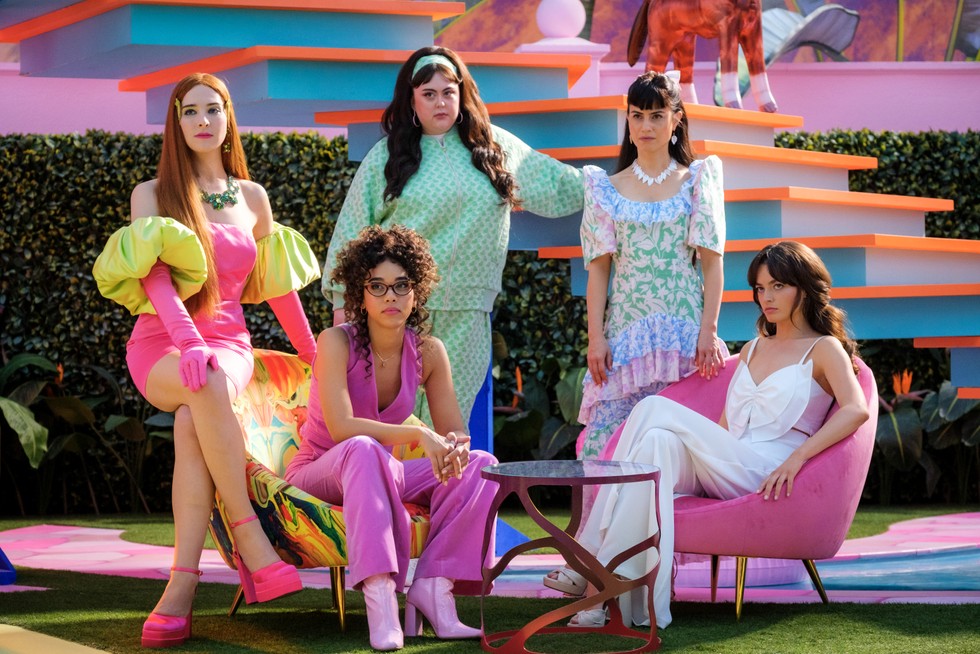
Picture1Perhaps this is what might mark out a new wave of (feminist and other) activism around femininity: challenging gender ideals without investing in non-ideals as the political response. From such a perspective, there is no femininity that is “empowered”. Power is exerted and ideals are enforced, but the reaction to this is to focus on the structural foundations and their ideological props rather than the individual effects alone (which might for some involve complicated attachments).

I’d love to hear what you think in the comments below. Does this work at all? Is it useful? Is there anything in the wrong place, or missing altogether? What might this look like in your context? And a reminder: this is only one theory, and, a work in constant progress.

Hope and Glimpsing the Future in the Marriage Equality Debate

This short paper was presented at the Feminist Utopias Conference held at the Australian National University on 8 September 2017. 

UntitledAs Gayle Rubin wrote in 1984, “…it is precisely at times such as these, when we live with the possibility of unthinkable destruction, that people are likely to become dangerously crazy about sexuality” (143). In the midst of the contemporary nuclear crisis, the never ending debate about marriage equality seems a fitting topic to apply the theoretical questions I’d like to explore today, about whether we can and should – and indeed how we should – hope for a better world.

UntitledSo the story goes: “it gets better”. This is a common refrain of LGBTIQ youth services in Australia. “It gets better” refers to the promise that when you leave school, you won’t have to deal with bullies any longer – you’ll be free to live your life as a happy LGBTIQ person. Now, for many of us, this isn’t totally wrong. Leaving the social intensity of the schoolyard and becoming independent from family units, can mean that we are able to find new communities of acceptance.

UntitledBut how cruel might this hopeful promise be, when bigotry can be canvassed as state-sanctioned “legitimate debate”, as we are seeing now? When homophobic and transphobic ideas are not originating from the schoolyard itself – as we know, people aged 15-24 are the most avid supporters of marriage equality – but are being shown on television during the nightly news? Perhaps the promise to our children of “it gets better” is a cruel one.

UntitledAs Lauren Berlant writes, “When we talk about an object of desire, we are really talking about a cluster of promises we want someone or something to make to us and make possible for us” (2007, 33). For the “yes” campaign, marriage equality has become the object of desire that contains within it a cluster of promises: a hope about what will get better and for whom.

UntitledBut cruel is the optimism of the segments of the “yes” campaign that refuse to confront the homophobia and transphobia emerging in the debate, and instead seek to win hearts and minds on the basis of respectability, normality, and the idea that “love” is indeed “love”. As Berlant argues, it is a cruel optimism that operates where we live with the toxic conditions of the present labouring under the view that the future will “somehow” deliver something better.

UntitledAnd indeed it is cruelly optimistic to imagine what that future will entail if we do not question the social constitution of futurity in the first instance. As Lee Edelman (1998) argues, it is the child that acts as the pervasive cultural “emblem” of the future, the ultimate signifier of the hope of tomorrow. Edelman explains that while the left operates under a liberalism that sees the elasticity of this signifier extend – children can still signify the future despite queer family arrangements – conservatives cling to a more intense vision of social rupture, that must preserve such signifiers at all costs. The child is not only a symbol of a future horizon, but also a concretely heterosexual future, where heterosexuality is to reproduction is to the child is to the future operate in a circular and spectacular logic.

UntitledThis is precisely what we have seen playing out for over a decade, albeit more sharply in recent times, in the marriage equality debate. While the right have repeated the refrain, “think of the children”, the left too have taken up this mantle, constantly leaning on statistics about the welfare of queer youth or children from queer families in order to make a point of the utter sameness of the child under queer circumstances. In this envisioning, the queer child doesn’t queer the future, rather, the queerness of the child is contained in order to suggest that there is very little threat – only a slight extension – to the more conservative vision.
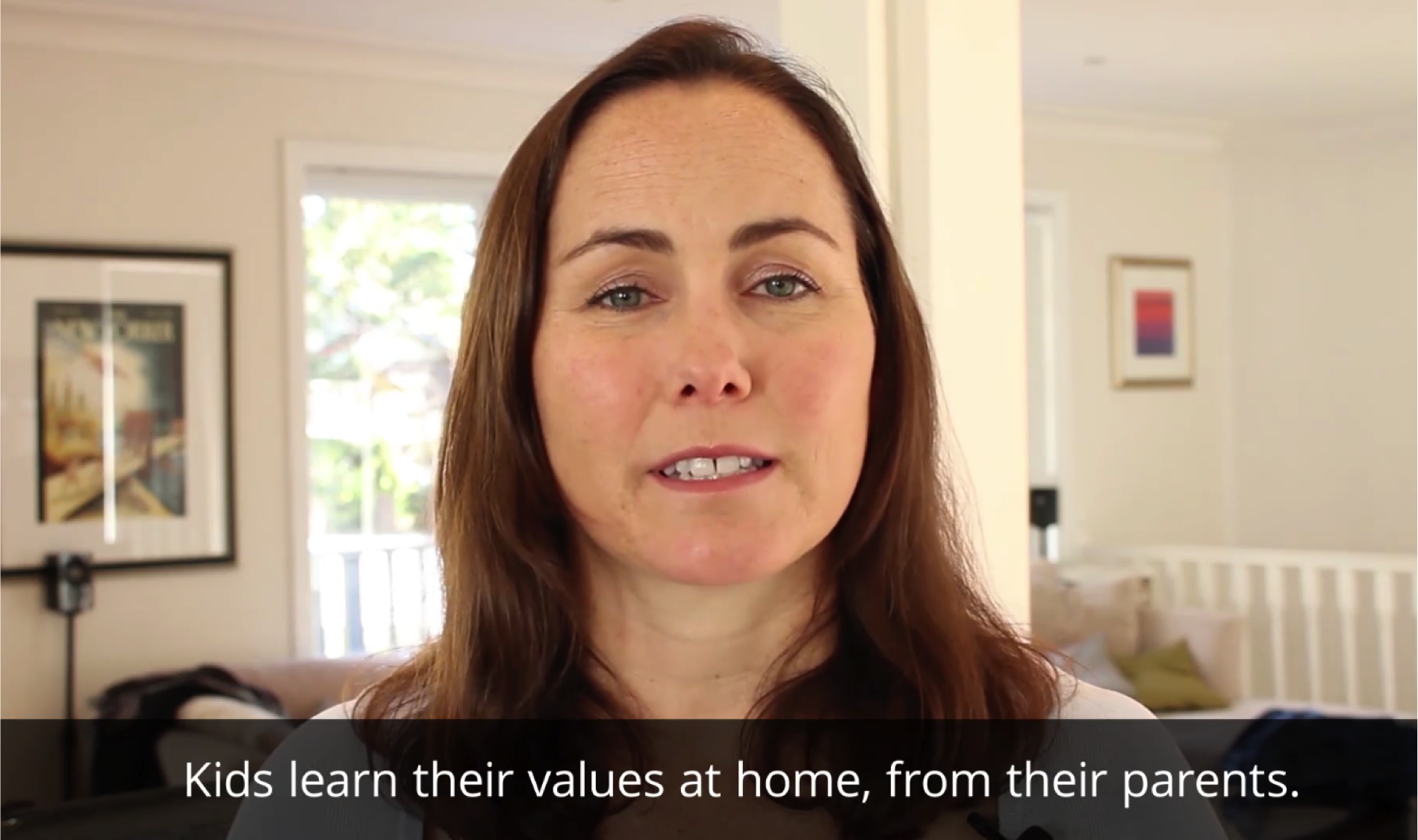
UntitledAs the recent GetUp ad for marriage equality suggests, in the words of the mother in the heterosexual nuclear family unit, “kids learn their values at home, from their parents, that’s why we’ll vote yes in the upcoming marriage equality vote. And if she asks, we’ll tell her it’s about fairness and kindness”. In this ad there is the removal of the threat of queering of the child, who is represented as safe from having to learn about sexuality or gender diversity because she learns her values from “the family” rather than through programs like Safe Schools. We learn in this ad that marriage equality is no challenge to the social logic of heterosexual normativity: this is the vision of transformation under marriage equality – total preservation of the existing social order.

But Edelman suggests a different approach to this logic is possible. As Edelman writes: “fuck the social order and the figural children paraded before us as its terroristic emblem; fuck Annie; fuck the waif from Les Miz; fuck the poor innocent kid on the ‘Net; fuck Laws both with capital ‘L’s and with small; fuck the whole network of symbolic relations and the future that serves as its prop” (1998, 29). Edelman utterly refuses the “sweetness” of hope and investment in a future, and instead endorses a queer negativity soaks in the bitterness of the present.

UntitledWe might wonder about the astringency of Edelman’s anti-social thesis, in light of the fact that attachment to “same-sex marriage” is currently being enacted by many as a mode of survival. Many have thrown themselves into fighting for a yes campaign precisely in order to assist a striving toward a “getting better”. We might also question the limits of Edelman’s radical presentism and anti-futurity, and if a different kind of future envisioning might be possible without a cruel investment in inevitable progress.
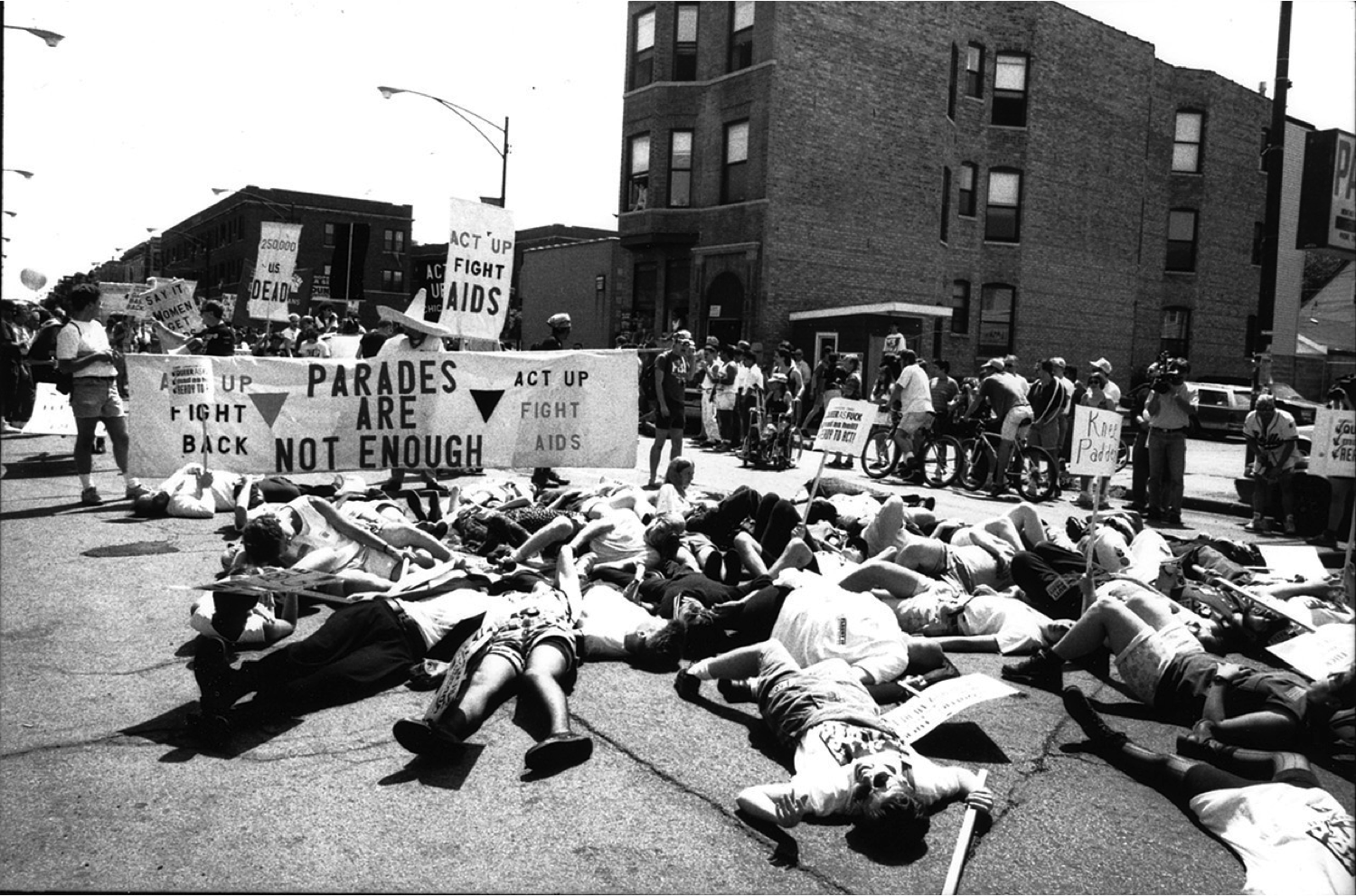
As some have pointed out, Edelman reduces ‘a’ version of the future to ‘the’ version of the future – more radical imaginings of opening up spaces of possibility for queer lives are rendered as as problematic as hegemonic dominant visions of how the future “ought” to be conserved (White 2013, 33). Could there then be a glimmer of a different set of possibilities, a transformed social order, and another logic, to be found? Rather than a cruel and unrupturing hope, can a queer hope be possible?

UntitledAs José Esteban Muñoz offers, “Queerness is a longing that propels us onward, beyond romances of the negative and toiling in the present” (2009, 1). Here Muñoz suggests that we might adopt a concrete utopian imagining where, “the hopes of the collective” are connected to real, lived struggle in the historical present. In other words, we might have “educated hope” (3). In contrast to Edelman, Muñoz insists on the importance of hope as a critical tool, where “hope is spawned of a critical investment in utopia…profoundly resistant to the stultifying temporal logic of a broken-down present” (12).

However as Teresa de Lauretis (2011) also contends, we must read Edelman’s point about negativity not as a call to negativity as the political act, but rather the reflection of a condition of society, the death drive at the heart of it all, where there is always the attempt to overcome and resolve this with positivity and hope. Edelman’s imagining is heterotopic as he reflects this death drive back at us, but argues against its resolution.

UntitledSimilarly Anne Cvetkovich’s (2007) work extends this heterotopic view of society, to get to the “depression” at the heart of things, that is, not the negativity and negation of life, but more specifically the feelings that are part and parcel of occupying this world. As feminists have long argued, “the personal is political”, and we might also extend this to say that we feel politics at the level of the body. Cvetkovich argues that affective states like depression can be political – because while they can be antisocial (in quite a literal way – through withdrawal), there is also the possibility that a new sociality may form through making-public these affective states.

UntitledBut in making the negativity at the heart of things public rather than private, we can also become targeted as the problem rather than merely pointing out the problem. As Sara Ahmed illustrates, the figure of the feminist kill joy who offers critique and anger can be seen as the source of unhappiness: “Does the feminist kill other people’s joy by pointing out moments of sexism? Or does she expose the bad feelings that get hidden, displaced, or negated under public signs of joy?” (2010, 582). In other words, unveiling already circulating – but hidden – negativity is risky business.

UntitledWhile we focus solely on concepts like fairness and kindness, positivity, good stories, the “good homosexual”, or the “unqueer queer child”, the bad feelings at the heart of the marriage equality debate remain occluded and politically impotent. To fail to recognise and name the homophobia and transphobia that are proliferating under conservative discussions in the marriage equality debate is to inadvertently reiterate a narrative of a heteronormative future where “it gets better”. To engage in a queer hopefulness then, is not to shy away from negativity, but rather, to embrace the possible world that it reveals to us.

Screen Shot 2017-09-10 at 5.56.32 PMIt is only in confronting those elements of the present that we would rather deny, from which a truly utopian vision might emerge. In this case, my educated hope is that we will have a marriage equality debate that confronts homophobia and transphobia, that embraces gender and sexual diversity, and that makes space for the LGBTIQ community well beyond the question of marriage.

A Queer Reading of Taylor Swift’s Look What You Made Me Do

Last week when Taylor Swift’s new single Look What You Made Me Do hit the airways, I was devastated. While the album name ‘Reputation’ seemed promising, the lyric video seemed to confirm that Tayswi – Queen of the Secret Lesbian Club of Hollywood – was only interested in making a petty jab at Kanye West via a mostly terrible pop song. My god, I thought. Is Taylor just completely basic? 

Screen Shot 2017-08-29 at 10.01.49 PM

Please never watch the lyric video. Ever.

But when the new video directed by Joseph Khan dropped, all of my doubts perished, because THIS IS WITHOUT A DOUBT THE GAYEST TAYSWI VIDEO OF ALL TIME. (And by gayest of course I mean open to a queer reading i.e. seeing things sideways, and reading LGBTQ themes into things). Unsurprisingly the mainstream media are calling this Tayswi’s “shade” video which is simply about mocking all of her haters. They are entirely skimming over all the gay bits that they can’t make sense of (never mind that queers invented shade).
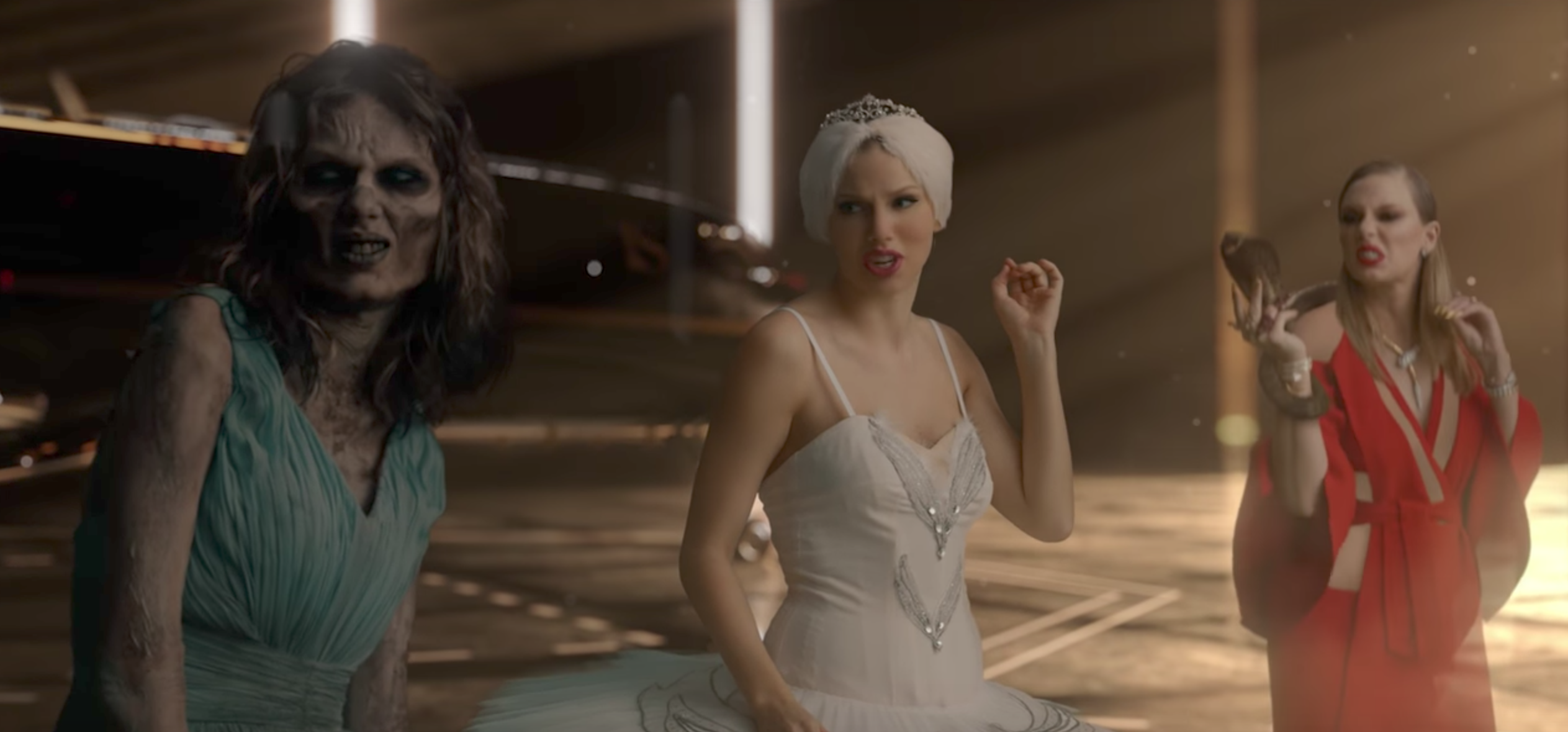
So bear with me for the incredibly long journey that is a queer reading (or really, just the most obvious and true and direct reading) of LWYMMD…

The opening shots lead us to a graveyard:

shot 1

This is surely an obvious story about Taylor’s trashed reputation, no?

Well, we are also immediately reminded of Leo Bersani’s famous paper Is the Rectum a Grave?, written in 1987 at the time when the peak of the AIDs crisis was unfolding in the USA. In Bersani’s paper he tracks the homophobic response to AIDS, but also how misogyny is also implicated in homophobia, where femininity is conflated with the “passive” bottom position in gay male sex. Bersani urges us to embrace the subordinate feminine/homosexual position as a way to contest and shatter hierarchies of power.

Here we see Taylor trying to “bury” her gaping grave that reveals her vulnerability/femininity/homosexuality:

shot 2

At the bottom of the grave we see 2014 circa Swift in her Met Ball gown, the same year of the peak rumours that her and Karlie Kloss were in a relationship:

shot 4

Much like the imagery of the video for Bad Blood (also directed by Khan) we appear to be transported to an “underground” world. We might recall that in that clip the underground involved an Amazonian-like alternate reality:

Screen Shot 2017-08-29 at 5.04.10 PM

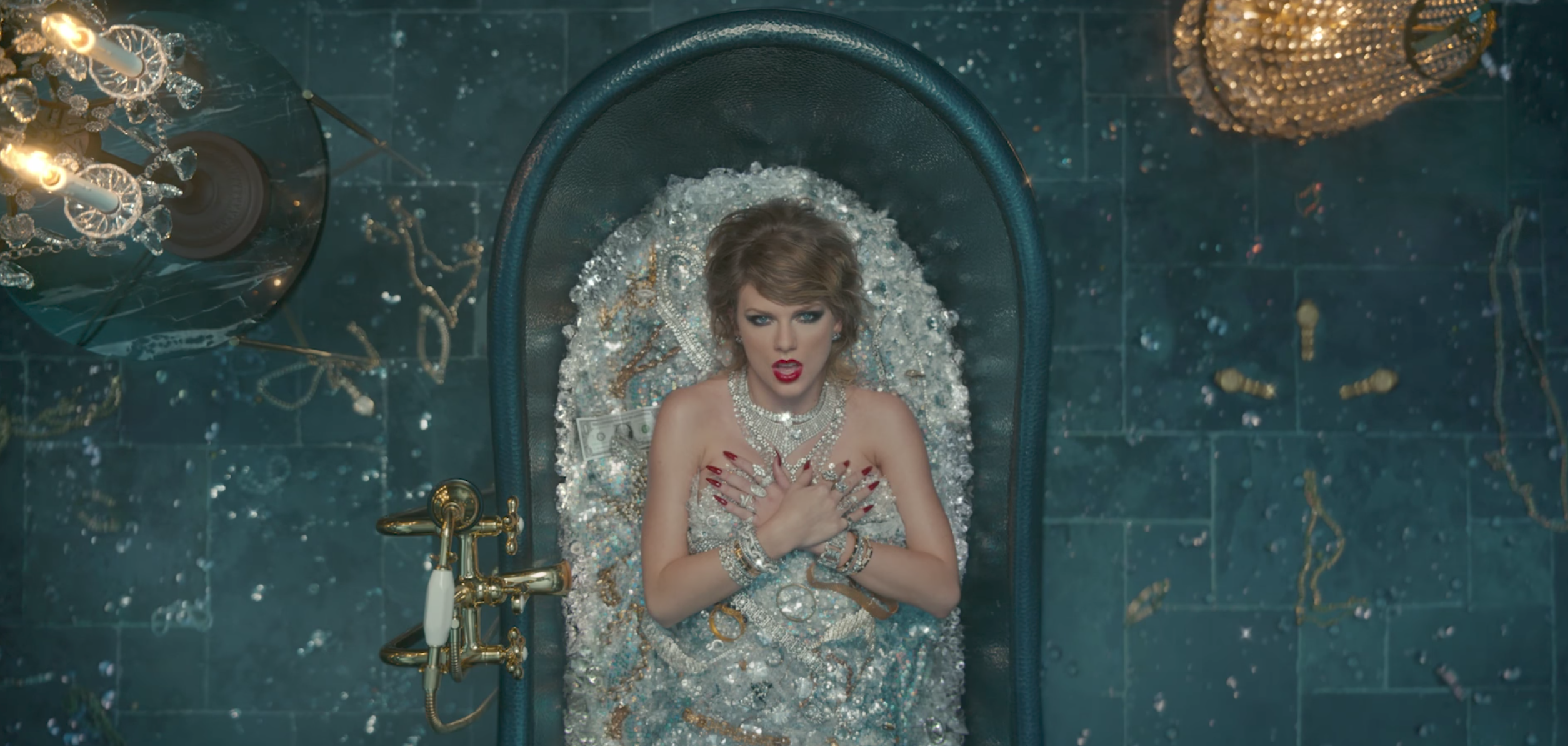
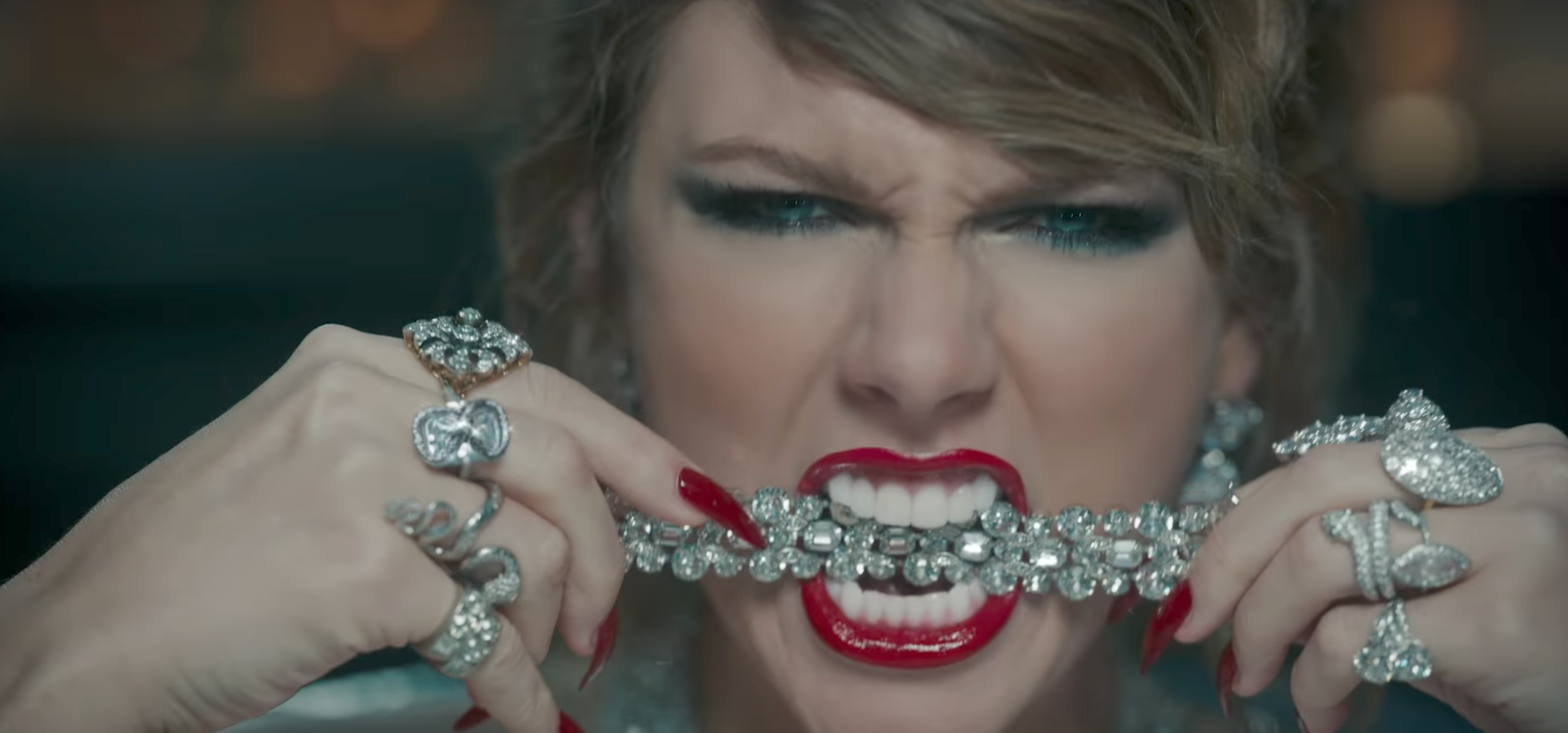
But in this underground, Taylor isn’t fighting, she’s in a bath full of diamonds:

shot 6

While diamonds symbolise wealth, she’s not sitting in a pit of money – most clearly here we are called to think of Marilyn Monroe’s Diamonds are a Girl’s Best Friend:

gentlemenpreferblondes_diamondsareagirls_FC_HD_2997_WithCCs_470x264_110920150507

Not only was Monroe herself a famously closeted gay icon, the original song has some rather queer lyrics: “Time rolls on/And youth is gone/ And you can’t straighten up when you bend”.

Taylor’s bath is also in the centre of a room full of mirrors, recalling the saying “hall of mirrors” where one is not able to distinguish fact from fiction. But we also need to recall the intertextual reference to her earlier clip for Style, which is all about duality:

shot 7

We might also note the rainbows evident in this clip:

rainbow

And the tension between the internal masculine/feminine:

shot 8

A theme which is also represented in Bad Blood:

shot 10

But back to LWYMMD, we are met with our first glimpse of snakes:

snake

Which are mostly obviously a reference to Kimye’s attack on Taylor after the Famous shenanigan. BUT what about the fact that snakes appear on Taylor’s hands in a lot of her earlier video clips? For example, Style:

snake 1

Shake it Off:

snake 3

And Blank Space:

snake 2

The fact that Taylor wears many of these snakes as rings is also significant in light of her earlier ring choices, notably the fleur-de-lis of Our Song, representing chastity:

fleur

So, Taylor has gone from a symbol of chastity, to snakes, which coincidentally are strongly associated with sexuality due to that whole Adam-and-Eve-snake-incident-thing. In other words, snakes are traditionally understood as representing sexual power. For Freud snakes were a symbol of male sexual drive, but lesbian culture has also embraced the snake namely in reference to the ancient matriarchal Minoan society symbolised by the “Snake Goddess”:

274525105_55227223d6_b

We then see that Taylor is indeed positioning herself as snake queen:

queen

But she’s not only queen of snakes i.e. queen of sexual power, she’s drinking tea:

tea

Which seems kind of random UNTIL we recall that tea is associated with the gay community as Urban Dictionary defines: “Used within the urban gay community, ‘tea’ signifies a piece of sensitive and possibly highly sought-after information or tidbit”. Or, as A.J. Musser has argued: “While I do not want to argue that tea functions as the sign of lesbianism, it does serve as one among a collection of possible signs of female queerness”. So, here the tea drinking is not only about recalling a secret, it is a nod to lesbian stereotypes. In light of this we might see the “et tu Brute” chiselled into the columns as not only referencing Kanye as a backstabber, but perhaps also calling him out of the closet – i.e. “and you, Kanye?”

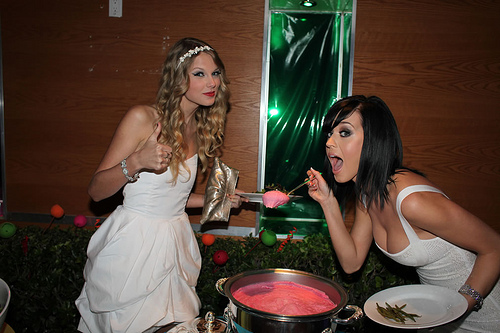
Next up it’s Taylor in an epic golden car crash, and as everyone has pointed out, she looks just like Katy Perry (but holding the grammy Katy doesn’t have – so shady):

perry

Up until recently the reason behind Katy and Taylor’s famous feud wasn’t known. Katy has since explained that it was about backing dancers. Are we really to believe that Taylor wrote Bad Blood, which features the lyrics “You know it used to be mad love” just because of a fight about backing dancers?

Maybe Taylor is trying to reference Judith Butler’s theory of gender melancholy here – you become what you cannot love…(And, not to mention that Katy came out earlier this year).

Taylor-Swift-Katy-Perry-Birthday

We then see Taylor the caged bird, calling to mind Maya Angelou’s I Know Why the Caged Bird Sings, which explores questions of lesbianism among other themes. We might also note that Taylor is in an orange jumpsuit behind bars, a la Orange is the New Black.

bird

But importantly, Taylor’s “feast” in the cage involves a lobster and a rat:

lobster

While rats are symbolic of new beginnings, and lobsters also represent regeneration, “lobster” is slang for “lesbian”.

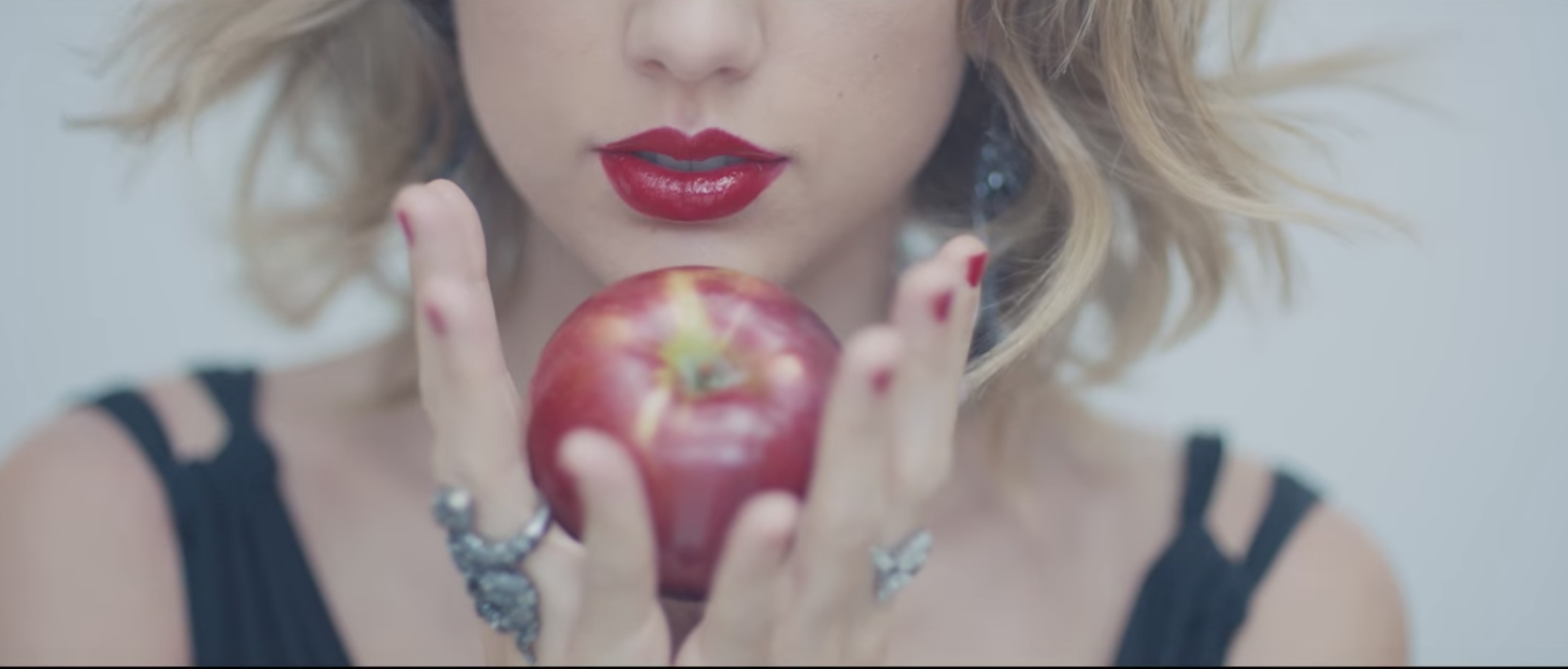
We are then taken to scenes of Taylor robbing what appears to be a music streaming company. But this isn’t just about her feud with Apple, she’s also sporting the very pansexual slogan “BLIND FOR LOVE” amongst a bevy of cats/pussies:

blind

Of course Taylor has been upfront about her obsession with cats for some time (also a lesbian stereotype), as we see in early videos such as 22 (where she just happens to be hugging a woman while making a “V” sign…):

22

And lobsters/cats aren’t the only animal symbolism Taylor has used in videos – remember that beaver from We Are Never Ever Getting Back Together who (along with a random woman) beckons Taylor away from her bed/phone call with her boyfriend?

Beaver

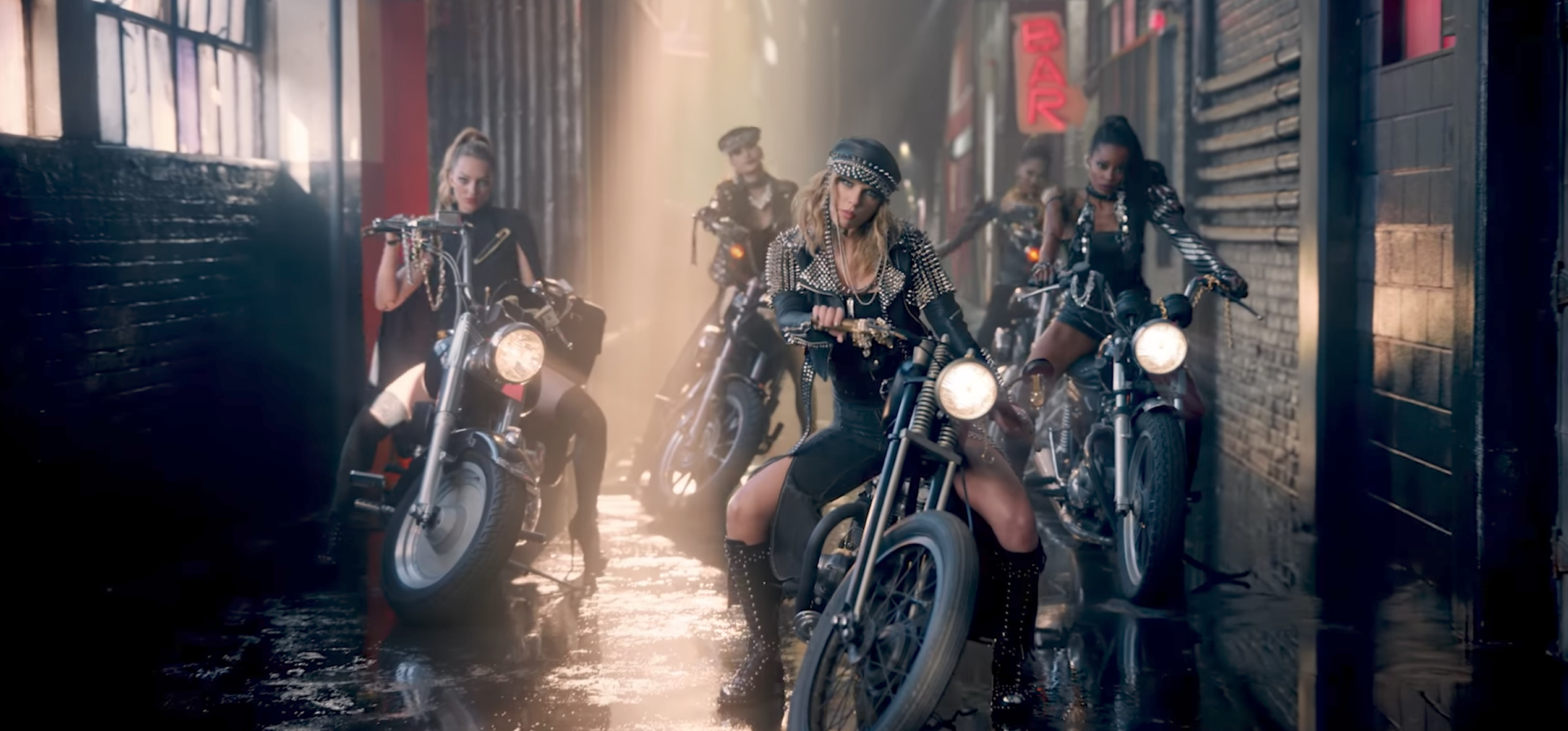
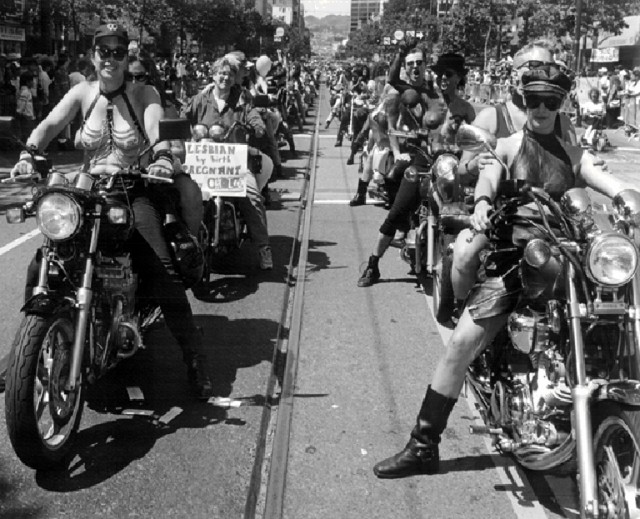
Back in LWYMMD, things take a turn for the extra gay, with Taylor referencing Dykes on Bikes (a lesbian pride group which began in San Francisco in the 1970s):

dykes

While some have suggested this is undoubtably a reference to Peter Lindberg’s “Wild at Heart” shoot for Vogue in 1991, there is no doubt that the inspiration for that was this:

dykes 2

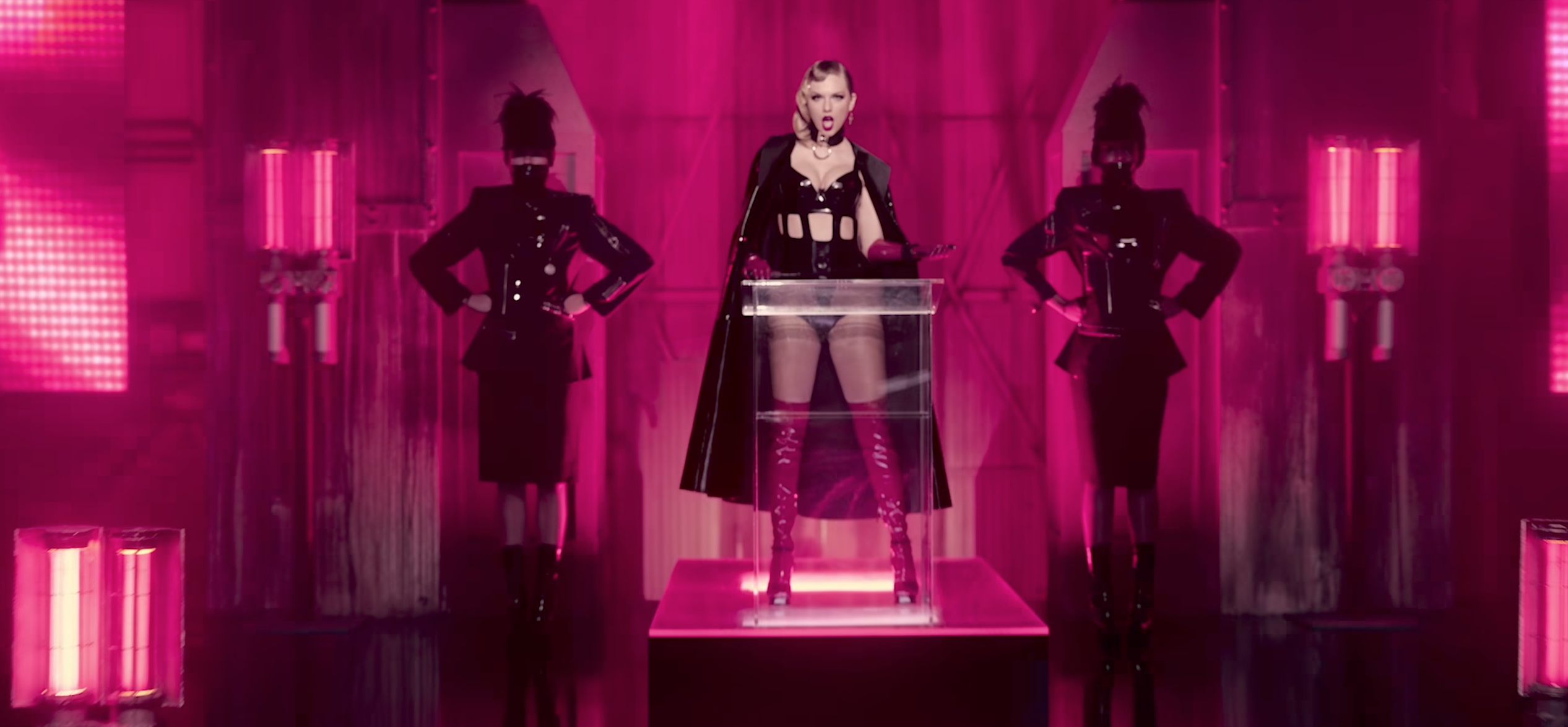
We then see Taylor as the dominatrix leader of a “squad” of plastic women (note the cats also on screen – it’s her “pussy squad”), in reference to her infamous girl gang groupies:

dom

While the figure of “dominatrix” has its own overt sexual connotations, the imagery (as Every Outfit on SATC has pointed out) is clearly referencing the 2016 horror film Neon Demon:

neon

81X6ifvFo6L._SL1500_

WHICH notoriously includes an extended scene involving lesbian necrophilia.

Taylor then bursts in to the metaphorical closet:

closet

Which also calls to mind the “door” in her clip for Fifteen where she is 800% in love with a girl and is just a completely gay story for real (lyrics include “you might find who you’re supposed to be…take a deep breath and walk through the doors”):

15

15 2

In the LWYMMD closet she doesn’t meet her teen girl crush, but rather a crew of effeminate men in heels, including the notable and openly gay Todrick Hall. A lot of commentators have pointed to the “I ❤ T.S.” on the men’s shirts as a jab at Taylor’s supposed ex-boyfriend Tom Hiddleston who wore a similar shirt when they were said to be dating:

landscape-1467652357-tom

But I think the real takeaway message here is the association between those who declare their love for Taylor, and being gay/closeted. In other words this whole scene is about Taylor’s beards.

ts

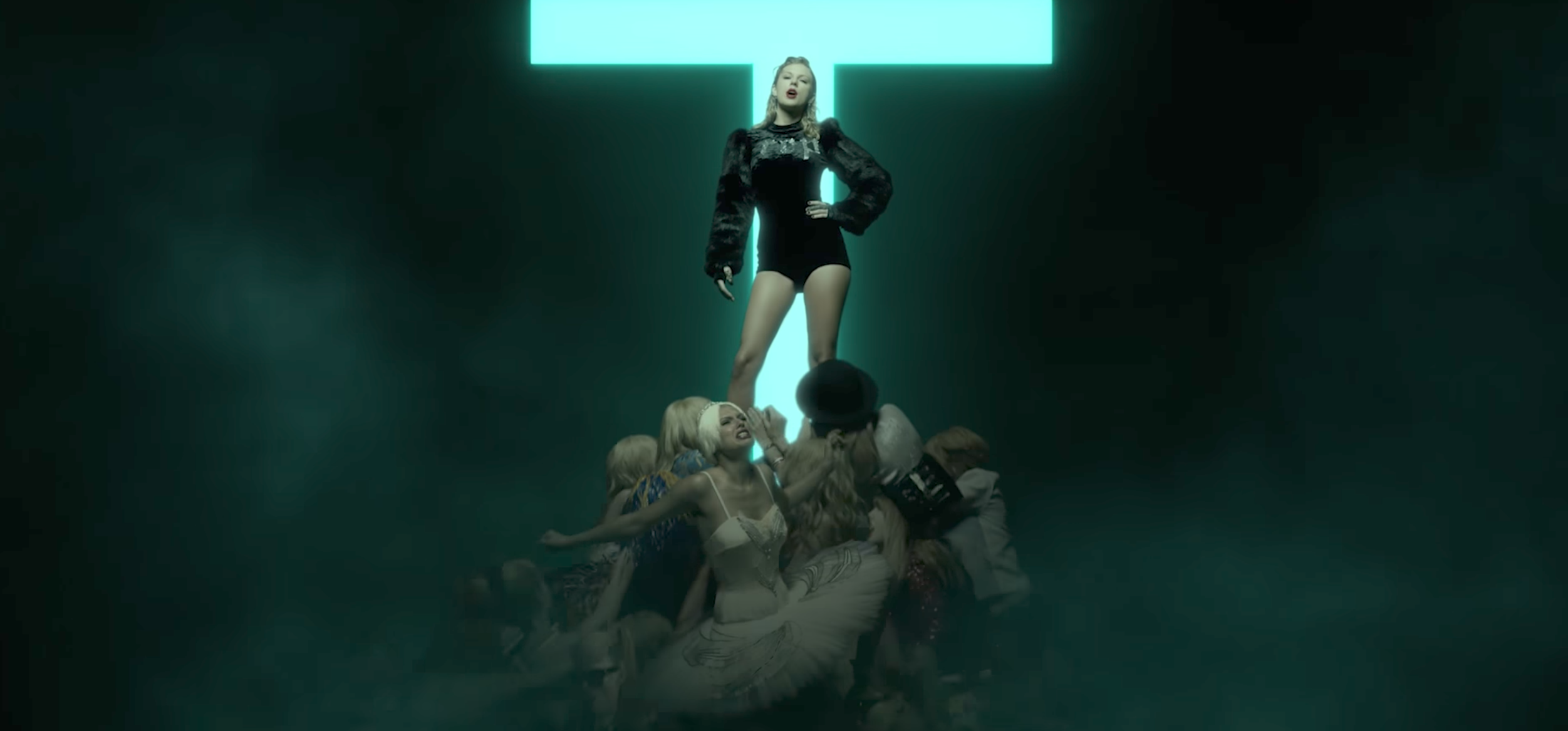
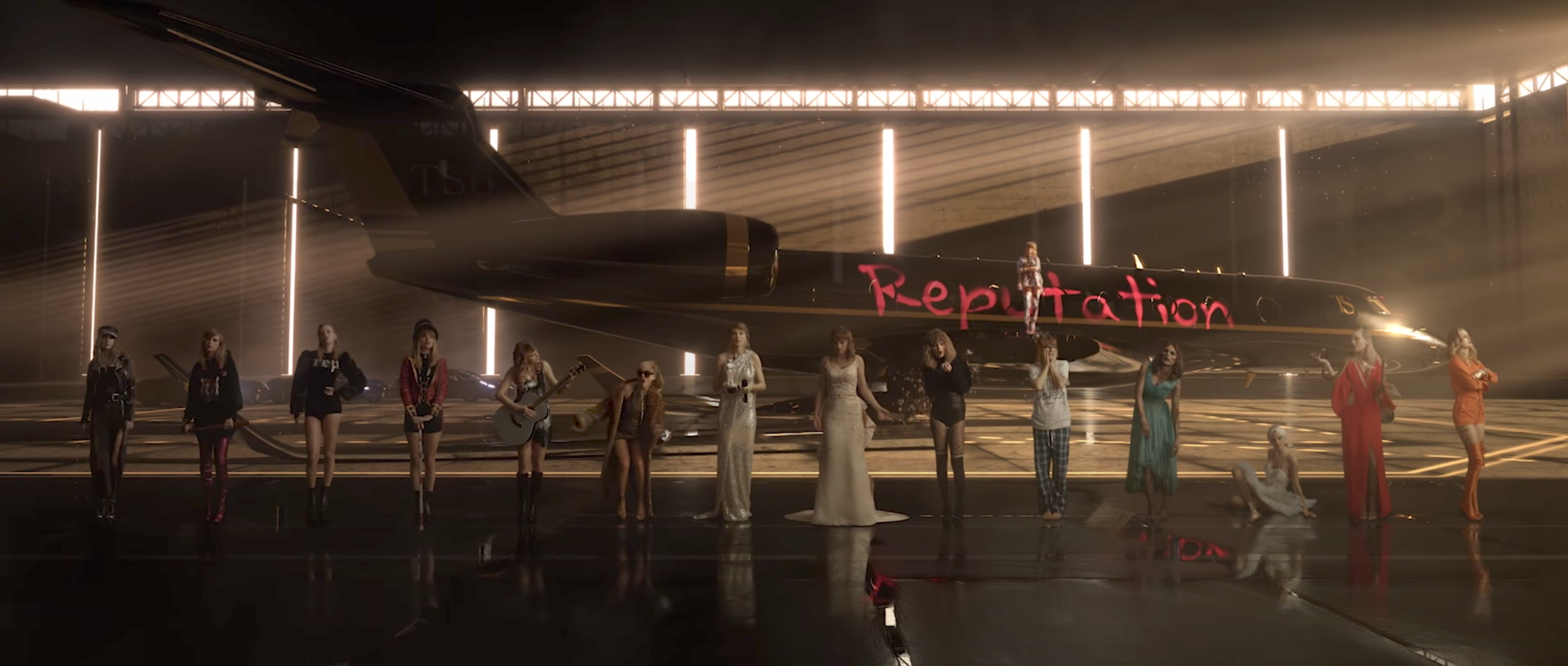
The finale is Taylor standing on a pile of warring alter-egos (and of course the “T” referencing not only “Taylor” but the “tea” earlier in the clip):

T

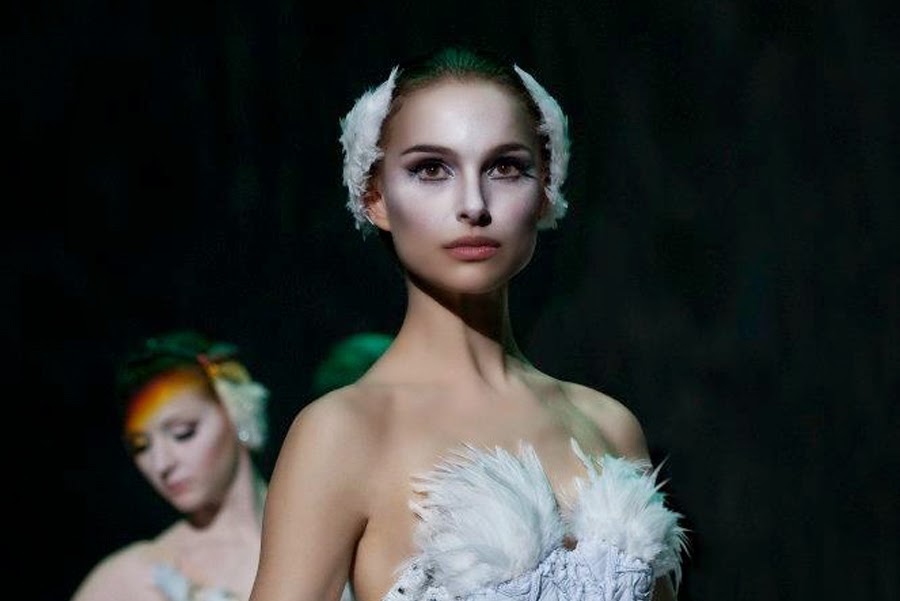
Up the front we have Taylor in her Swan Lake outfit from Shake it Off, and given that this particular character was chosen out of a cast of many from that particular clip, we might also see this as a reference to the lesbian horror (see a theme here?) film Black Swan:

Halloween-CISNE NEGRO

With feminine horror also referenced in Taylor’s outfit as she saws the wings off a phallic aeroplane:

lesbian

In the final scene Taylor once again meets the many sides of “herself”:

end

A theme of self-confrontation we have also seen in earlier clips like Out of the Woods:

Screen Shot 2017-08-29 at 5.04.36 PM

But while Taylor’s previous clips have been about “finding” herself, it is clear in LWYMMD that we the audience have not yet found the “true” Taylor.

finale

Or, maybe she’s all and none of these characters. Maybe she’s been trying to flag her sexuality for the longest time, with her snake rings, masculine internal duality, tea, rainbows, closet doors, lobsters, beavers and cats. I guess only time, and the rest of Reputation may tell.

(Thanks also to Clare S for helping with this piece, specifically the research on lesbians and tea). 

Katy Perry Does Critical Theory

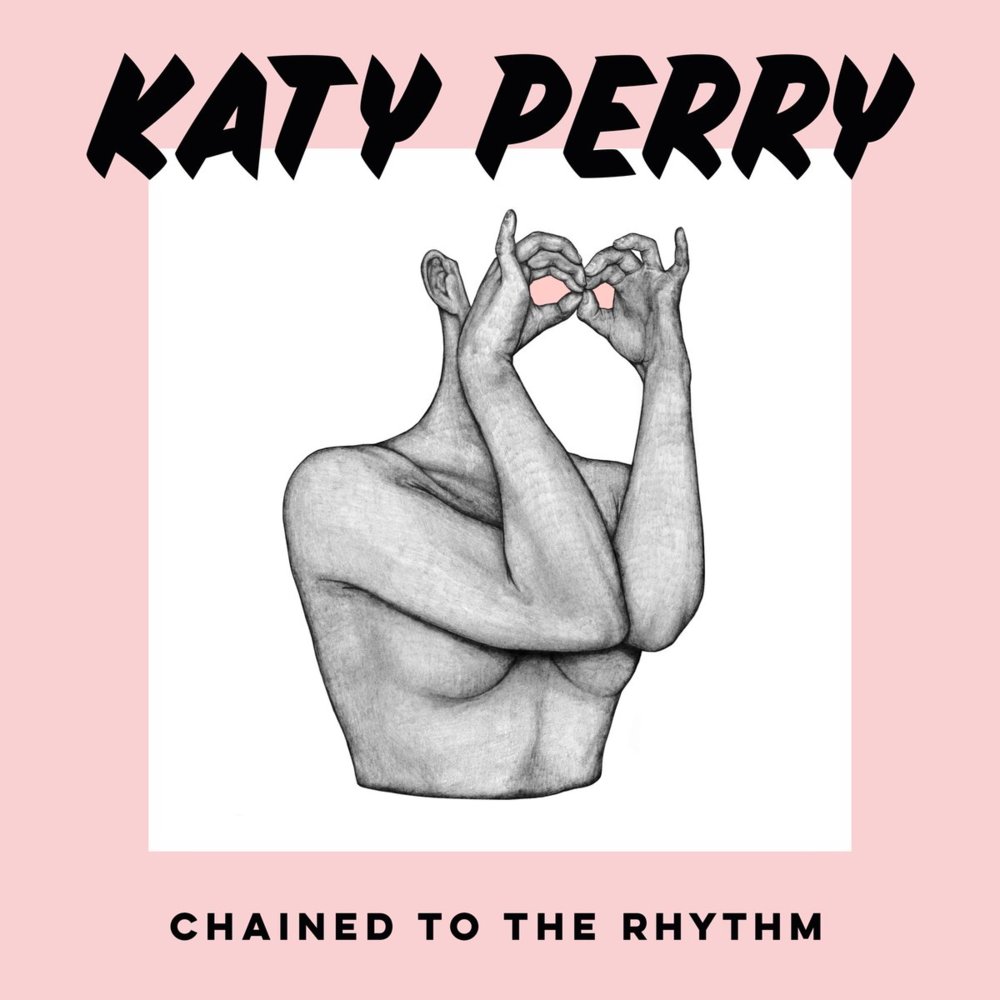
e7fbb6d2d0661b843397264775eab685-1000x1000x1

Illuminati realness, or reference to Guy Debord’s ‘Society of the Spectacle’? You decide.

There is little doubt now that we are living in a strange time, a time where Teen Vogue talks Black Lives Matter, Elle Magazine quotes Russian revolutionaries, and the dictionary trolls the President of the United States. Activist politics is filtering into mainstream spaces in strange and uneven ways. This week one such event was the release of Katy Perry’s video for her new song ‘Chained to the Rhythm‘, which is, in fact, a hilariously direct engagement with Critical Theory.

Critical Theory emerged in the mid twentieth century, and involved theorists such as Theodor Adorno and Max Horkheimer taking up strands of Marxist and Psychoanalytic thought, to provide a critique of society and mass culture. In particular, Adorno was very concerned with what he called the “culture industry“, that is, entertainment consumed by the masses that works to keep people controlled and complicit under capitalism. Adorno believed that popular culture numbs people so that they are not able to fully realise the conditions of their own oppression.

This is exactly the critique of society that Perry presents in her new video.

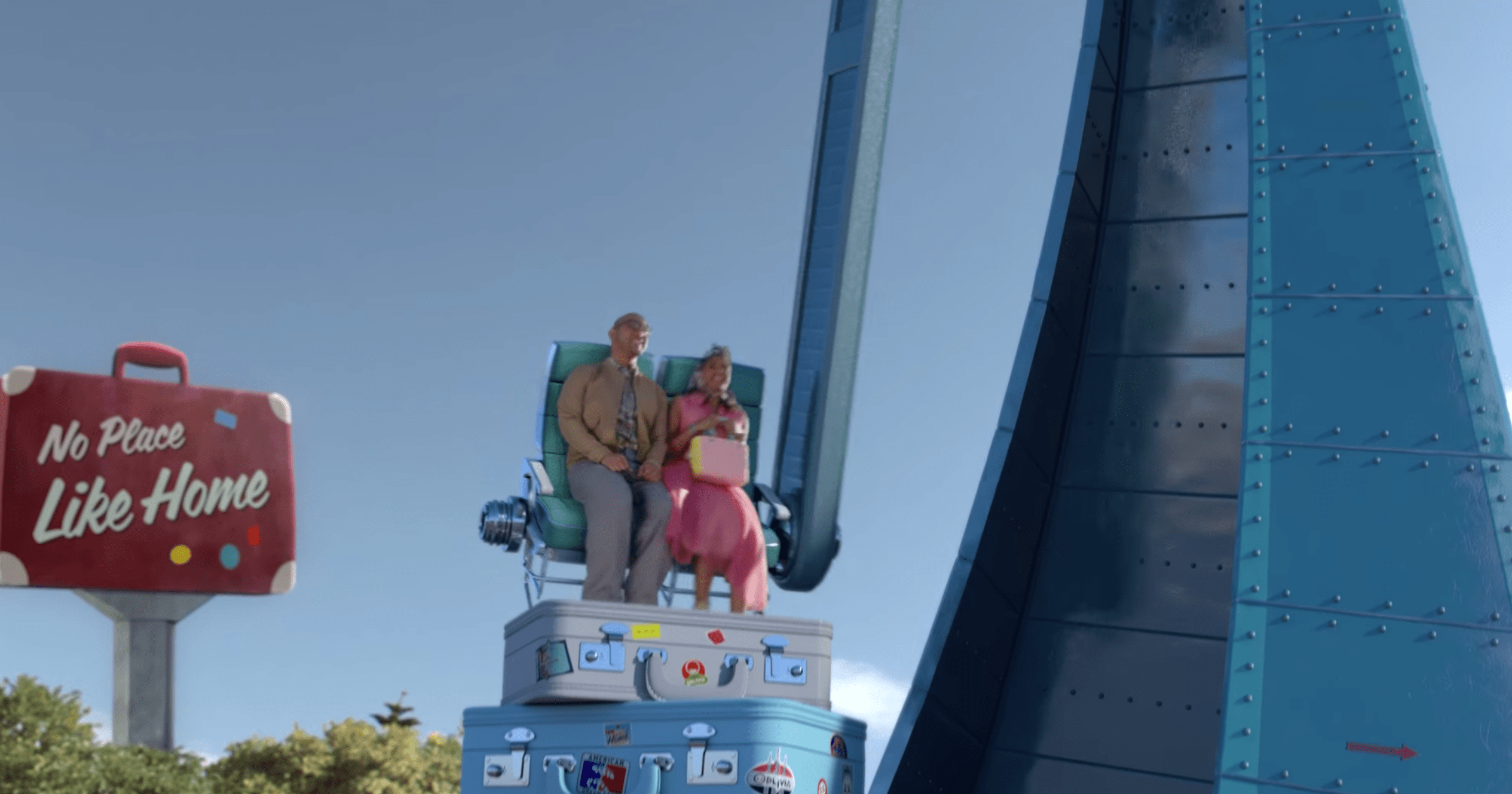
With the subtlety of a sledgehammer, Perry’s video is set in an amusement park called “Oblivia”, where everyone is either viewing the world through their iPads or shuffling behind others toward mundane rides such as a literal hampster wheel. The setting notably connects up with Adorno and Horkheimer’s famous claim that “amusement has become an extension of labor under late capitalism”.

one

Gosh KP, what on earth does it mean?!

But with increasing nuance throughout the clip, Perry manages to address some of the most pressing political issues of our time. These include:

1. The financial crisis and the American dream

screen-shot-2017-02-23-at-9-28-46-pm

The first ride Perry visits is a reference to the financial crisis of 2008 that saw the mortgage market in the USA bottom-out. It’s not a fun ride—you sit in a tiny house and get jolted in the air once you’re locked in the house. It’s almost like Perry read Lauren Berlant’s book ‘Cruel Optimism‘ which talks about how people invest in dreams of a better future (i.e. the American dream) but that this belief is actually a cruel and toxic attachment.

2. Heteronormativity

screen-shot-2017-02-23-at-8-32-15-pm

The dream drop ride shows heterosexual couples enter, surrounded by a white picket fence. Perry comes along and smells the roses on the fence, only to prick her finger, realising that the roses have stems of barbed wire. In a reverse-Sleeping-Beauty move, this finger prick helps to wake Perry up, and we realise that the deep sleep represented in fairytales is in fact about succumbing to a heteronormative life. Here, Perry functions as a queer character who can’t quite meet the normative standards that allow her to fully enjoy the park. As Perry is also the star of the piece, we are called to rethink the “barbed” reality of heterosexually “normal” life.

screen-shot-2017-02-23-at-8-32-29-pm

On this note, we should pause here to consider how Perry’s partner on the love-rollercoaster is an incredibly camp man in a glitter shirt.

3. Racism and the Trump Travel Ban 

screen-shot-2017-02-23-at-8-34-14-pm

One of the next rides that Perry stumbles across involves black couples and single people getting flung over a fence/wall. Here Perry is offering a direct critique of the Trump administration’s white heterosexist rulings.

4. War and nuclear holocaust

screen-shot-2017-02-23-at-8-32-01-pm

Park-goers walk around carrying fairyfloss that looks like broccoli, that we later realise are actually mushroom clouds. Also this ride:

screen-shot-2017-02-23-at-8-34-00-pm

Bleak.

5. Climate change and environmental degradation 

screen-shot-2017-02-23-at-8-34-33-pm

“Fire Water” is Perry’s most obscure reference—or, perhaps her most literal. Perry visits a gas station where the petrol is actually water but that water is on fire. There are also sailors. It’s pretty great. It appears to be a reference to climate change (the world is heating up) but also fracking (which can cause river fires!), and on that note, it is also clearly about Standing Rock.

6. The nuclear family and false appearances

screen-shot-2017-02-23-at-8-34-48-pm

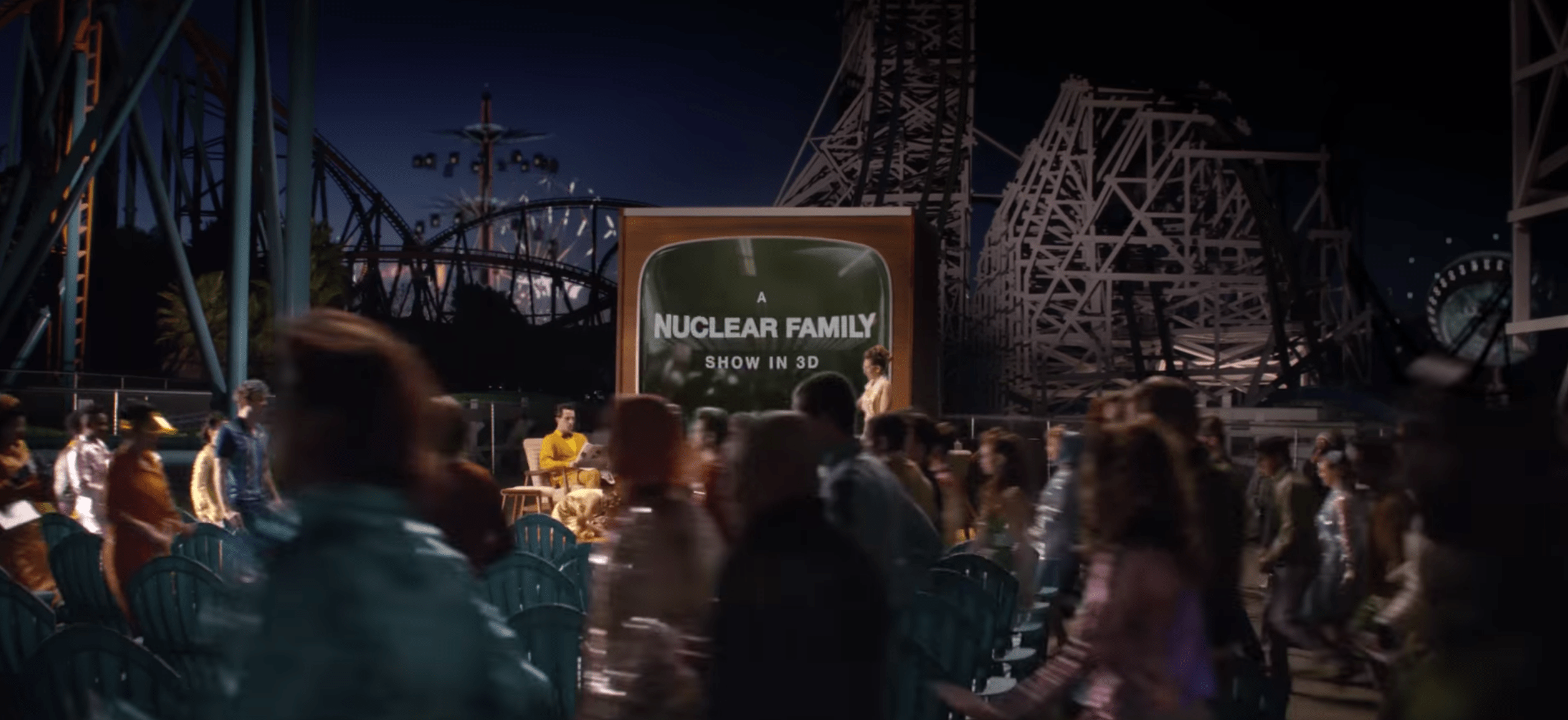
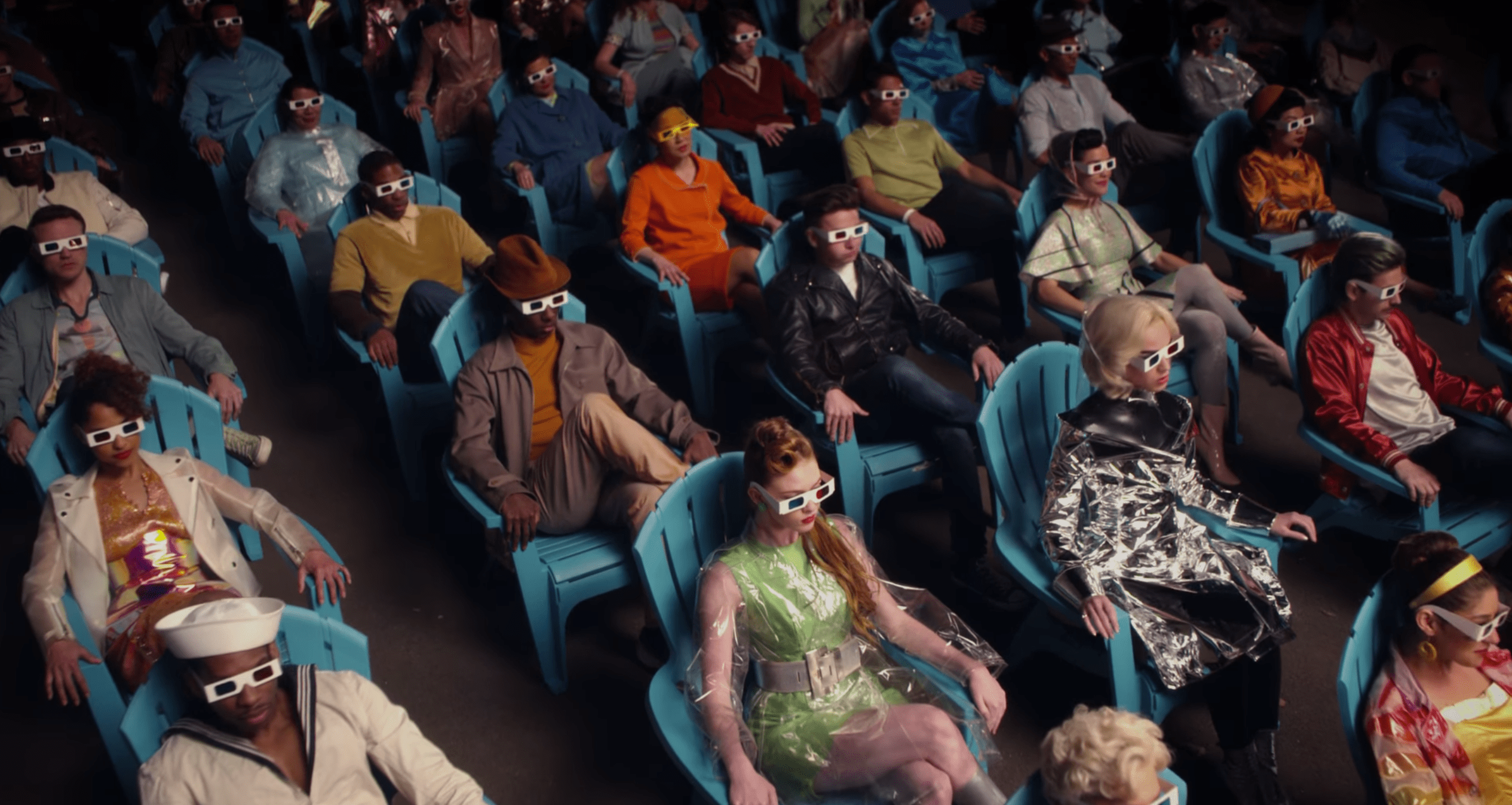
Toward the end of the song Perry sits in a crowd wearing 3D glasses, watching a family perform in front of a TV screen. Here Perry challenges the charade of the perfect nuclear family, and the societal focus on the heterosexual couple. The retro styling of the entire clip also gains greater meaning here, as we see that this world is also one where women are cast back into the stereotype of the 1950s housewife. But in Perry also adopting this dress (reminiscent of the Jetsons) she is entertaining a form of what Elizabeth Freeman calls “temporal drag“. That is, a way of embodying the past in order to displace the “present”, to help us question our own progress narratives.

screen-shot-2017-02-23-at-8-35-04-pm-1

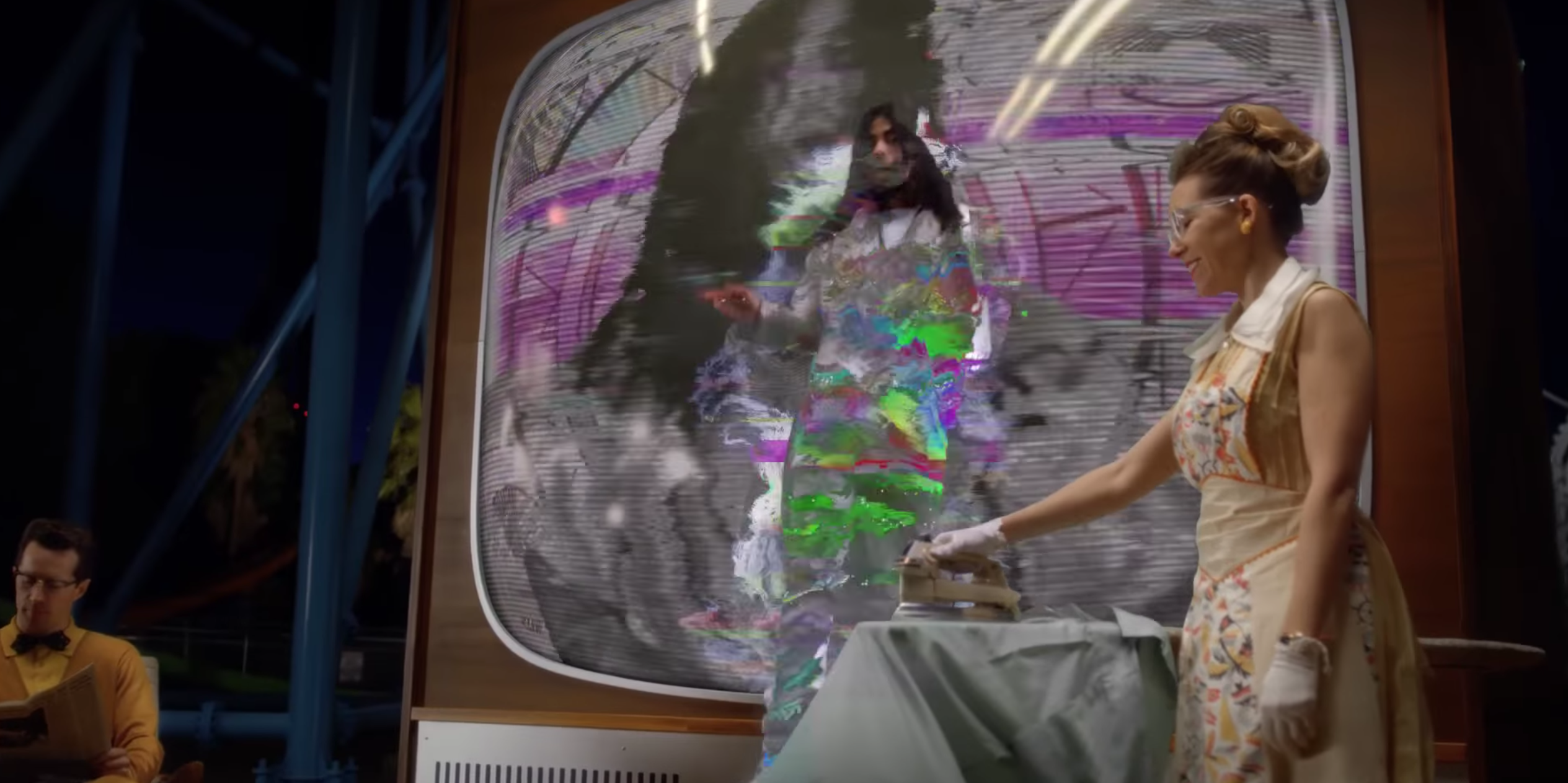
The imagery of this scene also, remarkably, directly references Guy Debord’s 1967 work ‘Society of the Spectacle‘, which laments the way everything in society has become about consumption and appearances. One of Debord’s proposed tactics for interrupting such a society is called “detournement“—basically hijacking cultural products and subverting their meaning, also known as culture jamming. That Perry would reference (or perhaps recuperate) Debord would, I imagine, have him rolling in his grave.

society_of_the_spectacle-01-480x787

The cover of Debord’s classic

During the same scene, Skip Marley emerges out of the television screen, and in a direct critique of imperialism, the ruling class and capitalist society, sings: “Time is ticking for the empire/The truth they feed is feeble/As so many times before/They greed over the people/They stumbling and fumbling and we’re about to riot”.

After this Perry dances around confusedly for a bit, before running and then stopping on a treadmill, giving us a completely alarmed stare down the camera.

When I first heard the song—which includes lyrics such as “So comfortable, we live in a bubble, a bubble” and “Stumbling around like a wasted zombie”—I was annoyed that Perry would take a swipe at ordinary people, as if everyone is just stupid and thoughtless. This seemed perfectly in line with the desperately elitist condemnation by Clinton of Trump supporters as “deplorables” in 2016, which only served to alienate rather than mobilise people. The original critical theory work from Adorno and others is similarly irksome in its extreme disdain for “low culture” enjoyed by the many, versus more intellectual “high culture”. As I see it, to condemn mass culture and in turn the “cultural dupes” who consume it, is to be radically ungenerous to the circumstances and experiences of the people involved.

But here’s where Perry manages to one-up Adorno. What makes Perry’s engagement more dynamic, is the way she places herself in the world of Oblivia. Rather than being a snobby outsider, she constantly refers to herself in the lyrics (through the use of “we”), and depicts herself in the video, as being caught up in oblivion similarly to everyone else. While she gradually becomes more “woke” than the other inhabitants of the theme park, she is consistently shown in a state of ignorant bliss just as unaware as everyone else. Here Perry manages to resolve the philosophical problem posed by Slavoj Zizek who suggests that it is false to think one can be authentically “outside” of a relation to culture. Perry doesn’t pretend to be outside of popular culture in an elitist way because she just physically can’t be…because this is a pop music video! That Marley emerges out of the television at the end also perhaps hints that Perry thinks critical ideas can come out of popular culture as much as you can also be “chained to the rhythm”. Presumably she’s hoping her work will woke you too.

screen-shot-2017-02-23-at-8-36-15-pm

Marley climbs out of the TV

While the irony of all of this should give you a lot of LOLs it does also beg the question as to whether this is really culture-jamming or merely the selling-back to us of critiques of culture. My sense is that it is almost certainly both (Perry is making money out of this after all), and that it certainly won’t be a Katy Perry video that starts the revolution (unless she keeps up her Brit Awards antics of course).

But I also don’t think it’s bad—in fact, it should be taken as an overwhelmingly positive sign that there is a current mood in daily life that is about being wildly vocal and “about to riot”. As Perry and Marley suggest, “they woke up the lions”. Sure, some of those lions are totally bizarre pop stars, but it also means it’s a jungle out there…

Feminist Utopias and Battling Cruel Optimism in Ghostbusters

empiregbcover

This is not a drill

When I first heard about the new Ghostbusters, I was bursting with anticipation. But when the trailers started coming I quickly tuned out. Like a child who has peeked at their Christmas presents before the big day, I needed to hold the excitement in. It all seemed too good to be true. So when the lights went down at the cinema last night, I turned to my girlfriend and said “holy crap—they really made this film!”

By way of review, the film itself is highly enjoyable but clunky at times.

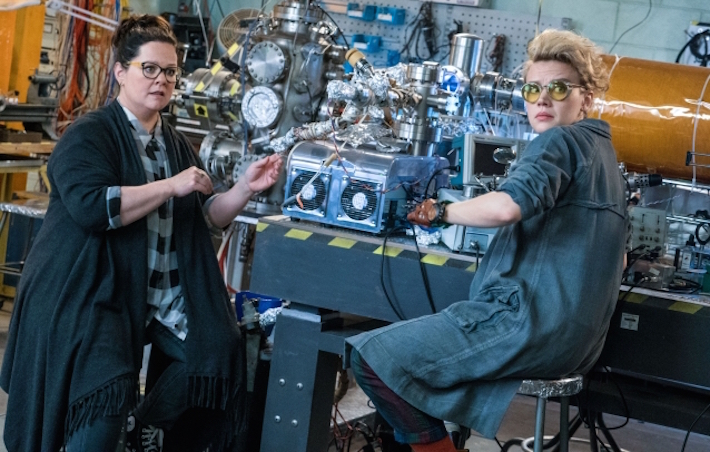
Ghostbusters-Lab-MIT_0-1

Hands up who wants to go get a science degree after seeing this film

Don’t get me wrong, I was still hanging on every word out of Melissa McCarthy’s mouth, but the direction and editing needed some tightening up. It was probably a three star affair. But the film more than makes up for its pacing and logic problems with its sharp ideas and cast who pull it right through.

Whether this was a great filmic success is not really the point. The point is that they made a movie dominated by smart and funny female leads, who explore issues of gender and race inequality, with large hints of queer sexuality. It feels like a miracle in a world otherwise saturated with films epically failing the Bechdel Test.

1280_ghostbusters_cast_elle_covers

Outside of the film however, cruel optimism is arguably still going strong

However, the irony in celebrating this bastion of female representation is that I spend much of my academic time critiquing the idea that we should focus on representational politics. I often argue that our focus on getting diversity in film and television obscures the material inequalities that underlie the lack of diversity in the popular realm in the first place. When we are presented with images of “successful” characters from ordinarily marginalised groups, this can help to present a false sense that “anyone can make it” despite the odds stacked against them. This connects up with cultural theorist Lauren Berlant’s idea of “cruel optimism”, which refers to those fantasies we hold onto (like “The American Dream”) that are actually cruel promises destined to fail. Berlant writes:

“Fantasy is the means by which people hoard idealising theories and tableaux about how they and the world ‘add up to something’. What happens when those fantasies start to fray—depression, dissociation, pragmatism, cynicism, optimism activism, or an incoherent mash?” (2011, 2).

Cruel optimism operates where there is a desire and attachment to a kind of projected future, but where this possibility is either impossible or “toxic”. Berlant warns against investing in these projections, because when they fail, it can lead to serious disaffection and demoralisation (or, an unhelpful continuation of false positivity).

ghostbusters

The film doesn’t hold back about the discrimination women experience

So, I have to admit that I was worried that the all-female Ghostbusters might be doing its part to contribute to a cruel optimism about gender equality, to say “don’t worry, women can make it too!”, despite the real-life discrimination, harassment and assault experienced by a diversity of women on a daily basis (and on that note, the Ghostbusters cast). But the beautiful thing about this film is that it owns this reality, and runs with it. The film is surprisingly open about gender issues, directly representing the ways that women are systematically dismissed and derided.

When the characters are thrown out of their academic institutions, it is biting commentary on the historic sexist assumption that women pursue the “irrational” (here represented by an interest in the paranormal). When they are dismissed by the authorities and the “men in charge” it is a reminder of the fact that when women report abuse (here represented by the violent male mastermind) there is a practice of active disbelief. When they are vilified online and represented by the media as liars, it is a reflection of the abuse that women experience in these realms.

Ghostbusters doesn’t present cruel optimism: it reflects the true cruelty of the present. There is not a sense that this can be easily overcome, rather, a mass-scale battle led by a vanguard of ass-kicking diverse women is partly what is needed to make any ground.

Kate-McKinnon-Ghostbusters-Gay

Kate McKinnon, the openly gay dreamboat, plays Jillian

The other thing that Ghostbusters does so well, is show us glimpses of the revolutionary future on the horizon. This is reminiscent of the late José Esteban Muñoz‘s work on queer utopias. Muñoz argues that there is a queer future that we are able to glimpse even in the darkest of moments, where oppressive norms of gender and sexuality have been undone:

“Queerness is a longing that propels us onward, beyond romances of the negative and toiling in the present” (2009, 1).

In Ghostbusters we catch sight of this queer future in the team’s workroom. Here there is no hierarchy (they are all leaders), much empathy (like when Patty cares about Abby’s blood sugar levels), endless patience (even for Kevin who is terrible at answering the phone), and a deep but balanced engagement with questions of science (they make cool stuff) and humanity (like Jillian’s speech to Abby about love). The film is always on the verge of showing us out-and-out queer love, with a complicated triangle between Abby and Erin (past lovers?) and Abby and Jillian (present lovers?), only slightly ameliorated by Erin’s attraction to Kevin. There is also a diversity of bodies, backgrounds, skin colour, and sexuality. Ghostbusters doesn’t shy away from how difficult gender relations are in the present, but it does show us a hint of a future where things could be different.

ghostbusters2016

They ain’t afraid of no Men’s Rights Activists

There are times of “reverse sexism” within the movie, and I think that kicking a ghost in the groin is probably a bit unnecessary, but largely these moments are used to reflect on the standards that women experience today. The treatment of the assistant Kevin for example, explicitly functions as commentary on the sexual harassment women can expect in most workplaces.

It is no wonder that the MRAs of the Internet are up in arms about this insta feminist-cult-classic. While the sexist and racist hate directed toward the movie serves as a reminder of how far we have to go, it also reveals how challenging this film truly is. As they always say, the feminist proof is in the sexist-reaction pudding.


Queering and Queening Femininity

Snog, Marry, Avoid?

SMA host Jenny Frost (centre) with two contestants pre-make-under

Recently I published an article in the journal Australian Feminist Studies titled “Queer Femininity Versus ‘Natural Beauty’ in Snog, Marry, Avoid“. In the article I discuss the way that femininity is represented on the BBC’s Snog, Marry, Avoid – the show where they take “extreme” women and give them a make-under to help them fit in.

I won’t go over all of the details of my analysis of the show, but in a nutshell the point I make is that the “natural beauty” promoted by the show is far from liberating. In fact, the contestants are merely presented with a form of appropriate gender that they must conform to, which restricts rather than frees them.

snog-marry-avoid

A typical contestant pre-make-under

Indeed, if we consider the women prior to make-under we can see that their “inappropriate” and excessive femininity is actually queer in many ways. That is, “queer” in the theoretical sense of making the familiar strange and subverting ordinary understandings of gender and sexuality.

It may seem anti-intuitive to say that women who are covered in make-up, wearing extremely short dresses and who have outrageous hair extensions are queer in any way. The usual sentiment that would circulate about such women is that they are a product of a problematic “raunch” culture where women are compelled to be sexy and one dimensional.

However what we see in Snog, Marry, Avoid is that these women are not treated as “normal” at all. Rather, they are marked out as deeply problematic and in need of transformation.

maxresdefault

A contestant hears that a man would prefer to “avoid” her

Men are interviewed on the show and are asked whether they would like to “snog, marry or avoid” the contestants. Their responses (almost always negative) are used to justify why a make-under is essential for the woman in question. The women who don’t want to change are ridiculed as ridiculous and disinterested in being attractive.

tumblr_min838AXFg1qlk0b7o1_500

For Halberstam “kinging” involves some understatement, “performing non-performativity”

This is where the idea of “queening” is helpful. The term is an inversion of queer theorist J. Jack Halberstam’s “kinging” referred to in the book Female Masculinity. In this text Halberstam looks in part at female drag kings and the kind of masculinity they present. Kinging describes portraying masculinity via “understatement, hyperbole, and layering” that makes obvious the performative aspects of gender.

In the same way, the contestants on Snog, Marry, Avoid are involved in exaggerating femininity and showing it up. The contestants often talk about wanting to look “fake”, and the show frequently points out how the women indulge in/are obsessed with “fakery”. In this way the women are queening rather than kinging – making obvious their adopted feminine presentation. In contrast, when the women are made-under their gender is portrayed as “natural” despite the fact that they are still wearing make-up, have had their hair styled, and so on – sometimes they are even wearing wigs! Here another kind of queening is going on, where they are compelled to perform naturalness.

Jodie-before_after__726928a

A typical before (left) and after (right) shot on SMA

We see that while a more extreme portrayal of femininity (pre-make-under) can serve to show us how constructed gender is, the portrayal of “natural beauty” insidiously covers this up. The make-under process presents gender as something that is natural, as something that can be found underneath and within.

Rather, we ought to understand gender as something that is determined by social expectations and norms, where some people are considered “normal”, and where others fall outside of these constructed boundaries and are often compelled by society to conform. Ironically Snog, Marry, Avoid does help us to see this, if we analyse the show for what it is contained within it rather than the narrative of normalcy it attempts to enforce.

ABC of Marriage Equality

IMG_0354Today in my hometown of Canberra, a “Marriage Equality” bill was passed in the ACT Legislative Assembly (the local government). Though it made it through, the bill faces a big challenge as it comes up against our federal government, who it is fair to say, are a bit conservative. With the expectation of a High Court challenge, the ACT government made a few amendments to the bill yesterday, which limits recognition to “same-sex” identifying couples, excluding those who identify as “X”, that is, neither male nor female. So, while emotions of joy and pride are riding high for some, there is still a concerning question of exclusion. Plus there is always the old conundrum…Of course we should have marriage equality! But should we have marriage? So, as we consider the alphabet soup of love, sex and gender, here’s an ABC of my thoughts on this issue…

A is for Abbott: such a conservative twat3tjgzm

B is for bride + bride: what’s so wrong with that?

C is for Canberra: hooray for taking a stand

D is for danger: but who counts in this demand?

E is for equality: for most, thereabout

F is for fighting: some wins, but some doubt…

G is for good times: gay marriage for all!

H is for hang on: we have some amendments y’alltumblr_luat2i2iP01qahipuo1_500

I is for ignored: who’s left outside this debate?

J is for justice: the law will determine your fate

K is for kinky: no wacky weddings my dear!

L is for love: as long as it’s “normal”, not queer

M is for meaning: life-time commitment, a ring

cat

N is for no thanks: marriage is not everyone’s thing

O is for option: limiting marriage? – A blunder

P is for poly: if I have more than one love, I wonder?

Q is for queer: reject all the norms!

R is for romance: sometimes undone by forms

sad-cat-S is for “same-sex”: choose one, or no access?

T is for trans*: no recognition? Call this progress?

U is for undecided: I do believe in love and Cupid

V is for votes: I fear it’s the economy, stupid!

W is for wedding: rainbow cake fo sho

X is for X gender: Canberra says no

Y is for yay: I’m really pleased, every step bit by bit!

Z is for zilch: big flaws for sure, which is just a bit shit