Queer Music Review – Fun Machine’s ‘Bodies On’

FunMachine_PressShot1

Fun Machine

As a slight departure from the usual gist of BinaryThis (i.e. critiquing dominant discourse and/or pictures of academically-themed cats) I’ve decided to do a music review. While considering music from a queer theory perspective is nothing new, it’s not often that we turn our lens from the pop culture machinations of the super-famous, to what’s being produced locally. So even though I know sh** all about music, I thought I’d take some time to consider a band from my hometown of Canberra, called Fun Machine and their newest album ‘Bodies On’. My feeling is that while we spend so long trying to recover interesting meanings from the big-name songs we hate/love, sometimes we might miss the very queer happenings right under our noses. Also I have a special place in my heart for this band- they did an ode to Skywhale (Canberra’s many-breasted whale hot air balloon) with Hannah Beasley last year, which is probably the best song OF ALL TIME (listen here!).

This is not the band, but it is what comes up on Google image search when you type in "fun machine"

This is not the band, but it is what comes up on Google image search when you type in “fun machine”

But before we begin, here’s a SUPER quick run down of what I mean when I say “queer theory perspective” (for a longer explanation of queer theory, see here or here). Questions I considered for this review are:
– How is the fixity of identity (such as sexuality, gender or human-ness) being challenged?
– What are the ways in which ideas of “normal” are being critiqued?
– Are there any other openings being made for ruptures/transformations of the way we usually understand the world?
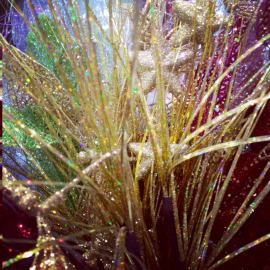
An image from the band's page: apparently you can "NEVER have too much glitter"

An image from the band’s page: apparently you can “NEVER have too much glitter”

As you might notice from those questions, though queer theory has its historical foundations in gay and lesbian activism, a “queer” perspective (though connected to questions of identity) can be about more than just gender and sexuality: doing queer theory involves challenging the way we think. In this sense, “to queer” can mean to make the familiar seem strange. While I have literally no idea how these guys identify in terms of gender or sexuality, that’s not what a queer perspective necessarily needs to involve – it’s about shaking things up. Having said that, sometimes queer is just about glitter – which incidentally, these guys are definitely into.

One thing that I really love about this band is the way they switch between different vocalists, styles, instruments and subjects…Listening to their new album in full for the first time, I had no idea what to expect from one track to the next. They’re also certainly not one of those bands where all their songs sound the same (as a side note here, honestly when the Lana Del Ray song ‘Young and Beautiful‘ came out last year, I genuinely thought it was a re-release of one of her earlier songs. Silly me). Point is, Fun Machine are far from boring. But what of their queer themes? Oh god get to the queer themes already! I hear you say. Okay, here goes…

The first song on their album, ‘Naked Body’, has a rather exciting clip filmed right here in Canberra, involving a crowd of sweaty, body-painted locals:

The clip is richly queer: a montage of skin fills the screen in an ode to hands, breasts, hair, feet and sequins. Blending voices, singers Bec Taylor and Chris Endry sing/shout the lyrics Girl it’s just my naked body/You’ll never touch my naked body/Get your hands off this naked body claiming freedom to nudity, and ownership of their own bodies. Then there’s some loud guitary-drumy bits (I said I don’t know sh** about music) and on repeat we hear Don’t trust unnaked bodies followed by orgiastic images of a dancing crowd smeared in paint and glitter. We see the words “naked”, “fun”, and “rock” literally written on their bodies.

Exposed flesh bursts forth in 'Naked Body'

Exposed flesh bursts forth in ‘Naked Body’

The whole scene adds up to a reclamation of the exposed body as something to embrace, but “fun” is located in your own enjoyment and relationship with your body rather than becoming object to someone else’s desires. At the end of the video clip we see a “money shot” of glitter in an orgasmic rock finish. Transcending boundaries of gender and heteronormativity, music is the polyamorous lover that brings bodies to climax. Here, nakedness is not about being seen, but about being “true” to yourself and your own desires, not the expected norms of sexiness.

‘Shave’ is the fourth track off their album, which also boasts a locally made vid. This was obviously done on a shoe-string budget (I love how you can see the pieces of paper they’ve pasted together for the backdrop):

shave

Brady Bunch for the 21st century in ‘Shave’

The clip starts with a colourful grid of local faces, a kind of modern-day Brady Bunch where “family” is no longer recognisable as the norm of mother-father-children, but rather the connections you have to your community and the people around you. The video involves these faces (also sporting neon makeup and jewels) lip-syncing Come back to me my love/And watch me as I shave. Faces are interspersed with surreal scenes that push the limits of reality: Barbie’s head has been replaced with the Hulk; a plastic wolf is bleeding from the mouth; a monkey mask is covered in candy bananas. The song finishes by asking Are you dancing/Gorgeous/Chaos/Hard Lust? More glitter bursts from a balloon, and a picture of Australia’s Prime Minister is smashed with an egg. ‘Shave’ opens up the limits of what we might take pleasure from and exposes a multiplicity of desire directed at rupturing “reality”. That the PM ends up with ‘egg on his face’ in amongst the scenes of multi-coloured surrealism, suggests that a different political future might be possible – things might be otherwise if we raise our voices up and shout Hey!

d196c0889d1ee562136dc85ec21180e9-640x360

Fun Machine: a veritable glitter-fest

Other songs on their album are also strange and wonderful. ‘In the Jungle’ has helpful tips for what you might want to have handy in the Jungle: You need a hat cos it is sunny/And penicillin never goes wrong, just don’t forget your games console…But I like to play my way/Play Nintendo in the Jungle. With a melody that reminds me of a late 80s sitcom blended with nostalgic videogame tones, this song may seem frivolous on the surface. But I can’t help but think that one message in this is that in order to survive we need more than just the practicalities of life, we need to play. In other tracks we hear about zombie girlfriends (‘Set You on Fire’), how we change each other in relationships (‘Alchemists’) and the possibilities for change (‘Ready for the Fight’). I couldn’t quite understand all of their songs- I think ‘Souvenir Teaspoon’ might be about taking drugs with your grandma, but I’m not sure. The album drifts from gruff deep voices to the softest lilting melodies – this is a musical landscape of difference and transformation.

As a final point, we might note that amongst “80s german minimalist techno” and “pop” they also classify their musical genre as “gay punk” and “genres are weird”. To me, this sums it up: Fun Machine are queer as f*** because you can’t put them in any one box. I encourage you to listen to their new album or go see them if you can: you’ll probably end up dancing around naked and covered in glitter. And as we all know, you can NEVER have too much glitter.
Rethinking Pink

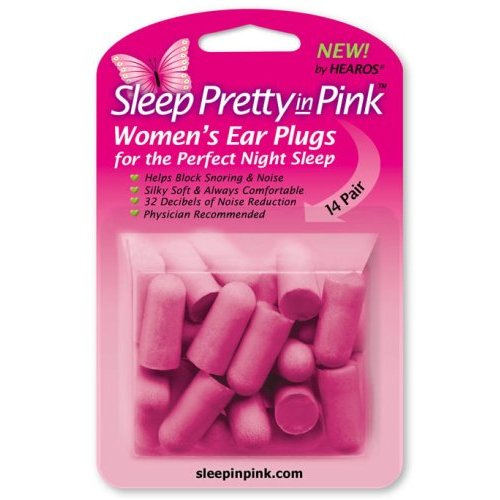
earplugsEvery week there seems to be a new story about how offended we should be about a new product marketed especially to women. You know the deal, it’s usually a rather ordinary object (like a pack of pens) that is selling itself as:

– PINK!
– FOR HER!
– GLITTERY!
– JUST FOR GIRLS!

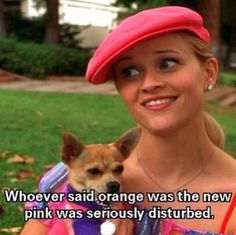
And of course, this is deeply annoying. It seems to reinforce the idea of woman as the “marked” gender and man as the “normal”, natural state of things. It feels patronising and seems to reduce women’s interest to a colour, as if the marketing executives are using Elle Woods from Legally Blonde as their model woman.

elleAnd you know, I love Elle Woods. My phone case is pink. I like the idea of wearing pink on Wednesdays (though I always forget). But I don’t want my interest in the world to be reduced to pink. On the other hand, if I want a pink version of something, so be it. Sometimes I like pink.

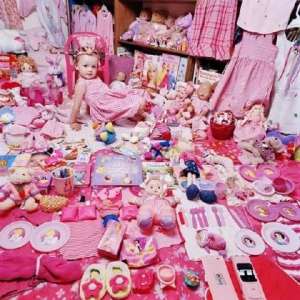
Venturing into the land of children’s toys however, presents a more complicated problem. Girls’ sections are a pinkwash of epic proportions. Understandably, this upsets a lot of parents.

love-pink-toys-07

In her book Living Dolls (2010) Natasha Walter argues that this “pinkification” of girlhood is in part responsible for contemporary raunch culture in so far as girls aspire to be like the dolls they play with – sexy, passive and plastic-looking. Others are also on the “kill pink” mission: UK site Pinkstinks states “We believe that all children – girls and boys – are affected by the ‘pinkification’ of girlhood. Our aim is to challenge and reverse this growing trend.”

Challenging traditional roles and stereotypes (and not just for girls) sounds great. But when you look at what exactly gets targeted in this, a lot of what’s being lumped under problematic “pinkification” is literally just pink stuff, as this screenshot from their front page shows:

pink

Now, I get that the fact if girls stuff is always pink that’s super boring; just as I described with the case of adult women, girls shouldn’t be reduced to a colour. I also understand that a lot of the stuff that these sites campaign against are things marketed at girls to encourage the to be homemakers or princesses or beauty-obsessed people. Obviously the problem is that there’s not a diversity of options being put on the table for girls. Like we tend not to tell girls: you could be a mother AND/OR a builder AND/OR an engineer AND/OR a makeup artist (though I have to say, Barbie has done a good job of having a lot of different occupations). 

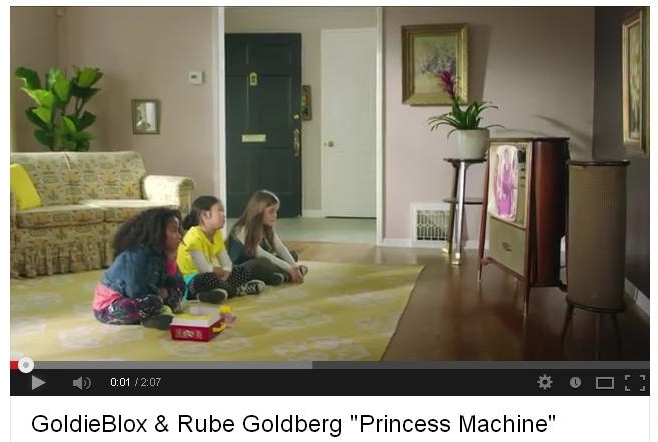
But I think one thing that often gets missed in all this is that a lot of toys marketed to girls are just sometimes boring compared to what boys are encouraged to play with. The much heralded Goldie Blox came along last year to try and introduce engineering concepts to girls. Again, pink became a signifier of all that is problematic about how toys are gendered, as we see in this opening shot from one of their ads (kids on screen dancing around in pink, girls watching super bored):
goldieNow, I should note here that in the actual Goldie Blox product, there are a few pink pieces (like a ballerina dolphin – rad). But the point is, clearly the rhetoric of Goldie Blox is trying to tap into anti-pinkification sentiments.

And the thing is, it turns out Goldie Blox itself is really boring for a lot of kids. It doesn’t have the imaginative radical potential of other toys, like Lego, that also teach principles of engineering. The problem isn’t pink, it’s the actual toys.

Speaking of Lego, this recent article reflects on how Lego has changed its marketing to girls over the years, with the girl from the 1981 “What it is is beautiful” ad showing how boring Lego “for girls” has become.
lori-then-now-lego-meme-630x416

There is a great point here: going from blocks that can become anything, to already-built pieces that have pre-determined (and often gender stereotypical) story lines is lame-o-rama. But so much of the article focuses on pink – for example they point out several times that in the original ad the girl is “without a hint of pink”. Pink has become symbolic of all that is wrong with the gendering of toys, and as a result pink is often one of our main targets, rather than judging toys on their capacities.

lesbian-barbiesWhen I was a kid I had to beg for a Barbie doll. When I eventually got one, it had blonde hair and this AMAZING pink disco outfit with a light on her belt that would flash on and off when you turned it. She had permanently bent elbows, which annoyed me because she was kind of hard to move about. I then obtained a second Barbie and a Ken Doll from an older best friend. I cut Disco Barbie’s hair short and she shacked up with new Barbie, who liked to wear ballgowns. They lived with Ken in a suitcase apartment that I made, with a white plastic cat. They had good queer times together.

Cool truck

Cool truck

There were lame aspects of pink Disco Barbie, like her immobile limbs (perfect for cuddling other Barbie though), but the pink wasn’t the issue. I was still inventive with my Barbies and though they never taught me about structural engineering, I had fun with them. Some of the “girly” toys I wanted in childhood were really inert and useless, like Fairy Winkles, but they weren’t bad because they were pink. I’m pretty sure that at the end of the day I was just subject to marketing and a desire for “status” like all the other kids (like, when I got connector pens I thought I was so cool).

I think we should promote kids to be interested in a range of dynamic stuff. But at the end of the day it’s not pink that stinks, it’s our attitude to gender that matters.

Photoshopocalypse: there’s more to be worried about than airbrushed legs

rs_634x890-140115075550-634.Lena-Dunham-Vogue-Cover-Annie.jl.011514

The Vogue in question

This week popular feminist site Jezebel embarrassed itself by offering $10,000 to anyone who could provide the before-photoshop shots of Lena Dunham’s US Vogue cover. Now, I love reading Jezebel on a daily basis. It’s a bit hit and miss, but generally I appreciate its mixture of popular culture and feminist analysis. Though this latest stunt has got me wondering: when it comes to cultural analysis, what is worth spending our time worrying about?

This has really been on my mind since I read this article from The Guardian, that asks “should popular culture be a site for political debate?”. Aside from the bit about the “deluge” of Miley Cyrus analysis (which gave me pangs of PhD fraud-guilt), I generally agree with the gist of the article. We should be careful not to get too caught up in deconstructing particularities of entertainment, lest we forget the bigger issues – of binary gender, economic disparity, racial prejudice, and so forth. 

I_have_no_idea_what_I_m_doing_here-4195

When we focus on the small stuff we can get lost (or stuck in the refrigerator)

In other words, we want to be careful that we can still see the political forest despite the pop culture trees.

Given that popular culture is a huge part of daily life and a source of enjoyment for many people (whether we agree it should be or not) it certainly warrants attention. But I do agree we should make sure our critique doesn’t become so narrow and specific that we miss the point. From what I can see going on in the Dunham-cover debate, there is a pretty narrow focus not on a tree, but on a tiny bug sitting on a leaf.

And it’s not like the issue of photoshopping doesn’t deserve attention, it’s just that we have the same conversation time and time again. It goes something like:

Photoshop: making celebrities look slightly alien since 1988

Photoshop: making celebrities look slightly alien since 1988

Prosecutor:
“BEFORE this woman looked NORMAL and BEAUTIFUL…
But then society deemed that she was NOT BEAUTIFUL ENOUGH.
Oh the TRAVESTY that we can’t just be our bumpy NORMAL selves”

Defendant:
“What do you EXPECT, the public want to see BEAUTIFUL people.
I mean, if you want to see FAT and UGLY just go out on the street.
This is FANTASY, this is fashion, it is MAKE BELIEVE”

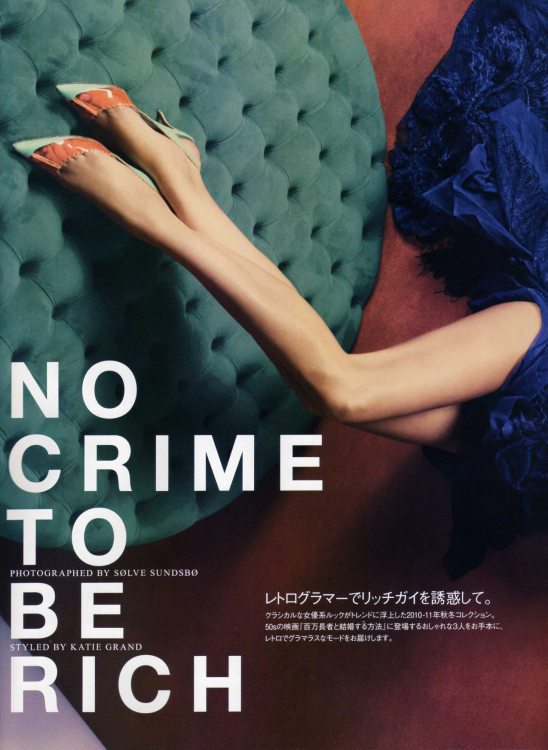
Vogue-Nippon-No-Crime-to-be-RichAnd so the banal conversation continues, until we have it again next time someone’s leg or muffin top is lopped off by photoshop. And we’re so busy having this debate over whether it is permissible for fashion magazines to have shiny airbrushed people in them, that feminism goes over to the corner and dies from boredom.

I mean, if we’re going to spend our time and money ($10,000, really Jez?) critiquing Vogue, why not look at it’s full-on reinforcement of class disparity? Why not look at it holistically, as a cultural artefact: what does it keep us aspiring to? That it proposes a vision of beauty that isn’t just a particular form of femininity, but is perhaps more grossly white, upper-class and heterosexual?

Is it just me, or are "real women" all veeeeery similar looking...

Is it just me, or are “real women” all veeeeery similar looking…

And part of the problem with focusing on photoshopping as *the* political issue, is that we then so readily accept “normality” as a selling point. Take the various Dove campaigns around “natural beauty”. We dance in jubilation – finally a company willing to show normal women! Never mind what might be left out, or the fact that this is all done in the name of profit.

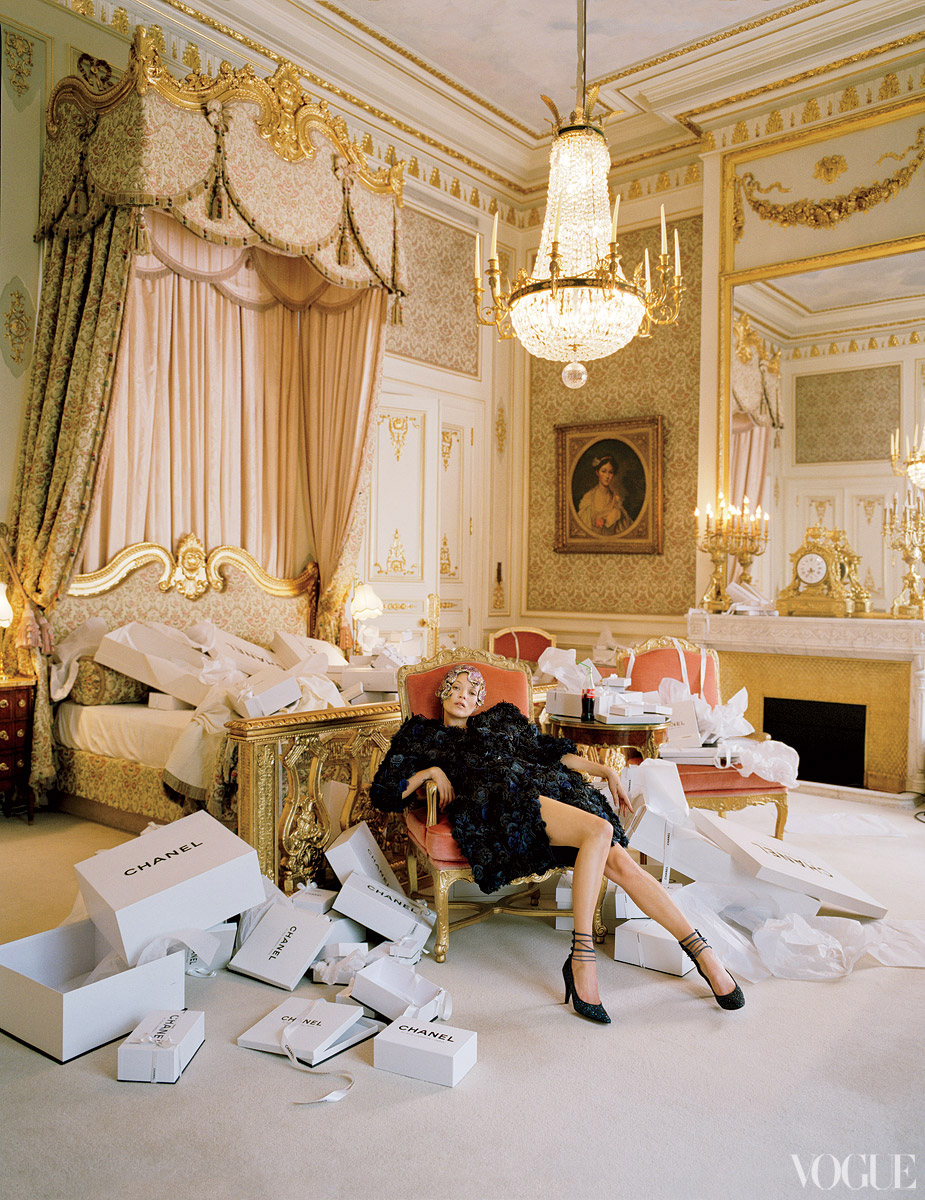
ritz-kate-moss-0412-VO-WELL61_112745722452

No photoshop here? No worries!

When we’re doing these analyses, why don’t we ask: who is the *real* enemy?
The women posing, willingly participating in their objectification?
The individual photoshoppers, for being so brutal with their brush?
The editor of Vogue, for dictating what is socially normal and acceptable in fashion and beauty?

…Or, something bigger?…

I’m not saying that individuals are devoid of ethical responsibility. I’m not even saying we should stop reading Vogue or Jezebel, and strip off all our clothes and makeup and run into the bush and live like a hermit (that’s a different conversation). But I am saying that when we invest our time in critical analysis and commentary, we also need to make sure we focus on the wider picture.

Revolutionary Eggs and the Pop-cult Basket

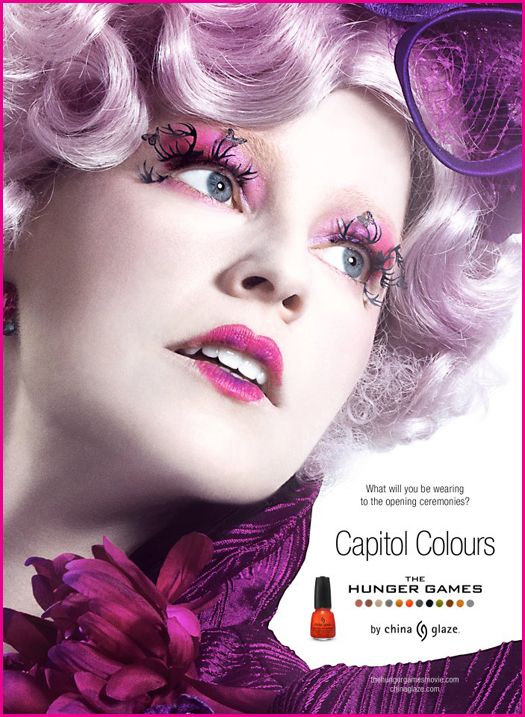
Hunger Games: selling you nail polish?

Hunger Games: selling you nail polish?

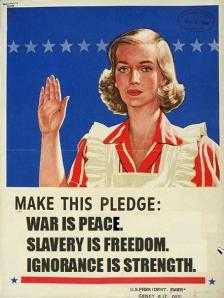
Currently I’m reading Catching Fire from the Hunger Games trilogy. This has mostly been triggered by the fact I’m going to see the movie on Saturday, and since seeing the first one I thought it might be a good idea to actually go and read the books. It is also a nice way to switch off for a while after uni each day, especially since I don’t own a TV. Since I have such a shoddy memory, I have been struck by how fantastically political the series of books actually are. As easy access young-adult lit, it really draws out quite an amazing Marxist critique of society (compare this to the John Marsden we were all reading when I was in year six, where the main theme was fighting against the invasion of Australia…).

1984_2

Suzanne Collins’ treatment of the characters from the Capitol is part of what I find most interesting. It seems to me (though this doesn’t come out so much in the first film at least) that although they are rather superficial in their interests, they are by no means devoid of humanity. Sure, they like watching kids slaughter each other on the telly, but they also have feelings. Though they are clearly part of an oppressive system, they are so inculcated in the norms of the capitol that the idea of resistance does not occur to them (false consciousness anyone?). 

madonnabo

And may the odds be ever in your favor

So then that got me thinking – I invest a great deal of my time waving the popular culture banner and resisting dominant readings that suggest we are all brainwashed and oppressed by current norms around sexiness, raunch, the problem with Disney Princesses, etc. But what if we had our very own Hollywood Hunger Games – would I spend my time analysing it in terms of the death drive, or the way in which it rendered boys and girls as equals within a killing field? Would I approach it without revolt, without action to break those kids out of that crazy systematic torture?

This troubles me. But then I am brought back to why I think approaching things queerly and providing alternative perspectives is part of resistance: because it opens up a space for thinking the world differently. I would hope that alongside my resistant readings would sit some heavy structural critiques. Because, as I have always found, you can’t jump from problematising, say, a dominant feminist line, without considering why feminism is so freaking important in the first place.

Britney-Spears-Work-Bitch

You wanna hot body…you wanna Maserati? You better work bitch

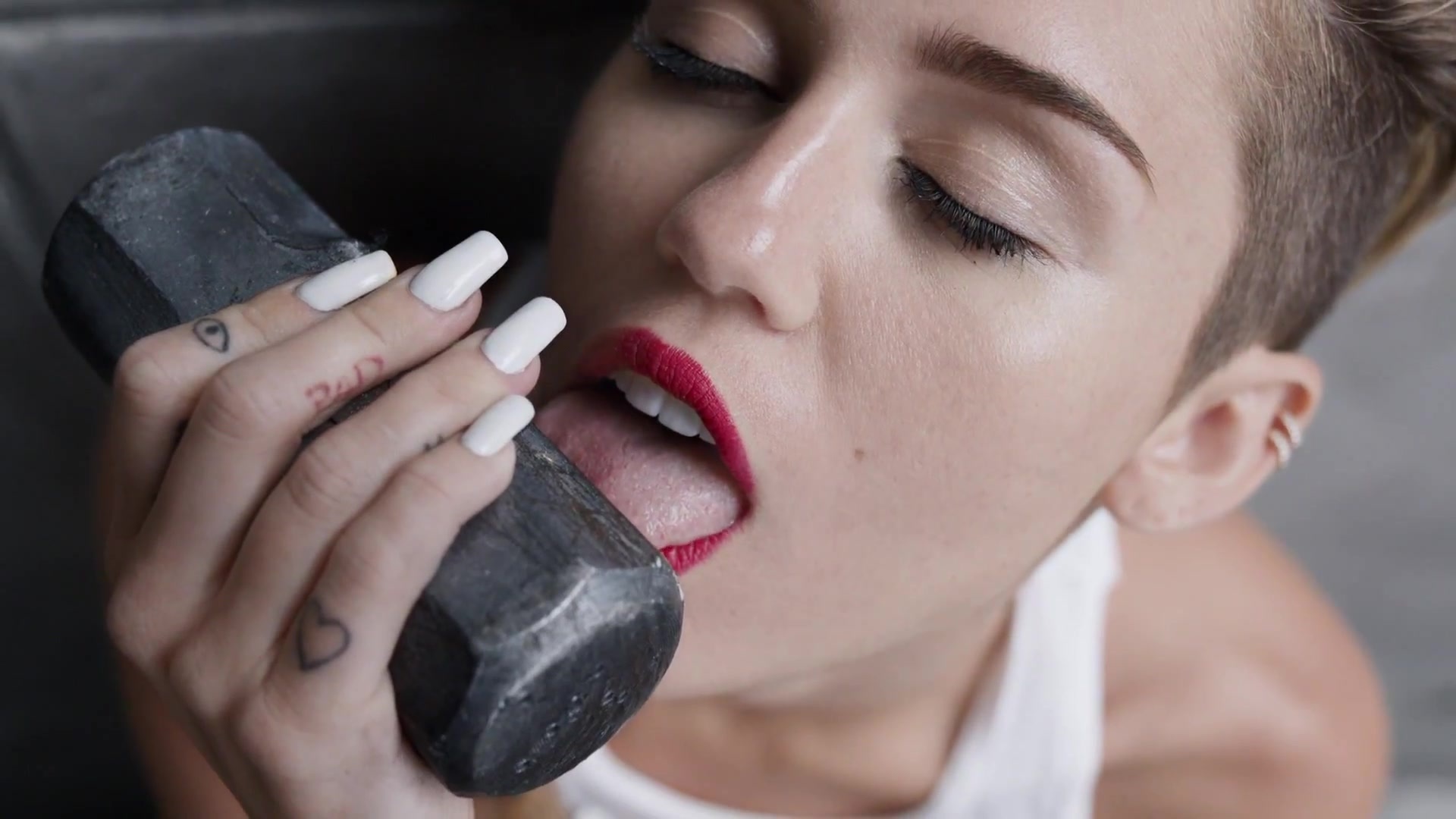
But most importantly, I don’t put all of my revolutionary eggs in the pop cult basket. I don’t actually think that millionaire Miley is necessarily going to smash the gender binary, or that the perfumed Britney is going to start the Marxist revolution with “Work Bitch”. But I also think that doesn’t matter. The way in which we approach these texts might matter though, a lot – to imagine different possibilities for sex, sexuality, class, identity, and so on.

She is pretty great though

Even The Hunger Games could be seen on one level (a classical critical theory approach) as making revolution part of a fantasy world, not a real one. But from another perspective, our encounter with this text could yield a whole other set of discussions and imaginings.

Soundtrack for Hard Time PhD Blues

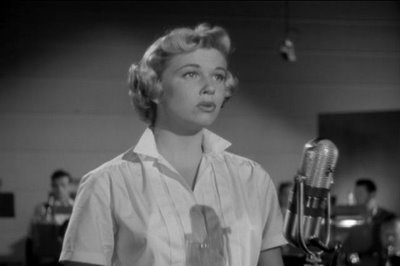
Doris will sing your blues away

Doris will sing your blues away

It is fair to say that I have reached the infamous “Valley of Shit” stage that people say comes at some point during a PhD. I decided a little while ago to drop a big section of my thesis that I had planned, as it just didn’t fit. That was a hard decision, not least because it was the bit that involved talking about Doris Day, who I am completely in love with.

Of course dropping this section has made me focus on the other chapters, which seem somewhat threadbare now that they’ve got to be the bulk of the work. And while my thesis is interdisciplinary in its approach (marrying elements of feminist, queer, affect and social theory, in an overall framework of cultural studies) sometimes that can just leave you feeling like you’re doing a crappy job of all the disciplines. haters-gonna-hateMuch like that Britney Spears song, my thesis is “Not philosophy, not yet anything substantial…” All this feeling bad reminds me of this lovely encounter I had with a pair of ass-hats from high school that I ran into when I had first quit my high-level public service job to do a PhD. Sipping cocktails in their work suits they asked me what I was doing with my life, and when I told them, they said “Oh…everyone I know that has done a PhD has ended up on antidepressants”. I left the conversation there.

Are you feeling equally bummed out with your study/work/life? Here’s a playlist of songs to try and get you through the hard times, a few go-to songs that are always playing in the background as I write.

Playlist in full:

1. Don’t It Get You DownDeadstar
From a time when it seemed like there were a lot more lady-fronted alt rock bands.

“Well don’t it get you down…It’s like the heat that burns you /  The knife that cut you / The heart that broke you / Just like the first time”

2. Where Is My MindPixies
This one just really sums it up sometimes.

“Your head will collapse / If there’s nothing in it / And you’ll ask yourself / Where is my mind”

3. The Golden PathThe Chemical Brothers
One of my favourite all time songs. I used this as a text in my year 12 exams back in the day. I think I analysed it as a “journey”.
“And I gained control of myself / And I decided to press on / And as I walked along the supposed golden path / I was trembling with fear all the lions and wizards yet to come”

4. HyperballadBjork
Bjork was the first person I saw live. When I was eight years old, my mum said to me, “it’s time you saw a concert”. And it was great. This song haunts me in difficult times.
“Every morning I walk towards the edge / And throw little things off / Like car-parts, bottles and cutlery / Or whatever I find lying around”

5. Suspended in GaffaKate Bush 
When I discovered Kate Bush for myself a few years ago, life changed. I think I was reading Wuthering Heights and then found the song. That was a good day.
“Suddenly my feet are feet of mud / It all goes slo-mo / I don’t know why I’m crying / Am I suspended in Gaffa?”

6. Adore YouMiley Cyrus
Given my first name, I have often been jokingly called “Hannah Montana”. But it’s only recently that Miley has really come into my life. I am pretty obsessed with her to be honest.
“Wondering where you’ve been all my life / I just started living”

7. Buffy Theme Song
Look, if you’ve never watched Buffy, PUT EVERYTHING DOWN AND GO AND START RIGHT NOW. People have been telling me for years to watch it, and I only started in June this year. It is literally the greatest thing of all time. ALL TIME. TRUST ME ON THIS ONE.

8. Party in the U.S.A. Miley Cyrus
Another Miley song, in here because it is such a great pop song. Guaranteed to make you feel a bit better about feeling out of place.
“Too much pressure and I’m nervous / That’s when the D.J. dropped my favorite tune / And a Britney song was on”

9. I Make Hamburgers The Whitlams 
I may be vegetarian, but that doesn’t mean I don’t dream of making hamburgers to get all the girls.
“My fourth customer was Sandy / She came in for nothing I could see except me / So it was I too, was eating a hamburger of sorts within an hour”

10. This Charming ManThe Smiths
My mum gave me the Smiths Singles CD for my fifteenth birthday, after I said that I really liked the intro song from Charmed. In this video, Top of the Pops insisted that they play a pre-recorded track. So Morrissey came on with gladioli instead of a microphone. Classic.
“I would go out tonight / But I haven’t got a stitch to wear”

11. UndergroundBen Folds Five
BFF were arguably one of my favourite bands as a small child, and this song in particular. I remember sitting in our old Toyota Corolla, listening to it on Triple J as a kid. Still relevant.
“I was never cool in school / I’m sure you don’t remember me / And now it’s been 10 years / I’m still wondering who to be”

12. Hair Lady Gaga
I saw Lady Gaga when she was on tour in Australia last year. Dressed as a unicorn in the monster pit, I feel in love with her. Before that I really liked her as an icon, but after the concert I couldn’t listen to any other music for about three solid months – she has some pretty serious pop voodoo going on. I like this song as it reminds me of a key part of my research. Hair is such an important aspect of identity for people, which is really interesting.
“And in the morning / I’m short of my identity / I scream Mom and Dad / Why can’t I be who I wanna be?”

13. PerfumeBritney Spears
I was tempted to post an oldie from our good lady Britney, but I really like this new song of hers. I also take a queer reading – obvs she wants her lover’s girlfriend to smell her perfume because that’s really who she desires. Remember Sedgwick’s discussion of the Ménage à trois? Yeah, it’s like that.
“I’ll never tell / Tell on myself / But I hope she smells my perfume”

14. You are the Music in MeHigh School Musical 2
If this isn’t the best cheesiest heartwarming song ever, then I don’t know what is.
Also, Zac Efron.
“When I hear my favorite song / I know that we belong / Oh, you are the music in me”

15. Secret LoveDoris Day
I used to skip school sometimes as a kid just to watch Doris Day movies that were on during daytime television (this was before the internet you guys). Well, my love’s not so secret – Doris Day 4EVA xox
“Now I shout it from the highest hills / Even told the golden daffodils / At last my heart’s an open door / And my secret love’s no secret anymore”

I hope you enjoyed this mix tape. What songs get you through the hard times?

My Struggle With Feminism

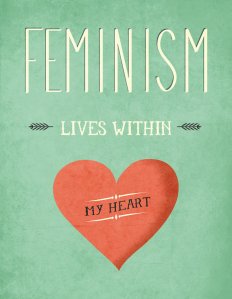
This lovely print from dothandmade really sums it up (check out her etsy page)

This lovely print from Michelle Scott of dothandmade really sums it up (check out her Etsy page)

Feminism and I go way back. For one thing, my grandmother used to write STEREOTYPE in big, bold letters underneath problematic pictures in my colouring-in books, such as wart-nosed witches, or coquettish Disney Princesses getting married off to their rather dull princes (if nothing else, this instilled in me a fervour for cultural criticism at a young age). I also had my mother, less the radical-separatist type, more a non-identifying new third-waver, which largely explains that my first tape at the age of four was Madonna’s Immaculate Collection (which I have to say ensures some rather awkward conversations, like when you jump around the lounge room singing “Like a Virgin”, which leads your mother to ask, “Do you know what that word means?”, a series of lying nods, and “the talk” before you’ve even got this Kindergarten thing down pat). I read The Paper Bag Princess, played with Motherpeace Tarot cards, and went to all number of Reclaim the Nights, and pro-choice rallies.

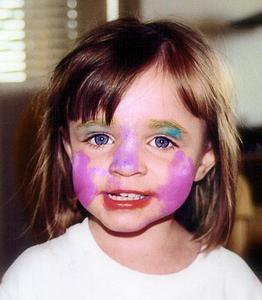
This is exactly the kind of style I would go for

This is exactly the kind of make-up style I would go for

Of course with this kind of upbringing, I didn’t identify explicitly with feminism. That was just assumed, background information, something everyone was au fait with (I thought). In fact, I actively rejected many of the feminist critiques I was exposed to. Much to the chagrin of my family, I demanded to wear dresses. I loved pink. Fairies. Ballerinas. Makeup. In my lifetime I have managed to have not one but three makeup-themed parties (though, on all occasions I was less interested in beautification than I was drag-queening).

Later, despite choosing university majors in psychology, political science and philosophy, I managed to write about sex, gender and sexuality whenever possible (a trend unfortunately only evident in hindsight). But it wasn’t until I began my honours in philosophy, that I finally read Simone de Beauvoir’s The Second Sex – which was a revelation. After that I took a giant leap straight into Judith Butler territory, sparking a rather dense love affair with her textual genius. But theoretically, I jumped from a foundational second-wave text to a pretty intense critique of all things gender. I’ve spent the years since then catching up on a lot of the feminist texts in-between and since the great Gender Trouble, but it’s fair to say I’ve taken the queer theory path rather than the recuperative one you see feminist writers like Angela McRobbie taking now (in Aftermath of Feminism McRobbie levels that the work of JB contributed in part to feminism undoing itself). 

This for example, is some crazy bullsh*t

This for example, is some crazy bullsh*t

The point is, a lot of the time, I find myself challenging many of the encompassing explanations of oppression presented by feminist writers and thinkers, instead proposing sneaky little queer readings of things that might otherwise be held up as extremely problematic and supportive of the patriarchy (for example, the much condemned antics of Gaga, Miley, Britney, Katy – I just can’t help falling in love with these women and I will defend them to the death god dammit!). But then at odd and unexpected times, I find myself confronted with street harassment, anti-abortion preachers, or even just vaguely misogynistic comments on social media, and I am reminded hey wait a minute, feminism isn’t always perfect….but it’s still pretty tops. After all, feminism doesn’t mean just one perspective – for me at least, laying claim to feminism in part just means caring about questions of gender.

It sure is

It sure is

As Butler put it herself in the 1999 preface to GT, “I was writing in the tradition of immanent critique that seeks to provoke critical examination of the basic vocabulary of the movement of thought to which it belongs”. In other words, one can write from a critical space that is also ultimately founded in feminist thought. And while I can’t help agreeing with some authors like Janet Halley, that it can be productive to “take a break” from feminism sometimes, I can also never forget my feminist roots.

ABC of Marriage Equality

IMG_0354Today in my hometown of Canberra, a “Marriage Equality” bill was passed in the ACT Legislative Assembly (the local government). Though it made it through, the bill faces a big challenge as it comes up against our federal government, who it is fair to say, are a bit conservative. With the expectation of a High Court challenge, the ACT government made a few amendments to the bill yesterday, which limits recognition to “same-sex” identifying couples, excluding those who identify as “X”, that is, neither male nor female. So, while emotions of joy and pride are riding high for some, there is still a concerning question of exclusion. Plus there is always the old conundrum…Of course we should have marriage equality! But should we have marriage? So, as we consider the alphabet soup of love, sex and gender, here’s an ABC of my thoughts on this issue…

A is for Abbott: such a conservative twat3tjgzm

B is for bride + bride: what’s so wrong with that?

C is for Canberra: hooray for taking a stand

D is for danger: but who counts in this demand?

E is for equality: for most, thereabout

F is for fighting: some wins, but some doubt…

G is for good times: gay marriage for all!

H is for hang on: we have some amendments y’alltumblr_luat2i2iP01qahipuo1_500

I is for ignored: who’s left outside this debate?

J is for justice: the law will determine your fate

K is for kinky: no wacky weddings my dear!

L is for love: as long as it’s “normal”, not queer

M is for meaning: life-time commitment, a ring

cat

N is for no thanks: marriage is not everyone’s thing

O is for option: limiting marriage? – A blunder

P is for poly: if I have more than one love, I wonder?

Q is for queer: reject all the norms!

R is for romance: sometimes undone by forms

sad-cat-S is for “same-sex”: choose one, or no access?

T is for trans*: no recognition? Call this progress?

U is for undecided: I do believe in love and Cupid

V is for votes: I fear it’s the economy, stupid!

W is for wedding: rainbow cake fo sho

X is for X gender: Canberra says no

Y is for yay: I’m really pleased, every step bit by bit!

Z is for zilch: big flaws for sure, which is just a bit shit

Girls, Girlhood and Feminism

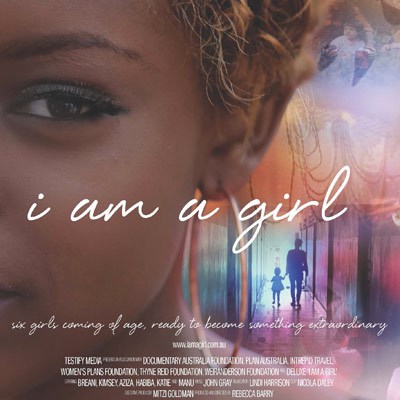
i-am-a-girl-poster-file-edited2Last night I was lucky enough to be asked by the YWCA of Canberra to speak at a film screening of the documentary I am a girl. Below is a transcript of the speech I made following the film.

I am a Girl
In light of the remarkable documentary I am a girl, and as we come up to the International Day of the Girl Child, I thought today it might be interesting to look at some of the ways in which the concept of the girl has been considered in an academic context, and how we might see this film as doing work in contributing to this conversation. So briefly I want to talk about three things:

  • First, what has been said about the girl in academia, specifically, feminist writing?
  • Second, how might we see even the title of the film I am a girl functioning as a powerful statement and intervention in conversation about the girl?
  • Third, why should we care about the girl in academia and feminism?

Second_Sex-20100831

What has been said about the girl?
At face value, girlhood implies a period of flux, of change. As Simone de Beauvoir famously said, “one is not born, but rather becomes, woman” (283). And in de Beauvoir’s account in The Second Sex, the girl is but one step in this process of becoming. However, for de Beauvoir girlhood is not a stopping point – the girl is always caught up in being compelled toward her future state, woman. As de Beauvoir explains, “She is already detached from her childhood past, the present is for her only a transition; she sees no valid end in it, only occupations. In a more or less disguised way, her youth is consumed by waiting. She is waiting for man” (341).

Germaine Greer takes a similar perspective to de Beauvoir in The Female Eunuch, insofar as she acknowledges the weight of expectations imposed upon girls, but she writes, “I would not be doing justice to girls if I were to imply that they accepted their enculturation without struggle” (78). Greer goes on to state that, “the pre-pubescent girl, however sluggish and confused she may seem to the disenchanted observer, is a passionate creature” (80).

the-female-eunuch-germaine-greer-feminism-books-270611-large_newThis conflict between identifying the structural limitations imposed on girls, while at the same time acknowledging the agency of girls themselves, continues to be a persistent tension in feminist writing.

Furthermore, often feminist writing has not settled on the girl as a focus for attention – often the girl is only discussed as a marker of transition on the way to what is often given more significance- the question of woman. However in very recent times we have seen the rise of “girlhood studies” which is attempting to give questions of the girl centre stage.

Theorists in this new field of study, such as Jackie Kirk, Claudia Mitchell and Jacqueline Reid-Walsh, have attempted to provide a map for understanding discussions of the girl in a contemporary global context (16). Three dominant themes that have emerged from this research are that:

  • Girls are often pathologised as victims of material deprivation and restrictive gender roles, particularly in development contexts (20-22);
  • Girls are seen as problematic consumers of “tween culture”, particularly in Western contexts (22-23); and
  • Given these restrictions, girls are seen to be already coopted and lacking the agency to have their own opinions or speak for themselves (24).

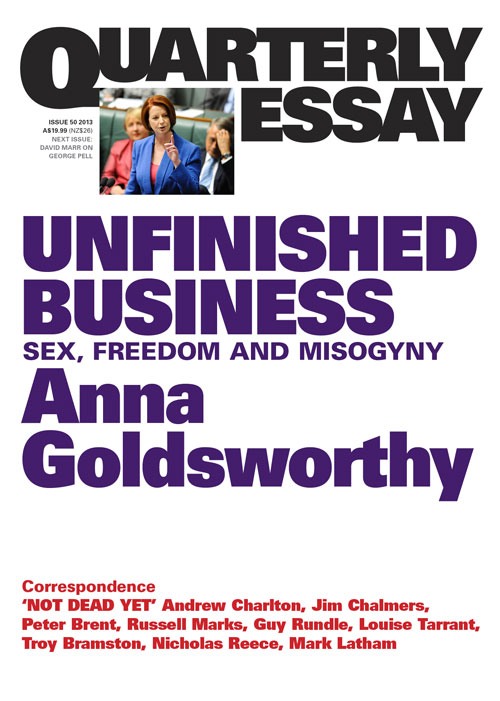
unfinished-business-anna-goldsworthyWe might note that even with the best critical intentions, sometimes discussion of the girl can carry a heavy weight that reduces the girl to a dupe of systemic oppression. Take for example, Anna Goldsworthy’s recent piece for the Quarterly Essay, Unfinished Business: Sex, Freedom and Misogyny. In part, Goldsworthy considers the dangers of girlhood today, framed as young womanhood, particularly the self-objectifying practices girls are taking part in online, as she writes, “the young woman is the celebrity at the centre of her Facebook universe, which might look like self-esteem but is ultimately a form of self-effacement” (37). That is to say, Goldsworthy argues that girls may be in charge of the creation of their self-image, but these are images that are in fact erasing girls. She asks, “is it only by photographing herself that she knows she’s real?” (38).

Now, this might be a compelling argument for some people, but I think it is vital that we pay attention to how these accounts are framing girls. Though there may be processes operating whereby girls are disempowered at one level, simultaneously these same girls may be empowered in other ways. Complexity should not be brushed over in favour of more simple explanations when it comes to investigations of the girl. We need to hear from girls about their own experiences- when we do, often extraordinary things are revealed.

How does I am a girl intervene in this discussion?
The title of this documentary alone provides a fascinating entry into this discussion of the girl. The power of the declaration “I am a girl” becomes ever apparent with comparison to the perhaps more prolific statement – “it’s a girl”.

cat-photo-gallery-payton-21274560As gender theorist Judith Butler has pointed out, we are “called into being” by identity statements – the phrase “it’s a girl” at birth enmeshes us in a process of being “girled” (xvi). That is to say, being labeled a girl is involved with a whole set of role expectations and bodily styles of the “feminine”. As Iris Marion Young argues in Throwing like a Girl, assigning the marker “girl” functions as part of creating less powerful bodies; she writes: “The girl learns actively to hamper her movements. She is told that she must be careful not get hurt, not to get dirty, not to tear her clothes, that the things she desires are too dangerous for her” (154).

08d14868_md

Of course Young’s work plays on the idea that often the statement “throwing like a girl” is used as an accusation or insult. To call something “girlie” is to emphasise that it is underdeveloped or infantile. With age, the proclamation at birth of “it’s a girl” transforms into the charge that one is “just a girl”.

But the title of this film, I am a girl refigures these notions – girlhood is claimed as a position one can be proud to occupy. To say “I am a girl” is to erase the “just” and proclaim this subject position as something to take ownership of. Importantly, the title is not “Nearly a woman” or “I am a young woman”- it marks girl out as a category that might carry a weight of social implications, but that deserves special attention in itself.

And further, the title implies an idea of the girl speaking for herself, but that this is a subject position the viewer can also relate to. Here the “I” functions as the voice of the girl, but also as a space of empathy- it calls for us to put ourselves in the place of the girl as we hear her story.

So from this perspective, we can see the documentary as making an intervention on the topic of the girl, in that we are encouraged to consider:

  • What possibilities are imaginable for these girls; what kinds of women are these girls compelled to become?
  • And, how can we acknowledge these difficulties without making girls victims?
  • But also, where can we see small points of resistance emerging from the girls themselves, and how can we work together across different cultural contexts to make sure these girls are supported to transform boundaries and limitations imposed upon them?

Why should we care about girls?
9780231119139The final point for consideration today is why the girl is important? Why should we care about girls in feminism and academia broadly? As a leading theorist in the field of girlhood studies, Catherine Driscoll, has commented: “As a future-directed politics, as a politics of transformation, girls and the widest range of representations of, discourses on, and sites of becoming a woman are crucial to feminism” (9). Driscoll implores us not to erase girlhood in the question of becoming woman which is central to feminism.

But Driscoll also notes that the question of the girl is not only relevant because it refers to a developmental stage prior to the “independent woman as feminist subject” (9). We need to make sure that while we acknowledge the importance of the girl in relation to the question of woman, the girl does not get lost in this discussion.

652cf38361a209088302ba2b8b7f51e0_500x735It is vital that we hear from girls themselves – as I am a girl implores us to do. And while identifying limitations that are socially placed upon girls, let girls tell these stories so as not to erase their voice in this process, but also so that a diversity of perspectives might ring out. After all, we cannot expect that the needs of girls should be the same across all contexts, or that all girls will share the same experiences. In acknowledging the category “girl”, particularly across cultural boundaries, we need to make sure that difference is held as key.

On the one hand, it is crucial that we see the girl within a future trajectory – what are her possibilities of who she might become? And to this point, a sense of hope is important for imagining different futures. But by the same token, the girl in the now needs to be considered- not just who she will become or who she might be, but what she has to say in this moment. Because it is only in this acknowledgment – that the present is actually the future – that we can hope to come together not to rescue girls but to amplify their voices as they mark out their own space in a changing world.

References
Beauvoir, Simone de. The Second Sex, Trans. Constance Borde and Sheila Malovany-Chevallier. New York: Alfred A. Knopf, 2010 [1949].

Butler, Judith. Bodies that Matter: On the Discursive Limits of “Sex”. London; New York: Routledge, 2011 [1993].

Driscoll, Catherine. Girls: Feminine Adolescence in Popular Culture and Cultural Theory. New York: Columbia University Press, 2002.

Goldsworthy, Anna. ‘Unfinished Business: Sex, Freedom and Misogyny’. Quarterly Essay. Issue 50, Collingwood: Black Inc., 2013.

Greer, Germaine. The Female Eunuch. London: Granada Publishing Limited, 1970.

Kirk, Jackie, Claudia Mitchell and Jacqueline Reid-Walsh. ‘Toward Political Agency for Girls: Mapping the Discourses of Girlhood Globally’. Girlhood: A Global History. Ed. Colleen A. Vasconcellos and Jennifer Helgren. New Brunswick, N.J.: Rutgers University Press, 2010.

Young, Iris Marion. Throwing like a Girl and Other essays in Feminist Philosophy and Social Theory. Bloomington; Indianapolis: Indiana University Press, 1990.

Things that are more nude than Miley Cyrus

“The denial of lower, coarse, vulgar, servile – in a word, natural – enjoyment, which constitutes the sacred sphere of culture, implies an affirmation of the superiority of those who can be satisfied with the sublimated, refined, disinterested, gratuitous, distinguished pleasures forever closed to the profane. That is why art and cultural consumption are predisposed, consciously and deliberately or not, to fulfill a social function of legitimating social differences” – Bourdieu, 1984

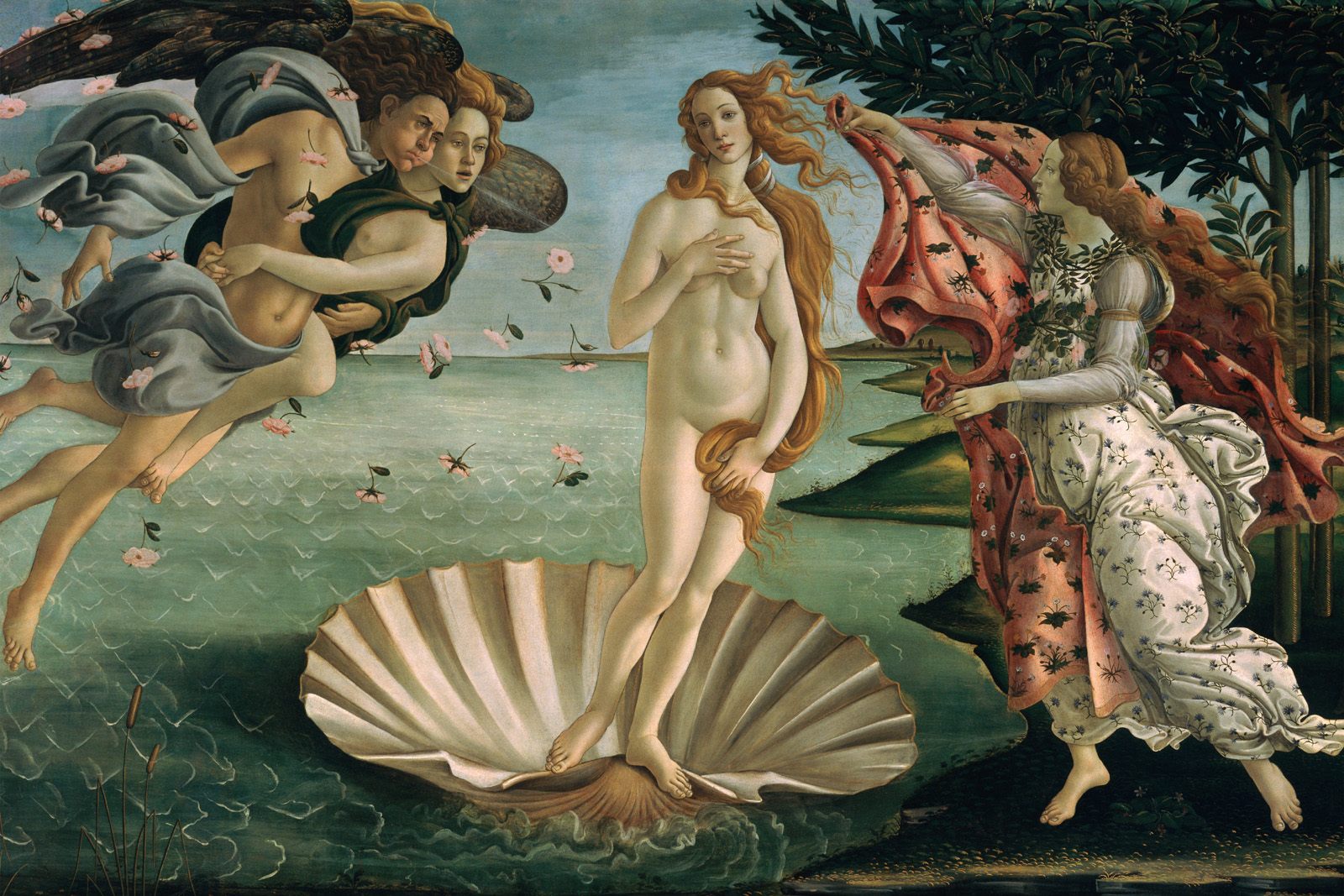
Definitely more nipple action than Miley in ‘The Birth of Venus‘, Botticelli 1486:
the-birth-of-venus-1485(1)

The nipple party continues with ‘Gabrielle D’Estrees and One Of Her Sisters‘, artist unknown 1594:
gabrielle-destrees-and-one-of-her-sisters_school-of-fontainbleau_ecole-francaise

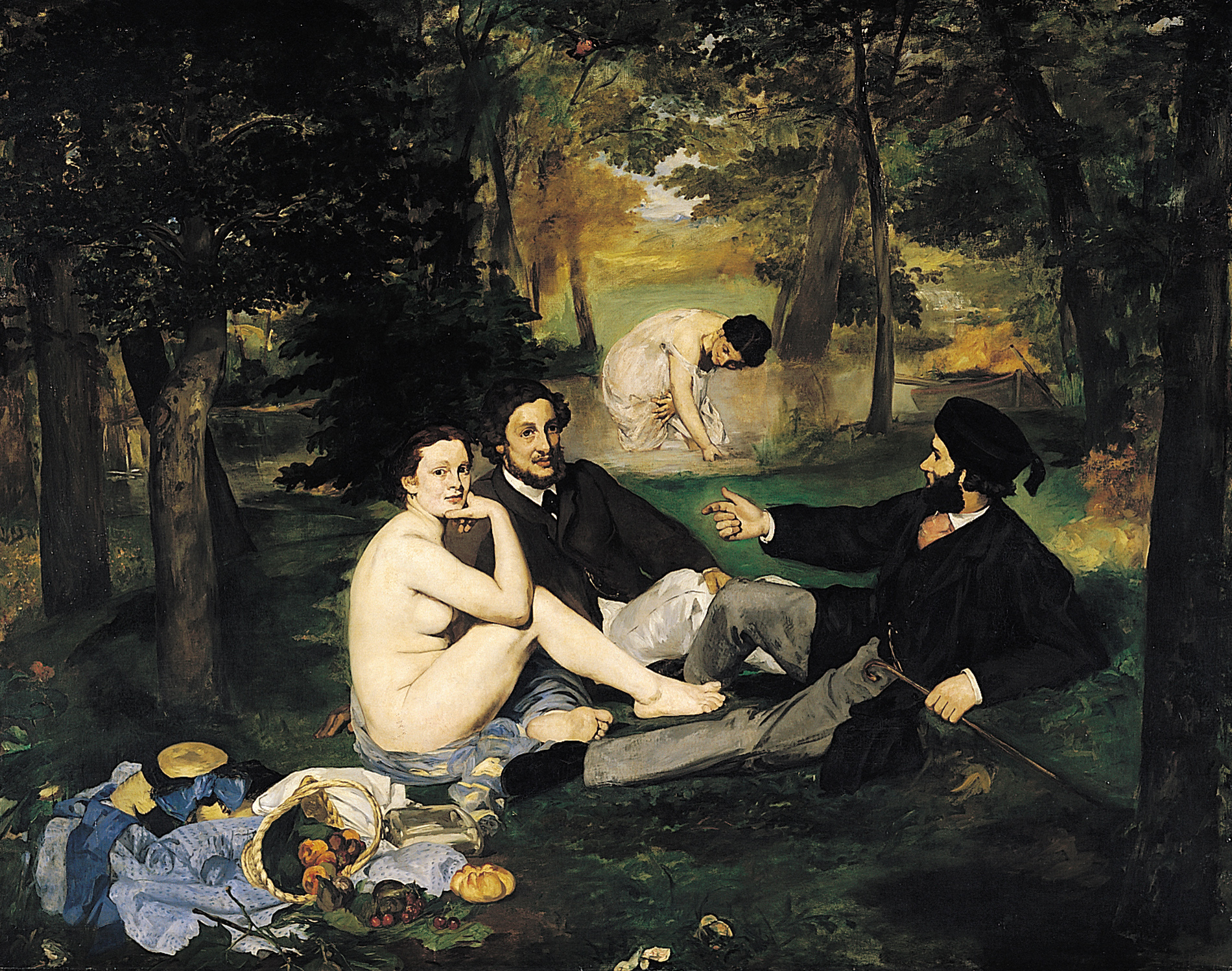
And if you thought Miley was bad, at least she was in the privacy of her own wrecking-ball room. ‘The Luncheon on the Grass‘, Manet 1863:
the-luncheon-on-the-grass-1863It looks like there may even be some bondage happening in ‘Nude, Green Leaves and Bust‘. Picasso, 1932:
2410_6

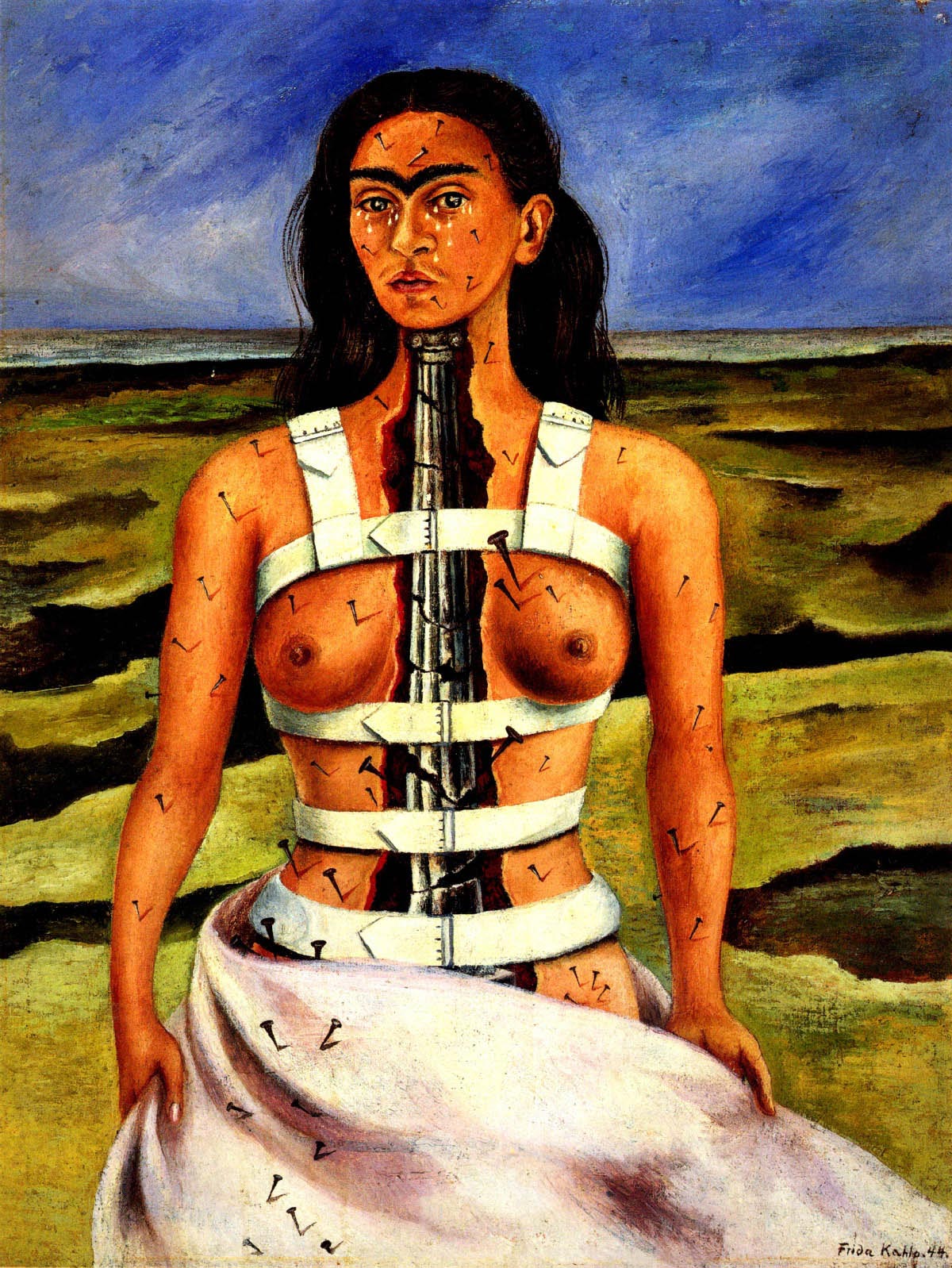
Kahlo also communicates suffering with revelation of her body in ‘The Broken Column‘ 1944:The-Broken-Column

And there’s even full-frontal penis action in Lucian Freud’s ‘After Cézanne‘ 2000:
134617

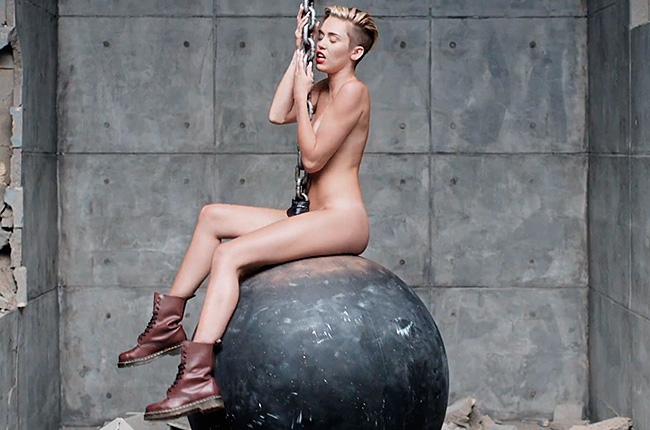
Miley’s looking pretty tame after all. She even has shoes on:
miley-cyrus-wrecking-ball-video-4-650-430


Sisters, Doing it for Them-selfies

WDN_18-04-2013_ROP_01_WAR170413selfie_t460

A “typical” selfie pose

Recently an article, Dark Undercurrents of Teenage Girls’ Selfies, has been doing the social media rounds. Selfie literally refers to taking a photo of yourself, and as the papers would have it, this is a dangerous trend being taken up predominantly by girls. While the author – a grade eleven student – admits that “There isn’t anything inherently wrong with uploading self-portraits”, part of this piece also claims that the underlying motivation is popularity, ultimately judged by men: 

Who do we blame for this moral mess? As feminists, we correctly blame patriarchy because boys are securely at the top of the status game. Boys end up with the authority. They have their cake and eat it.

On the weekend The Observer also jumped on the bandwagon with an ominous appraisal over this “global phenomenon”. Journalist Elizabeth Day argues that even though the selfie allows for a modicum of control over images, “once they are online, you can never control how other people see you”. And as Anna Goldsworthy recently remarked in her piece for the Quarterly Essay:

And so the young woman photographs herself repeatedly, both in and out of her clothes, striking the known poses of desire: the lips slightly parted, the “come hither” eyes, the arched back or cupped breast.

tumblr_mfobi2itwF1rm5ngbo1_500By all accounts, young girls today are not just in big trouble, they are trouble. Unlike every generation before them, these girls are the lewdest, excessively raunchy, most aggressively hypersexual… What we have on our hands is a moral panic that combines two things we love to fret about: technology and women’s bodies.

I think that whether or not selfies are ultimately empowering vs. disempowering is actually a moot point. After all, this line of questioning can only really disseminate along two opposing lines:

  1. Empowering – Girls are in control, and the elements of choice and agency involved in self-constructing images is key. This perspective necessitates extrapolating individual claims out to the whole.
  2. Disempowering – Girls may think they have control when they produce a selfie but really as outsiders we know better: they are the victims of a patriarchal culture that compels them to auto-objectivise. This perspective necessitates making generalisable structural claims to the detriment of considering individual experience.

Both of these lines of argument involve making wide-spread claims to provide a definitive evaluation that the practice of taking selfies is either good or bad. From this black and white approach, the possibility that something might be at once empowering and disempowering, is obscured. But – let’s take an imaginative leap here – what if we decided that actually, the answer to the empowerment question is actually kind of fuzzy…

It's not just young people that get in on selfie action...

It’s not just young people that get in on selfie action…

It is almost certain that, as Olympia Nelson claims, many young people are playing popularity games through selfie posts. But what if we considered the ways in which online environments are opening up new avenues for exploration of identity and selfhood? Capacitating the formation of new communities? Creating space for young people to experiment with different modes of self-expression? Selfies are just one more form of image being produced and reproduced in this world. But why flatten girlhood through this story of the scourge of selfie, and miss the other aspects at play in this question of growing up in an era where online expression is the norm?

Frida Kahlo: doing selfies before it was cool

Frida Kahlo: doing selfies before it was cool

Nelson herself admits that “The real problem relates to conformity” – but unfortunately her morality-tale (clearly sensationalised by the paper, e.g. the byline “a cut-throat sexual rat race”) doesn’t leave room for a more in-depth look at how she herself engages online aside from her general, mostly generalised, examples. It seems to me that there are more interesting questions to ask about being a young person on social media if we can put aside our immediate reactions, dry our sweaty brows for a minute and calm our anxiety over the “youth of today”.

The point is, why not suspend judgement and condemnation of these girls and their online practices? Let’s think of some new ways to engage with questions of technology, sexuality and gendered bodies…without all the panic.